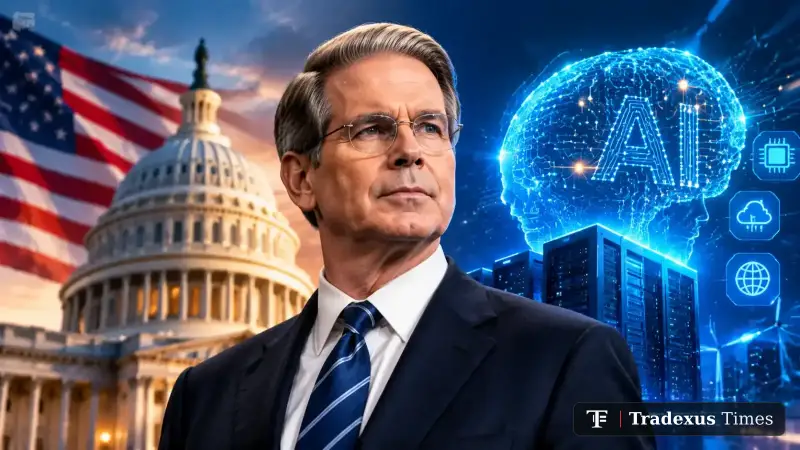
Treasury Secretary Scott Bessent has emerged as a leading candidate for President Donald Trump’s planned artificial intelligence czar position, according to three people familiar with the matter cited by Semafor. However, no appointment has been finalized, and White House spokesperson Kush Desai said reports regarding personnel decisions that have not been officially announced should be considered speculation.
Bessent’s potential consideration comes as artificial intelligence becomes a larger focus within U.S. economic policy, national security discussions, and relations with China. The Treasury secretary has recently taken a more active role in AI-related policy discussions, including talks with Chinese Vice Premier He Lifeng ahead of a planned meeting between Trump and Chinese President Xi Jinping.

The discussions reportedly included the possibility of establishing a formal U.S.-China dialogue on artificial intelligence, along with a notification framework for AI-related incidents that could create national security concerns. Bessent said both sides intend to continue those discussions.
Beyond international coordination, Bessent has also expressed views on accountability in artificial intelligence development. He has argued that responsibility for actions involving AI systems should remain with humans and companies rather than being transferred to the technology itself.
Other individuals reportedly under consideration for the AI czar role include White House Office of Science and Technology Policy Director Michael Kratsios and Office of Personnel Management Director Scott Kupor. The final decision has not been announced.
If selected, Bessent would not necessarily need to leave his Treasury position. Previous administrations have assigned cabinet officials additional policy coordination responsibilities alongside their existing roles.
The potential appointment reflects the increasing importance of AI policy within government decision-making. As artificial intelligence becomes connected with economic competitiveness, technological development, and national security considerations, the administration’s approach to AI oversight is expected to remain a key policy focus.
Markets and technology companies may continue watching how the administration structures AI leadership, whether a dedicated coordinator is appointed, and how future policy discussions address regulation, innovation, and international cooperation.