Bitcoin

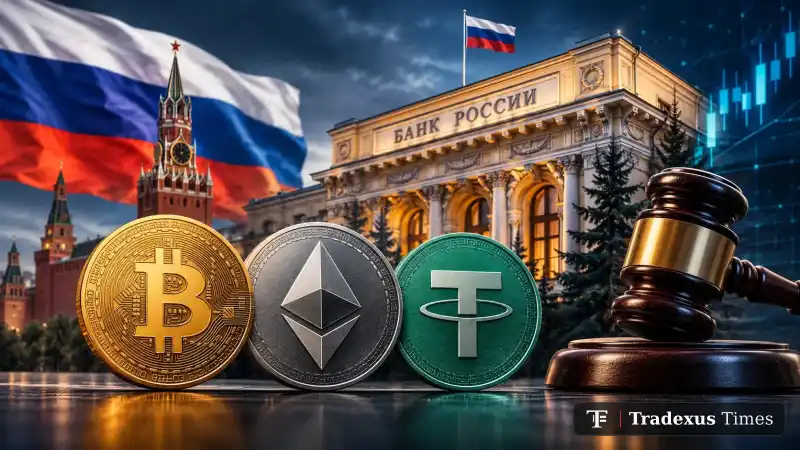
The Central Bank of Russia has announced that Bitcoin (BTC), Ethereum (ETH) and Tether (USDT) will become accessible to individuals without qualified investor status under a new regulatory framework taking effect on November 17. The measure will allow exchanges and financial intermediaries to offer trading in the three cryptocurrencies to retail investors, subject to an annual purchase limit of 300,000 rubles per intermediary, equivalent to approximately $3,600.
Under the new framework, non-qualified investors will be able to gain cryptocurrency exposure through brokers, portfolio managers and other intermediaries providing digital-asset trading services. Transactions will be permitted on both centralized exchanges and over-the-counter (OTC) markets, giving retail participants access to multiple execution channels.
In this story
3 assets

However, the annual investment ceiling introduces a clear distinction between retail and qualified investors. Non-qualified participants will face a 300,000-ruble limit for each intermediary, while qualified investors will not be subject to the same purchase restrictions or limitations on the eligible cryptocurrency list.
The difference is significant for the structure of Russia's regulated cryptocurrency market. By establishing separate access conditions, the central bank is creating a framework in which retail participation is permitted but remains subject to predefined financial constraints. The approach expands access to digital assets without extending the same degree of investment flexibility available to qualified participants.
The initial list is limited to Bitcoin, Ethereum and USDT, representing three distinct segments of the cryptocurrency market. Bitcoin and Ethereum provide exposure to the two largest established digital-asset networks, while USDT offers access to a dollar-pegged stablecoin commonly used for cryptocurrency trading and settlement.
The selection process also indicates that the central bank is applying specific market-based eligibility criteria rather than opening the market to cryptocurrencies indiscriminately. According to its statement, the assessment considered market capitalization, average daily trading volumes and historical price performance on international platforms. Eligible assets must have at least five years of price history.
These requirements suggest that market size, trading activity and historical data availability are central considerations in determining which cryptocurrencies can be offered to non-qualified investors. The criteria could also make it more difficult for newer or less established digital assets to enter the permitted retail market.
Investor protection will remain a separate requirement regardless of qualification status. Both qualified and non-qualified investors must complete a test and receive information about the risks associated with cryptocurrency investments before trading. This means that access to the newly approved assets will not be automatic, even after the framework takes effect.
From a market perspective, the inclusion of BTC, ETH and USDT provides a regulated entry point for retail cryptocurrency exposure in Russia. The combination covers exposure to major crypto assets as well as a stablecoin, potentially supporting different trading and portfolio strategies within the permitted framework.
The 300,000-ruble annual limit, however, will constrain the scale of retail participation through individual intermediaries. The distinction between qualified and non-qualified investors may therefore become an important factor in determining how cryptocurrency exposure develops across Russia's regulated financial sector.
The next key development will be the implementation of the framework on November 17. Market participants will be watching how exchanges and intermediaries incorporate the three approved assets into their services, how the purchase limits are applied in practice and whether the initial eligibility criteria shape future additions to the permitted list.