Dogecoin
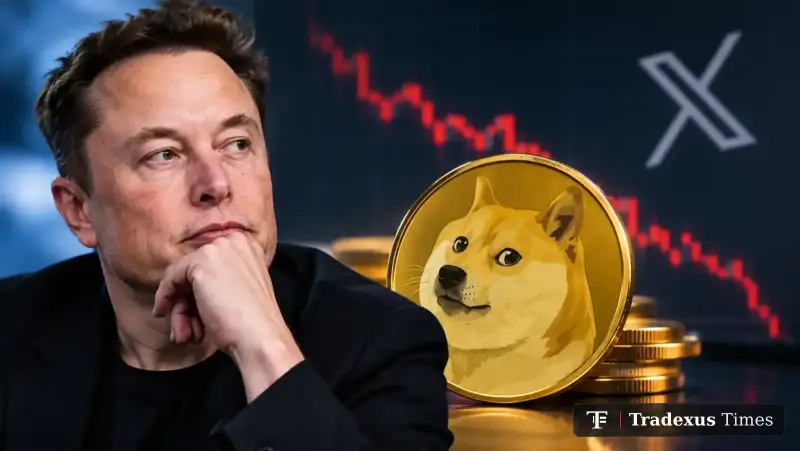
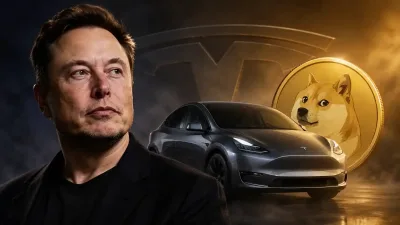
Elon Musk was once one of Dogecoin’s most powerful catalysts, with a single social media post capable of triggering sharp price swings. But the relationship between the billionaire and the popular memecoin has changed. Although Musk has not completely abandoned DOGE, his public support has become less frequent, leaving investors questioning whether the token can regain its former momentum without his influence.
Musk’s impact on Dogecoin became particularly evident during the 2021 bull market. His comments, memes and television appearances helped push DOGE into the mainstream, while speculation surrounding his potential support encouraged waves of retail buying. His description of himself as the “Dogefather” became part of the token’s identity, reinforcing the perception that Musk could be a major driver of its price.
However, his direct engagement with Dogecoin declined significantly after he acquired Twitter, now known as X, in 2022. In a 2024 interview that resurfaced in 2026, Musk said he was not interested in actively promoting cryptocurrencies, although he retained a personal fondness for Dogecoin because of its association with dogs and memes.
One possible explanation is that Musk’s priorities have shifted toward his businesses and broader technology projects. Tesla, SpaceX and X have substantial commercial ambitions, while his involvement in US government efficiency initiatives in 2025 also drew attention away from his previous cryptocurrency-focused public persona. However, Musk has not confirmed that these responsibilities are the specific reason for his reduced Dogecoin commentary.
Another factor is the gap between speculation and actual adoption. Investors have repeatedly anticipated that Musk’s companies or X could integrate Dogecoin into payment services. Yet, despite years of discussion, no broad Dogecoin payment integration across X has been officially announced. Tesla has accepted DOGE for selected merchandise, but that is different from integrating the token into a widely used payments platform.
The confusion surrounding the Department of Government Efficiency, also known as DOGE, added another layer of speculation in 2025. Some crypto traders hoped the initiative might lead to government adoption of Dogecoin. Musk subsequently clarified that the government initiative and the cryptocurrency were separate, and said the US government had no plans to use the token as far as he knew.
Still, Musk has not completely stopped engaging with the Dogecoin community. In February 2026, he responded to a post about sending a literal Dogecoin to the Moon, suggesting it might happen the following year. In June, he also reaffirmed his long-standing joke about eating a McDonald’s Happy Meal on television if the company accepted DOGE. Neither interaction, however, produced a significant market reaction, suggesting that the influence of his comments may have weakened.
Dogecoin’s challenge is therefore not simply that Musk speaks about it less often. The bigger issue is whether the project can generate sustainable demand through payments, real-world utility, developer activity and broader ecosystem growth rather than relying primarily on celebrity attention.
Some Dogecoin ecosystem developers argue that the network is gradually becoming less dependent on Musk as new teams and applications emerge. If that transition continues, it could help the project develop a more independent identity. But sustained adoption and meaningful demand will be necessary to demonstrate that the ecosystem can grow beyond social media-driven speculation.
For DOGE holders, Musk’s reduced public engagement removes one of the token’s most recognizable short-term catalysts. A renewed endorsement or confirmed payment integration could still attract attention, but neither should be treated as guaranteed. Until concrete developments emerge, Dogecoin’s direction will also depend on broader crypto market conditions, investor sentiment and the network’s ability to deliver practical use cases.