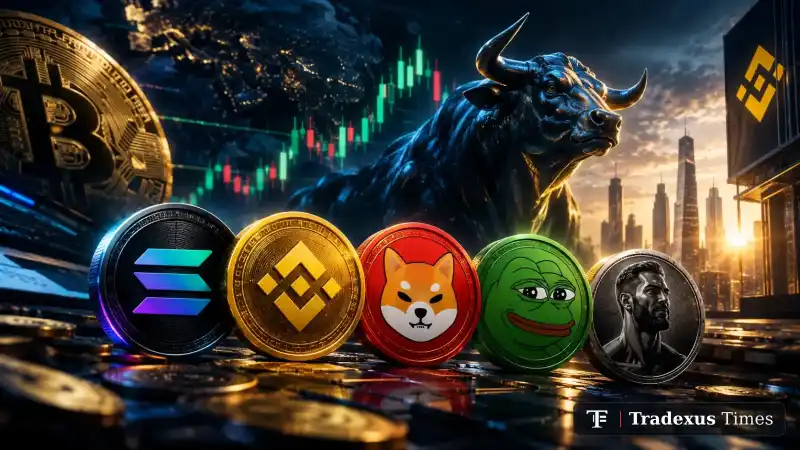
The possibility of an altcoin supercycle in 2026 is drawing attention to Solana (SOL), BNB, Shiba Inu (SHIB), Pepe (PEPE) and Gigachad (GIGA), as market participants assess whether demand could broaden beyond Bitcoin. A sustained rally would likely require more than isolated token price gains, with expanding trading volume, stronger liquidity and wider participation across the altcoin market serving as more meaningful signs of a potential trend.
The outlook remains conditional. A stable Bitcoin market, improving liquidity and stronger investor confidence could encourage capital to move toward alternative cryptocurrencies. However, the available indicators would need to show sustained improvement before a prolonged altcoin rally could be distinguished from a temporary speculative rebound.
In this story
5 assets




Bitcoin dominance is one factor to watch because it helps illustrate how Bitcoin's share of the broader cryptocurrency market changes relative to other digital assets. A sustained decline alongside rising altcoin market capitalization and stronger trading activity could indicate that market participation is broadening. A decline in Bitcoin dominance alone, however, would not establish that an altcoin supercycle is underway.
Solana and BNB have market drivers connected to their respective blockchain ecosystems. Solana supports decentralized applications, decentralized finance platforms, NFT marketplaces and transaction activity. Greater use of its network could strengthen demand for SOL, although competition from other blockchains and network reliability remain relevant considerations. Network adoption does not automatically translate into sustained token-price appreciation.
BNB is tied to the BNB Chain ecosystem and is used for transaction fees and other network activities. Greater adoption of blockchain applications could support interest in the token by increasing activity across its ecosystem. Regulatory developments, competition between networks and broader cryptocurrency market conditions could nevertheless influence its performance. For both SOL and BNB, the strength and persistence of ecosystem activity would be more informative than a short-lived price increase alone.
Shiba Inu, Pepe and Gigachad have a different set of market drivers, with community engagement, speculative demand and liquidity playing important roles. SHIB has developed beyond its meme-coin origins to include an ecosystem featuring the Shibarium layer-two network. Its longer-term prospects may depend partly on whether ecosystem activity and token demand can extend beyond community attention and speculative trading.
PEPE and GIGA are more directly exposed to changes in sentiment toward meme coins and other speculative digital assets. A broader appetite for risk could increase trading interest in these tokens, but that demand may be difficult to sustain. Thin or deteriorating liquidity can amplify price movements in either direction, while profit-taking can reverse gains quickly. For GIGA in particular, verifying the correct token contract and available liquidity is important before any transaction, as similarly named assets can create confusion.
The distinction between network-linked tokens and meme coins matters when evaluating a possible market-wide rally. SOL and BNB have identifiable uses within blockchain ecosystems, while SHIB, PEPE and GIGA are more sensitive to community momentum and speculative positioning. These differences do not guarantee that infrastructure-related tokens will outperform meme coins. Instead, they suggest that a broad altcoin rally could produce uneven results across assets, depending on the source and durability of demand.
A sustained recovery would also require evidence that strength is spreading across a wider selection of altcoins rather than remaining concentrated in a handful of popular tokens. Rising aggregate altcoin market capitalization, improving trading volume and stronger liquidity, considered alongside Bitcoin dominance, could help distinguish broad participation from isolated speculative moves. Social-media attention may contribute to short-term demand, but it is a less reliable indicator of the durability of a market-wide advance.
The central question for 2026 is therefore not simply whether individual altcoins can rally, but whether market participation can expand and persist. If volume, liquidity and breadth improve together, the case for a more extended altcoin cycle would strengthen. If price gains remain narrow or depend primarily on speculative enthusiasm, the outlook would be less convincing.
Even under favorable conditions, a supercycle would not imply uniform gains across the market. Altcoins remain exposed to substantial volatility, and speculative tokens can experience sharp reversals. The next meaningful signal would be sustained improvement across several market indicators, supported by continued activity within individual blockchain ecosystems where relevant, rather than a short-lived rally or a surge in online attention.