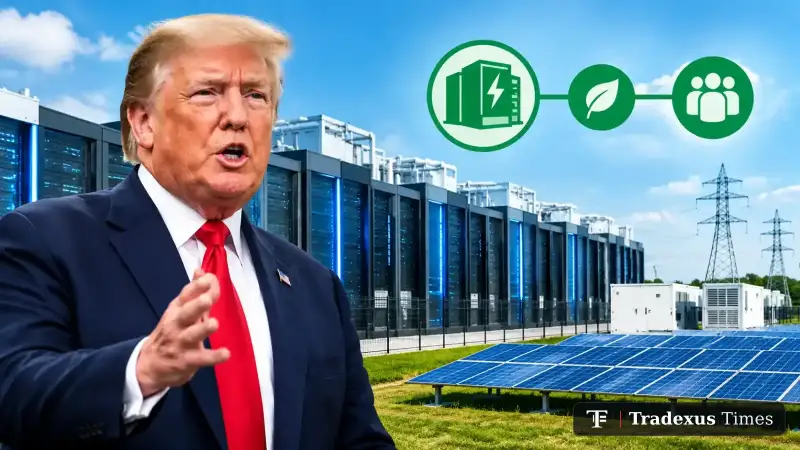
U.S. President Donald Trump has called on new large-scale data centers to generate the electricity they need, arguing that technology companies should shoulder more of the energy burden associated with expanding digital infrastructure while helping protect consumers from rising power costs.
Trump said large data centers should produce their own electricity and supply any surplus to the wider power grid or local communities. The approach is intended to prevent the rapid expansion of energy-intensive computing facilities from driving up electricity bills for American households, while potentially creating conditions for lower power prices.

The proposal comes as demand for electricity from data centers continues to attract attention amid the growth of artificial intelligence, cloud computing and other energy-intensive technologies. Large facilities require substantial and reliable power supplies, creating challenges for electricity networks and communities hosting new developments.
Trump also urged technology companies to share some of the financial benefits generated by data center projects with residents in surrounding areas. He suggested that companies could provide direct payments or cash distributions to local people to help build public support for new facilities.
According to Trump, previous experience has shown that data center projects initially opposed by residents have gained greater acceptance after companies reached financial agreements with host communities. He encouraged technology firms to pursue similar arrangements to ease local opposition and accelerate construction.
The proposal highlights two issues facing the data center industry: securing enough electricity to support growth and addressing concerns among communities affected by new infrastructure. Requiring facilities to generate their own power could reduce some pressure on public electricity systems, although the actual effect would depend on how projects are financed, connected to the grid and operated.
Supplying surplus electricity to local communities could also offer potential benefits, but the extent of any reduction in household bills would depend on generation costs, grid infrastructure and the terms of agreements with electricity providers. Direct payments to residents could help companies gain local support, though they would not necessarily resolve broader concerns over land use, water consumption, emissions or long-term energy demand.
Trump’s remarks signal support for a model in which major technology companies take greater responsibility for the energy requirements and local impact of their infrastructure investments. Whether the approach becomes a formal policy, and how it would be implemented, remains to be established.