Tesla’s third-quarter earnings report arrives at a pivotal moment for the electric vehicle maker, with investors looking beyond delivery numbers to assess profitability, cash generation and the financial demands of its expanding artificial intelligence ambitions. Results are due after the market closes on Wednesday, October 21, and could help clarify whether the company’s growing investment program is putting additional pressure on its near-term financial performance.
The latest company-compiled analyst estimates put third-quarter revenue at an average of $28.34 billion, while adjusted earnings per share are projected at $0.45. Operating cash flow is estimated at approximately $3.27 billion, but capital expenditure is expected to reach $7.77 billion, leaving free cash flow at an estimated negative $4.51 billion. These figures put the balance between current operations and long-term investment at the center of the earnings debate.
Tesla has already reported 486,532 vehicle deliveries for the quarter, alongside 13.7 gigawatt-hours of energy storage deployments. Vehicle deliveries exceeded the earlier consensus estimate of 461,974, but the energy storage figure fell below the average analyst expectation of 15.9 GWh. The mixed operational picture means investors will need to examine the full financial results rather than treat stronger-than-expected vehicle deliveries as a guarantee of improved profitability.
Regional demand remains an important part of the outlook. The US market is facing pressure following the expiration of the federal electric vehicle tax credit, while Tesla’s operations in China and Europe have shown differing trends. In China, September wholesale volume at the Shanghai operation reached 95,366 vehicles, with exports rising even as domestic sales declined. In Europe, registrations across the EU, UK and EFTA were reported to have increased during the first eight months of the year. These contrasting developments make pricing, regional demand and the composition of sales important factors to watch when Tesla reports its margins.
The company’s spending plans represent a much larger financial commitment than in the previous year. Tesla has indicated that capital expenditure could exceed $25 billion in 2026, compared with roughly $8.5 billion last year. The investment is directed toward AI computing, Optimus humanoid robots, Cybercab production and the Terafab chip initiative being developed with SpaceX. The scale of this expansion could weigh on near-term cash generation, even if management views the projects as essential to Tesla’s long-term strategy.
Chief Executive Elon Musk has argued that Optimus and Cybercab will account for the vast majority of Tesla’s future value. That ambition places greater importance on execution: investors will want to understand how quickly these programs can move from development and infrastructure spending toward scalable commercial operations. The earnings update may offer more detail on the company’s priorities, although the long-term financial contribution of these initiatives remains uncertain.
Cybercab is also facing a regulatory hurdle. After commercial service began in Austin in September, US vehicle safety regulators sought additional information about Tesla’s self-certification of the vehicle, which lacks a traditional steering wheel and pedals. Tesla was given until October 30 to respond to the agency’s requests. The outcome could affect the pace at which the company expands this part of its autonomous-driving strategy, making regulatory progress an important development alongside the financial results.
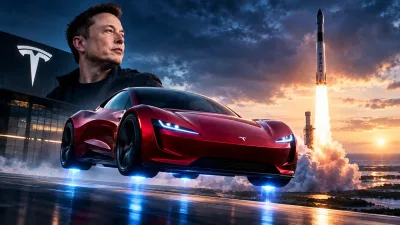
Tesla has also presented its next-generation Roadster, demonstrating a design that incorporates compressed-gas thrusters developed with SpaceX and claiming a 0-to-60-mph time of 0.81 seconds during the event. Musk has said production is planned for 2028. While the unveiling reinforces Tesla’s emphasis on engineering and performance, the vehicle’s eventual production timeline and commercial contribution remain future considerations rather than immediate drivers of quarterly earnings.
Meanwhile, speculation about a possible Tesla–SpaceX combination has resurfaced ahead of the companies’ reporting dates and Tesla’s expected annual meeting in December. One proposed scenario discussed by market participants involves an all-stock transaction in which SpaceX would acquire Tesla. However, no confirmed deal is established by the information available, and the possibility should be treated as speculation rather than a corporate announcement. Musk previously indicated that a potential transaction would not be an appropriate subject for discussion during an earnings call.
For investors, Wednesday’s report is likely to turn on three central questions: whether margins are stabilizing, how quickly capital spending is translating into operating progress, and how much financial flexibility Tesla retains while funding its AI and autonomous-driving ambitions. Better-than-expected deliveries have provided a constructive starting point, but the projected cash outflow underscores the pressure facing the company. The figures and guidance management provides will be crucial in determining whether the market views Tesla’s investment strategy as a credible foundation for future growth or an increasingly expensive commitment with returns still to be demonstrated.