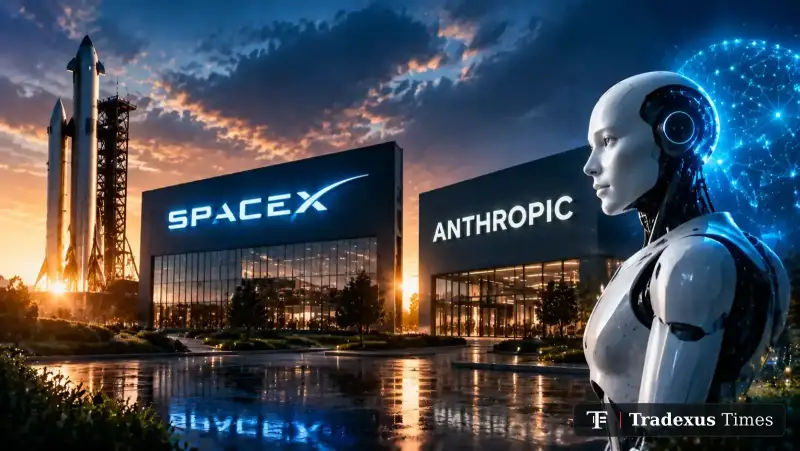
SpaceX CEO Elon Musk and artificial intelligence company Anthropic have outlined plans to direct portions of their companies’ equity toward public benefit, as concerns mount over AI-driven job displacement and the distribution of wealth generated by advanced technology. The proposals take different approaches: Anthropic plans to allocate 5% of its shares to a new public-benefit fund, subject to shareholder approval, while Musk says he intends to give SpaceX shares directly to every child in the United States next year.
Anthropic’s proposed Public Benefit Fund would be structured as a company-owned limited liability company rather than a conventional nonprofit. The company says this structure would allow the fund to support nonprofit organizations or distribute money directly to specific populations. It has also stated that the fund would not finance lobbying or political donations. However, its governance arrangements have not yet been fully outlined, leaving questions about how recipients would be selected and how the fund’s impact would be assessed.

The proposed allocation builds on Anthropic’s earlier commitments. Including pledges from founders and employees, the company says approximately one-fifth of its stock is intended for public benefit, with the possibility of additional contributions if certain valuation targets are reached. Anthropic has already set aside $200 million to study AI’s effects on workers, but it argues that the scale of technological progress may require more substantial responses. The company has not yet specified how its new fund would address potential job losses or which populations would receive support.
Musk responded by advocating direct ownership rather than channeling equity through a dedicated fund. He subsequently said he plans to distribute SpaceX shares to every American child next year, describing the proposal as the beginning of a broader effort. Based on the figures provided, the United States has approximately 73 million children, while SpaceX shares closed at $147.96. The estimated value of a distribution of roughly $11 billion illustrates the potential scale of the pledge, although Musk has not explained the eligibility rules, distribution mechanism, or number of shares each child would receive.
The difference between the two approaches highlights an important question about how technology-generated wealth should be redistributed. Anthropic’s model would give a dedicated fund discretion to support organizations and selected populations, potentially allowing resources to be directed toward specific social challenges. Musk’s proposed model emphasizes direct ownership, which could give recipients a financial stake in a company benefiting from technological development. Yet the practical outcomes would depend on the final arrangements, including how assets are allocated, managed, and made accessible to beneficiaries.
The proposals also arrive amid growing public concern about AI’s economic consequences. A survey cited in the supplied material found that 71% of U.S. adults expected AI to result in fewer jobs over the following two decades, compared with 64% in 2024. Only 5% anticipated an increase in employment. These figures point to a widening concern that productivity gains and corporate valuations may not translate automatically into broadly shared economic benefits.
There are precedents for directing corporate wealth toward public objectives. Mark Zuckerberg and Priscilla Chan pledged a substantial portion of their Facebook holdings to the Chan Zuckerberg Initiative in 2015, while Google established Google.org in 2005 to support its philanthropic objectives through commitments involving profits and equity. More recently, SpaceX President and Chief Operating Officer Gwynne Shotwell pledged more than $320 million in SpaceX stock toward children’s Trump Accounts, while Michael and Susan Dell announced a $6.25 billion contribution intended to seed accounts for 25 million eligible children. These initiatives demonstrate different ways corporate wealth can be directed toward social or financial support, although their structures and eligibility conditions vary.
For Anthropic and SpaceX, the next challenge is translating public commitments into workable programs. Anthropic still needs shareholder approval and a clearer governance framework for its fund. Musk has yet to disclose the operational details of his proposed distribution. Until those arrangements are established, the announcements represent intentions rather than completed transfers of wealth. Their eventual significance will depend on how much value reaches beneficiaries, how effectively the programs address their stated objectives, and whether other technology companies adopt similar approaches as AI reshapes employment and economic opportunity.