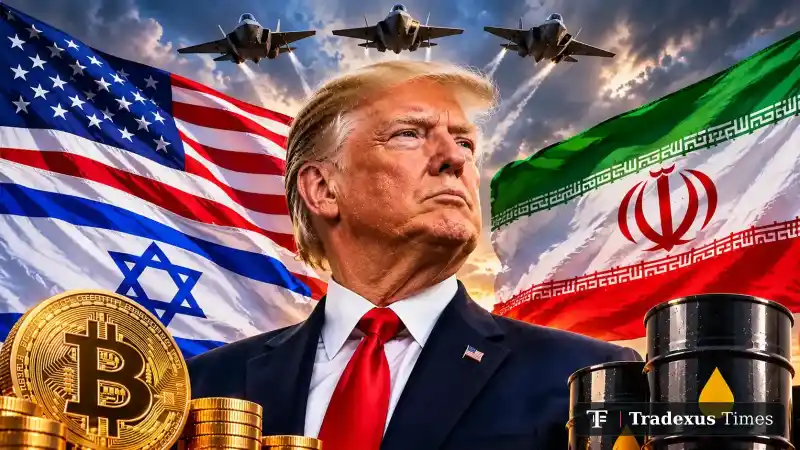
Is Trump Planning a Nuclear Strike on Iran After the Midterm Elections? Tehran Threatens to Target Israel With Chemical Weapons

As the U.S. midterm elections unfold, reports of possible post-election strikes on Iran contrast with Trump's latest comments favoring a potential deal. Tehran warns of severe retaliation, but a nuclear strike remains unconfirmed.

Jordan Foster
By Global News Correspondent 3 min read
Summarize this story3 key points · 25-second readThe key points in 25 seconds
  • U.S. forces carried out limited strikes against Iranian targets near Qeshm Island and the Strait of Hormuz on November 2, described as defensive actions.
  • President Trump publicly said he is not considering a strike on Iran after the midterm elections and suggested a negotiated agreement could be possible.
  • Iran warned it would retaliate severely if nuclear weapons were used against it, though no verified plan for chemical or nuclear retaliation has been identified.

Why it matters: These developments affect the risk of further U.S.-Iran conflict, potential regional escalation, and global economic impacts such as oil price volatility.

Summary written with AI and checked by Tradexus editors.

Is Trump Planning a Nuclear Strike on Iran After the Midterm Elections? Tehran Threatens to Target Israel With Chemical Weapons
BTC$76,640.00▼ 0.30%24h

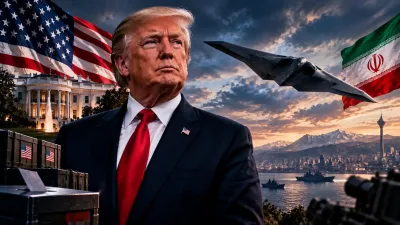
As Americans head to the polls in the November 3 midterm elections, attention is turning to what the Trump administration may decide once voting ends. The possibility of renewed U.S. military action against Iran remains a major concern, particularly after reports that Washington and Israel have been discussing further strikes against Iranian targets in the days following the election.

The situation has become more complicated after reports that U.S. forces carried out limited strikes against Iranian targets around Qeshm Island and the Strait of Hormuz on Monday, November 2. U.S. officials described the operations as defensive actions targeting Iranian military capabilities. These strikes, however, do not necessarily indicate that Washington has decided to launch a broader military campaign after the elections.

Reports published in recent days have suggested that American and Israeli military planners have prepared options for renewed operations against Iran after November 3. Israeli officials have reportedly pushed for another wave of attacks, potentially targeting military facilities, energy infrastructure and nuclear-related sites. The final decision on any joint operation would rest with Trump.

However, the president's latest public comments have introduced uncertainty. On Monday, Trump was asked directly whether he was considering striking Iran after the midterm elections and answered, "No." He also said that a negotiated agreement with Tehran could be possible. Vice President JD Vance similarly indicated that diplomatic discussions had made progress. These statements contrast with reports about military preparations and suggest that the administration has not publicly committed to a new offensive.

The possibility of a nuclear strike has also attracted attention, particularly after media discussions about potential targets deep inside Iran. Nevertheless, there is no verified evidence that Trump has approved or is preparing to use nuclear weapons against Iran. A conventional attack on nuclear facilities and the use of a nuclear weapon are fundamentally different scenarios and should not be treated as interchangeable.

Iran has responded with warnings of severe retaliation. On November 3, Deputy Foreign Minister Kazem Gharibabadi said that if nuclear weapons were used against Iran, Tehran would not limit its response to diplomatic or legal measures. He also warned that such an action could undermine the international nuclear non-proliferation framework and trigger consequences extending well beyond the Middle East.

Meanwhile, Ebrahim Azizi, head of the Iranian parliament's National Security and Foreign Policy Committee, warned that Israel could become uninhabitable in less than an hour if Iran's national security or interests were attacked. His statement, published in late October, included a map highlighting strategic Israeli infrastructure, including power plants, desalination facilities, refineries and transportation networks.

Although this warning has generated speculation about possible chemical weapons use against Israel, Azizi's reported statement did not explicitly identify chemical weapons as the means of retaliation. No independently verified official declaration establishing a specific Iranian plan to use chemical weapons against Israel has been identified. The distinction matters because the possibility of chemical or nuclear escalation carries consequences far beyond conventional military confrontation.

The coming hours and days could therefore become an important period for U.S.-Iran relations. If Washington authorizes further attacks, Iran could retaliate against Israeli territory, American military positions and strategic infrastructure across the region. Such a cycle of escalation could also threaten shipping through the Strait of Hormuz, disrupt energy supplies and push oil prices higher, adding pressure to an already sensitive global economy.

For now, the central question is whether Trump will pursue a diplomatic agreement or approve additional military operations after the midterm elections. Reports of military planning and pressure from Israel point to the possibility of further confrontation, while Trump's latest public remarks suggest that negotiations remain an option. The possibility of a nuclear strike remains unconfirmed, and no decision to launch a broader post-election offensive has been publicly established.
Share
Newsletter

Get the Tradexus Briefing

The day’s most important crypto stories in one short email, once a day. Free — unsubscribe any time.

Jordan Foster
About the authorJordan FosterGlobal News Correspondent

Global news journalist covering financial markets, cryptocurrency, business, technology, and world affairs. Delivering timely updates, breaking news, and clear reporting on major global developments.

Breaking
The Desk

Live market intelligence snapshot

Crypto · trading 24/7 US stocks · closed
BitcoinBTC
Open profile
$77,834.01+1.27% 24h7d −4.57%
Low $76.4k$78.1k High
EthereumETH
Open profile
$2,293.25+1.52% 24h7d −3.41%
Low $2,241.15$2,309.00 High
Fear & Greed
34
Fear
Yesterday 26 · Fear
Total market cap
$2.60T−2.71%24h
24h volume
$63.92B−5.61%vs yesterday
Market shareBTC dominance
59.3%
BTC 59.3%ETH 10.6%Others 30.1%
Top 100 coins today
67 up31 down

Latest News

Updated 6h ago
Showing 0 of 0 stories

Market Movers

Live 24H changes
Top Gainers
Top Losers

Live Markets

Top 100 by market cap · prices update live
Watchlist Last 7 days

My Watchlist

Crypto and stocks you follow, live
Breaking-news notificationsGet a notification on this device whenever we publish breaking news, even with the site closed.

My Portfolio

Holdings you add by hand · no wallet connection

Compare Assets

Side-by-side, live data
Coins compared side by side: price, market cap, 24-hour volume, 24-hour range, distance from the all-time high and fully diluted value. The strongest value in each row is marked Leader.
Up to 3 coins, head to head

Pick any coin from the market list. The strongest value in each row is marked so you can read the winner at a glance.

Leader in the rowOthers, to scale
Add a coin
Add a coin
Add a coin
Live from Tradexus Data · prices in USD · Live · USDupdated just nowFull market table →Brightest bar = leader
Quick Convert
Macro

Economic Calendar

Date Country Event Impact Forecast Previous
Loading calendar…
Desk Research

Technical Analysis

Updated Daily

Correlation Matrix

How closely the largest coins move together

Each square compares two coins' hourly price moves. Near 1, they rise and fall together; near 0, they move independently.

Loading market data…

Sentiment Pulse

Derived from recent Tradexus Times coverage

—
—
0%
0%
0%
Bullish 0 Neutral 0 Bearish 0
Story by storyTap a block to read
NewestOldest

Community Predictions

Daily price calls from our readers
Media & Learning

Education

@tradexustimes
Tradexus Times video
The Desk Behind The Desk

Our Team

Analysts, Editors & Quantitative Researchers
Tradexus TimesStaff · 01

Dr. 3A

Chief Market Strategist

Specializing in macro-economic trends, institutional flows, and derivatives market structure.

Tradexus TimesStaff · 02

Jason Garrity

Head of On-Chain Research

Expert in smart contract auditing, DeFi liquidity analytics, and Layer-2 scaling solutions.

Tradexus TimesStaff · 03

Daniel Vance

Senior Technical Analyst

Focuses on order flow dynamics, price action models, and algorithmic trading strategies.

Tradexus TimesStaff · 04

Elena Novak

Managing Editor

Oversees editorial integrity, investigative journalism, and policy impact reporting.