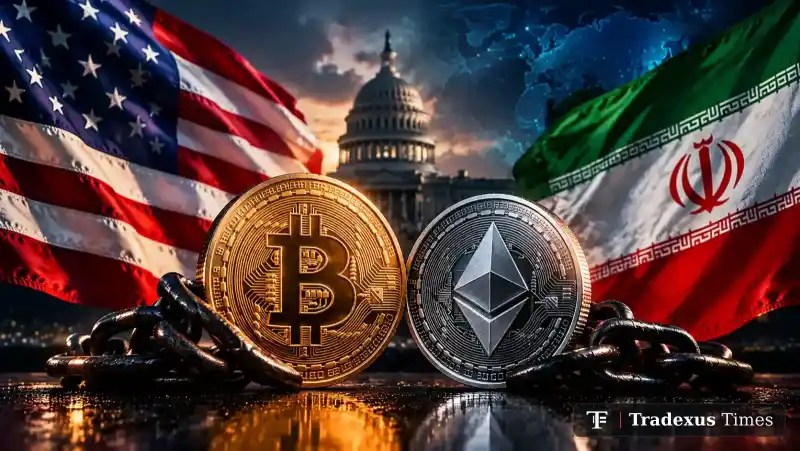
U.S. Treasury Secretary Scott Bessent has stated that Washington could seize approximately $1 billion in Iranian cryptocurrency assets, intensifying financial pressure on Iran and highlighting the growing role of digital assets in sanctions enforcement. The reported move reflects broader U.S. efforts to restrict financial networks allegedly used by Iranian entities to circumvent international sanctions.
Enforcement actions targeting Iranian-linked cryptocurrency activity could extend beyond individual wallet seizures to include exchanges, custodians and other financial intermediaries. Authorities can use blockchain analytics to trace transactions and identify wallets associated with sanctioned entities, while regulatory measures may compel centralized service providers to restrict access to designated accounts and funds.

The direct impact on cryptocurrency prices will depend largely on what happens to the seized assets. If the funds are frozen or held by authorities, the action would not automatically create additional selling pressure in the market. However, if confiscated Bitcoin or other liquid digital assets are subsequently sold, those transactions could introduce additional supply. The timing and scale of any potential sales remain critical variables in assessing the market impact.
The broader implications could include increased compliance scrutiny across the digital-asset industry. Exchanges, stablecoin issuers and custodial platforms may strengthen wallet screening and transaction monitoring to reduce their exposure to sanctioned entities. Such measures could affect access to certain services and increase compliance costs, although they would not necessarily disrupt the underlying operation of decentralized blockchain networks.
Bitcoin and centralized stablecoins also face different enforcement mechanisms. Bitcoin has no central issuer capable of freezing individual addresses, although authorities can seize private keys or restrict access through custodians and exchanges. Centralized stablecoin issuers, by contrast, may be able to freeze tokens at designated addresses under applicable legal or compliance procedures.
Market sentiment represents another potential transmission channel. An escalation in U.S.-Iran tensions could increase uncertainty across financial markets and weigh on risk-sensitive assets, including cryptocurrencies. However, the direction and magnitude of any price reaction would depend on broader market conditions, liquidity and investor positioning rather than the seizure announcement alone.
Investors will be watching for further sanctions, restrictions on crypto-related intermediaries and clarification regarding the disposition of confiscated assets. Whether the funds remain inaccessible or eventually enter the market will be particularly important in determining the potential supply-side implications.
The situation underscores how cryptocurrency enforcement is becoming an increasingly significant component of international financial sanctions. While restricting Iranian-linked assets could limit the financial options available to targeted entities, the consequences for the broader crypto market will depend on the scale of enforcement, the treatment of seized funds and the resulting effects on investor confidence.