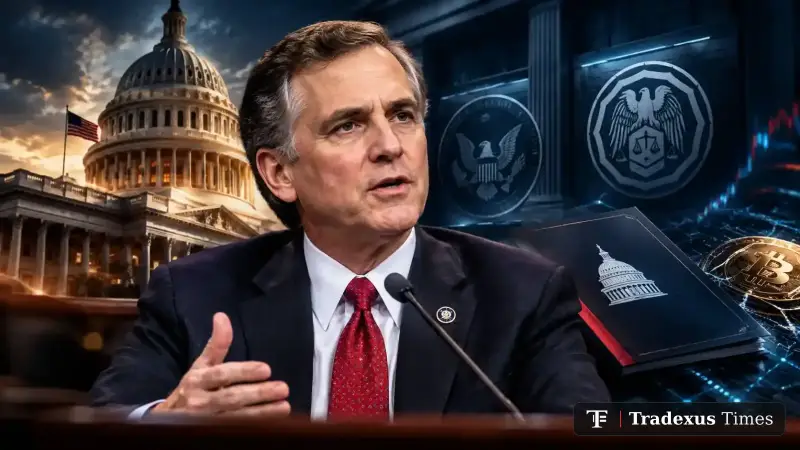
French Hill, Chairman of the House Financial Services Committee, said regulatory actions by the SEC and CFTC do not provide a sufficient substitute for legislation, strengthening his case for the CLARITY Act as Congress considers a path toward a broader crypto market structure framework.
Speaking to Fox Business, Hill credited SEC Chairman Paul Atkins and CFTC Chairman Michael Selig for using their exemptive powers to provide greater definition around digital assets and digital commodities. However, Hill argued that agency policies remain insufficient because future regulators could revise them, while changing federal law generally requires further congressional action.

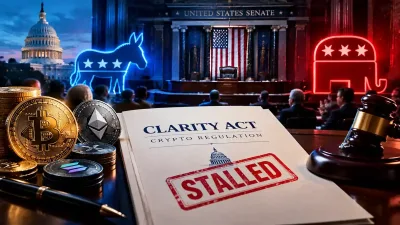
The distinction is particularly relevant as the CLARITY Act remains stalled in the Senate. With legislative progress limited, agencies have continued developing crypto-related policies, including SEC action on tokenized stocks and custody conditions for certain investment advisers and funds, while the CFTC has advanced proposals for regulating crypto markets and considered a broader role in overseeing crypto exchanges.
The SEC's March 17 interpretation identified five asset classes, while an August proposal included exemption thresholds of $5 million and $75 million. A conditional exemption for tokenized stock trading took effect on September 17, illustrating how parts of the emerging framework are being established through regulatory action rather than congressional legislation.
The agencies are also operating with significant vacancies. Seven commissioner positions remain open across the SEC and CFTC, while the CFTC currently has Selig as its only sitting commissioner and the SEC is operating with Atkins and Mark Uyeda following Hester Peirce's resignation.
Hill is looking toward the lame-duck period between the midterm elections and January as a potential opportunity to advance the CLARITY Act. However, the Senate has 22 planned session days during that period, none specifically allocated to cryptocurrency, leaving a narrow window for lawmakers to reach an agreement.
The legislation faces a substantial procedural hurdle after a September Senate vote on cloture produced a 49-50 result. Because 60 votes were required to advance consideration, supporters fell 11 votes short. Senator Thom Tillis voted against the motion to preserve the ability to seek reconsideration and potentially bring the measure back for another vote.
The House previously passed H.R. 3633 in July 2025 by 294-134, with 78 Democrats joining Republicans. That bipartisan House vote contrasts with the unresolved negotiations in the Senate, where ethics provisions remain one of the central disagreements.
Democratic negotiators have argued that ethics safeguards must extend to the president, future presidents and Congress. Republicans, meanwhile, said their September 14 draft incorporated 126 Democratic requests, including ethics provisions, a role for state attorneys general in enforcement and Treasury authority concerning deposits moving into stablecoins.
Other unresolved issues include consumer protection, illicit finance and stablecoin rewards. Former Democratic congressman Tim Ryan said on September 24 that a lame-duck agreement remained possible if both parties returned to negotiations and made concessions.
For crypto markets and businesses, the central issue is therefore not only whether regulators can provide near-term clarity, but whether those rules can deliver a durable framework. Hill's argument suggests that the market may continue watching the Senate negotiations and the limited lame-duck window for evidence that agency-level rules can ultimately be replaced or reinforced by legislation.