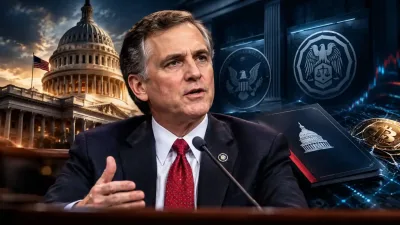
Former U.S. Securities and Exchange Commission (SEC) Chair Jay Clayton is reportedly being considered for a role overseeing the Trump administration’s artificial intelligence agenda, potentially placing a former crypto regulator at the center of another rapidly evolving technology sector. His possible appointment comes with a regulatory record that includes some of the SEC’s earliest major enforcement actions against the digital-asset industry.
The prospective role appears focused on artificial intelligence rather than cryptocurrency. Clayton would potentially oversee the administration’s AI Force as policymakers navigate the expansion of the domestic AI industry and questions surrounding the safety of increasingly advanced systems. The precise responsibilities of the position remain unclear, and it is not known whether the role would involve any direct oversight of crypto-related policy.

The administration’s crypto and AI responsibilities have already diverged. David Sacks, who previously handled both areas as a White House technology czar, left his crypto role in March. Since then, the administration’s crypto initiatives have been led by adviser Patrick Witt, separating that work from the AI portfolio.
Clayton’s background in digital-asset regulation could nevertheless remain relevant to industry observers. During his tenure as SEC chair from 2017 to 2020, the agency stepped up enforcement involving initial coin offerings (ICOs), token sales and blockchain businesses. In 2017, Clayton established the SEC’s Cyber Unit to focus on emerging cyber-related threats and misconduct, including activity in the digital-asset market.
The most prominent case associated with Clayton’s final months at the SEC was the agency’s lawsuit against Ripple Labs in December 2020. The SEC alleged that Ripple had conducted an unregistered securities offering involving approximately $1.3 billion worth of XRP. The case became a defining legal dispute over how U.S. securities laws apply to digital assets, although subsequent developments unfolded under later SEC leadership.
By the time Clayton left the agency in 2020, the SEC had brought 57 cases involving digital assets, blockchain businesses and ICOs, according to the agency’s account of its enforcement record. The enforcement-first approach that later became a major point of conflict between the crypto industry and the SEC under Gary Gensler therefore had roots in the agency’s earlier regulatory strategy.
For the digital-asset sector, Clayton’s possible move into AI leadership would not necessarily signal a change in crypto policy. The immediate question is whether his potential appointment will remain confined to artificial intelligence or create any overlap with the administration’s broader technology agenda. Until the role’s mandate is clarified, his previous SEC record offers context for his regulatory background, but not a definitive indication of future crypto policy.