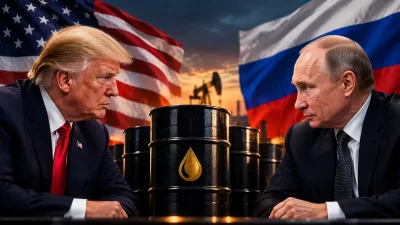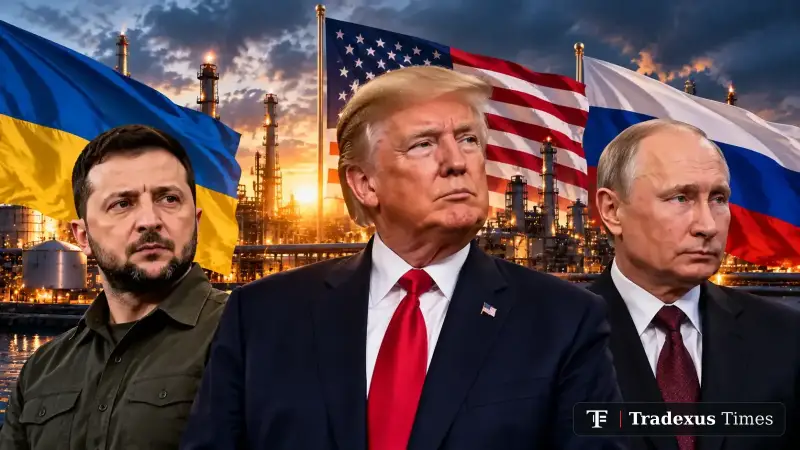
U.S. President Donald Trump has announced an energy ceasefire between Russia and Ukraine, claiming that both sides have agreed to suspend attacks targeting energy infrastructure. However, Ukrainian President Volodymyr Zelensky indicated that the announcement was unexpected, leaving questions about the agreement’s terms, timing and implementation.
In a statement published on Truth Social on Sunday, Trump declared that an energy ceasefire between the two countries was effective immediately and warned both sides against violating the arrangement. Zelensky, however, said he had not been informed of the announcement beforehand. He indicated that Ukraine would be prepared to accept an energy ceasefire if Russia agreed to the terms, and called for clarification on when the arrangement would begin.

The contrasting statements leave uncertainty over whether a formal agreement has been reached and whether both governments share the same understanding of its conditions. The announcement also marks another attempt to establish a pause in attacks affecting energy infrastructure, although the practical details and commitment of both sides remain unclear.
Financial markets have shown a limited immediate response to the announcement. Oil prices were reportedly little changed in early cryptocurrency-market trading, while traditional oil markets had yet to open. Bitcoin was trading just below $83,000, with broader cryptocurrency prices showing little movement. The subdued reaction suggests that traders may be waiting for clearer confirmation before adjusting their positions, although market conditions could change as further details emerge.
Energy infrastructure remains an important factor in the economic consequences of the Russia-Ukraine war. A credible reduction in attacks on energy facilities could ease concerns about supply disruptions and reduce some geopolitical risk premiums in energy markets. Conversely, uncertainty surrounding the announcement or renewed attacks could keep volatility elevated, particularly if energy supplies are threatened.
The political implications are also drawing attention as the United States approaches its midterm elections. Market-based election forecasts cited in the initial reports indicated increasing expectations of Democrats gaining control of both chambers of Congress. However, whether the ceasefire announcement will influence the political environment remains uncertain, and its significance will depend on subsequent developments rather than the announcement alone.
For investors, the key issue is whether the proposed energy ceasefire becomes a clearly defined and mutually acknowledged arrangement. Confirmation from both governments, details on its scope and evidence of reduced attacks would provide a stronger basis for assessing its potential impact on oil prices and broader financial markets.
Until those details emerge, the announcement remains an important geopolitical development, but its implications for energy markets, cryptocurrencies and U.S. politics are still uncertain.