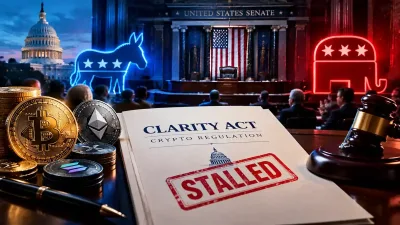
White House crypto adviser Patrick Witt defended President Donald Trump’s digital-asset interests after the U.S. Senate failed to advance the Digital Asset Market Clarity Act, arguing that Trump had accepted significant ethics restrictions during negotiations over the legislation. The Senate’s procedural vote fell short of the 60 votes required to advance the bill.
Speaking at a Financial Markets Quality conference at Georgetown University, Witt disputed accusations that Trump’s crypto ties contributed to the bill’s defeat. He argued that Democrats had turned the issue into a political dispute and pointed to what he described as similar questions involving lawmakers who hold financial-sector stocks while serving on committees overseeing those industries. These are Witt’s arguments, rather than an independent finding about the ethics issue.

Witt said the White House had agreed to two significant ethics concessions during the negotiations. According to his account, Trump was prepared to accept restrictions that could require him to divest certain crypto interests or place them in a blind trust. Witt also said the administration was willing to allow state attorneys general to pursue legal action related to federal ethics enforcement under specified circumstances.
The ethics provisions became a central obstacle in negotiations over the Clarity Act, even though the legislation’s core purpose was to establish a regulatory framework for digital-asset markets. Democratic lawmakers had argued that the bill needed stronger safeguards addressing potential conflicts involving Trump and other federal officials. The Senate ultimately failed to advance the legislation in its September vote.
The setback shifts near-term attention toward U.S. financial regulators. Witt said the Securities and Exchange Commission and Commodity Futures Trading Commission have regulatory work to pursue regardless of the legislation’s congressional status. He also indicated that the year-end “lame-duck” congressional session is not currently the primary focus, with the administration instead emphasizing regulatory action.
For the crypto market, the immediate significance is that comprehensive federal market-structure legislation remains unresolved after the Senate setback, while regulatory agencies continue to shape the rules governing digital assets. The next focus will be how the SEC and CFTC proceed and whether Congress revisits the Clarity Act after the November elections.