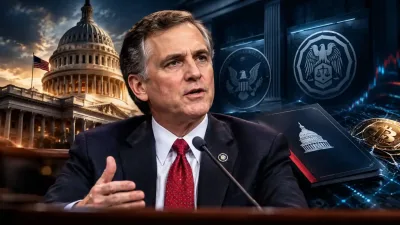
Kalshi is pushing back against concerns over recurring trade sizes that accounted for a significant portion of its trading volume, with Mansour attributing the activity to fixed-size orders placed by market makers. The explanation follows online speculation that unusual volume spikes, including activity associated with a Washington event, could indicate artificially inflated trading activity.
Mansour rejected the interpretation that concentrated trading patterns necessarily reflected volume manipulation. "Twitter went, like, 'Oh my God, there's a spike. There must be, you know, like inflation of volume or anything like that.' It's none of it," he said. His comments highlight the distinction between suspicious-looking trading patterns and legitimate market-making activity, which can produce repeated transaction sizes without necessarily indicating artificial volume.

Market makers provide liquidity by continuously submitting orders that allow other participants to enter and exit positions. When these participants operate with standardized order sizes, recurring trade amounts can become prominent in transaction data, particularly when their activity represents a substantial share of overall volume. Such patterns are not inherently evidence of manipulation, although identifying their underlying causes requires more than observing trade sizes alone.
The controversy raises a broader question about how trading activity should be interpreted in prediction markets. Reported volume measures the value of transactions executed, but does not independently establish the diversity of participants, the depth of available liquidity or the economic motivations behind individual trades. Consequently, unusually concentrated activity may warrant closer examination without necessarily supporting allegations of inflated volume.
Mansour argued that the public reaction reflected a wider misunderstanding of financial market structure. "Maybe the broader point about this is how much people misunderstand markets," he said. "They're just complicated. They're not easy to understand." His position suggests that conventional market-making practices can be misinterpreted when transaction-level data circulates without sufficient context.
The dispute comes as the Commodity Futures Trading Commission moves to strengthen its authority over prediction markets. The agency recently issued one rule and proposed another intended to bring event contracts explicitly within the regulatory definition of swaps. That classification would reinforce the CFTC's position as the federal regulator responsible for overseeing these instruments rather than leaving them subject to state gambling authorities.
The regulatory initiative carries important implications for Kalshi and the broader event-contract industry. Federal derivatives oversight and state gambling regulation represent different legal frameworks, creating uncertainty over which authorities can impose restrictions on particular contracts. A clearer federal classification could strengthen the industry's argument for centralized supervision, although it would not necessarily eliminate challenges under state law.
That distinction remains particularly relevant to sports-related prediction contracts. Another federal appeals court has ruled against Kalshi, finding that its sports contracts are subject to state regulations. The decision underscores the continuing legal conflict between the CFTC's efforts to establish federal jurisdiction and states seeking to enforce their own gambling requirements.
For prediction-market operators, the outcome could influence the regulatory conditions under which event contracts are offered. Stronger federal authority could provide a more consistent supervisory framework, while continued state-level restrictions could complicate market access and contract availability. Neither outcome can be assumed while the legal disputes and regulatory process remain unresolved.
The trading-volume debate also has implications for market transparency. If recurring order sizes primarily reflect legitimate liquidity provision, transaction patterns alone may offer an incomplete picture of market quality. Greater clarity around market-maker participation and trading concentration could help distinguish normal liquidity activity from behavior that warrants regulatory scrutiny.
The next developments to watch are the CFTC's progress in defining event contracts as swaps, the treatment of Kalshi's sports contracts under state law and whether additional trading data clarifies the disputed volume patterns. Together, these issues will help determine both the regulatory framework governing prediction markets and the level of confidence participants can place in reported trading activity.