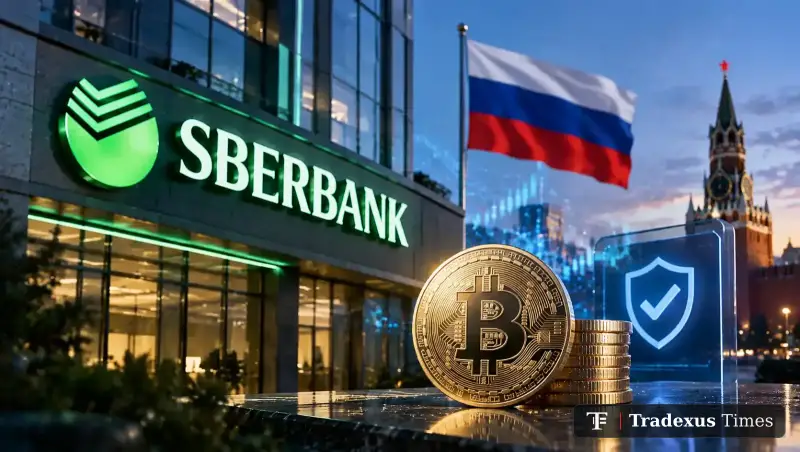
Russia’s largest bank, Sberbank, has received approval from the Bank of Russia to provide cryptocurrency exchange services, marking another step in Moscow’s effort to integrate digital assets into a regulated financial framework. The approval allows Sberbank to operate as a registered cryptocurrency exchange provider while expanding its role in Russia’s developing digital asset infrastructure.
According to Interfax, the Bank of Russia added Sberbank to its register of approved cryptocurrency exchange providers. The bank had previously entered the digital depository register, allowing it to participate in recording ownership and transfers of clients’ crypto assets.

The latest approval places Sberbank among a limited group of organizations authorized to operate within Russia’s regulated crypto market. The exchange register currently includes nine organizations, including major financial players such as VTB and T-Invest Lab.
The development reflects a significant shift in Russia’s approach to cryptocurrency regulation. While the Bank of Russia previously proposed restricting domestic crypto exchanges and preventing financial intermediaries from handling digital assets, the current framework has moved toward controlled market participation through regulated banks, brokers, exchanges, and digital depositories.
The two registrations provide different functions within this emerging structure. Registered crypto dealers are permitted to buy and sell digital assets using their own funds outside traditional organized exchanges, while digital depositories are responsible for recording ownership and asset transfers. Together, these capabilities create a foundation for institutions such as Sberbank to provide both trading and custody-related services.
Sberbank’s move also follows its earlier development of crypto infrastructure, including work on a digital asset wallet and testing support for major cryptocurrencies. The bank has reportedly been testing transactions involving assets such as Bitcoin, Ethereum, and USDT through its application, although the final list of permitted cryptocurrencies will be determined by the central bank.
The expansion of regulated crypto services comes with strict limitations. Cryptocurrency payments for domestic transactions remain prohibited, and future rules are expected to require crypto transactions to pass through registered intermediaries. This approach would give regulators greater oversight of digital asset activity while reducing the role of direct peer-to-peer transactions connected to Russian bank accounts.
Sberbank plans to introduce its first crypto-related products on December 1 through interfaces already used by its customers. The launch could represent one of the most significant moves by a major Russian financial institution into regulated digital asset services.
The key market implication is that Russia appears to be moving toward institutional control of cryptocurrency activity rather than full market prohibition. Sberbank’s entry could strengthen the role of traditional financial institutions in crypto trading and custody, while the scope of available assets and services will depend on future regulatory decisions.