Bitcoin
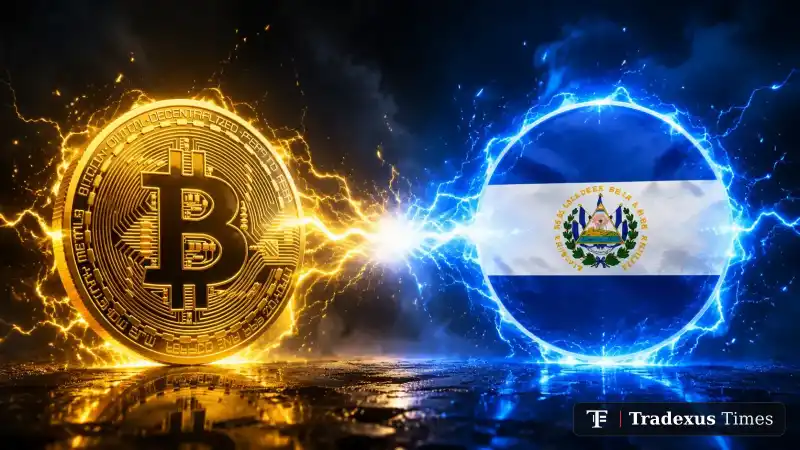
El Salvador's national bitcoin reserve has reached 7,762 BTC, with the government confirming another addition to its holdings as part of a policy of purchasing one bitcoin per day — a strategy that has continued without interruption since the country became the first nation to adopt bitcoin as legal tender in 2021.
The accumulation pace has been consistent. Between January and April alone, the government added more than 1,600 coins to its reserve, a rate that points to a deliberate, calendar-driven acquisition program rather than opportunistic market timing. At bitcoin's current price near $77,000, the full reserve carries a market value of approximately $598 million — placing El Salvador among the largest disclosed sovereign holders of the asset globally, behind only a small number of nations with substantially larger economies.
What makes the continued buying noteworthy is the context in which it has occurred. In early 2025, El Salvador secured a $1.4 billion financing agreement with the International Monetary Fund that explicitly called on the government to limit public-sector bitcoin purchases and make merchant acceptance of the asset voluntary. A legislative amendment tied to that same agreement rescinded bitcoin's formal legal-tender status — a significant rollback of the original 2021 framework. The reserve-building program, however, was not part of that rollback and has continued at the same daily cadence.
President Nayib Bukele has been direct about the reasoning. The government is not attempting to time market cycles or optimize around price levels. The one-bitcoin-per-day policy is structured as dollar-cost averaging applied at a national scale — a strategy that deliberately removes individual price points from the decision entirely. The underlying logic is that the coin count matters more than the valuation on any given day, and that the reserve's long-term worth depends on where bitcoin trades years from now rather than in the current session.
That framing is either its greatest strength or its most significant vulnerability, depending on the price trajectory that follows. At $77,000, the 7,762 BTC position carries a paper gain relative to earlier accumulation periods. A sustained decline would compress that figure without changing the daily purchase policy — which is precisely the commitment the strategy requires to function as designed.
The broader El Salvador bitcoin experiment extends beyond the reserve. The country built the Chivo wallet to encourage everyday bitcoin use among the general population, and it was the first sovereign nation to grant the asset legal-tender status. Both of those elements have since been scaled back — Chivo's rollout faced persistent operational difficulties, and the legal-tender designation was legislatively removed as part of the IMF arrangement. What survived the retreat is the reserve itself, which now represents the most durable institutional piece of the original strategy.
The diplomatic dimension remains unresolved. Critics point to the IMF friction as evidence that the approach carries a real cost in terms of international financial relationships, particularly for a small economy dependent on external financing. Supporters counter that a nation steadily accumulating a fixed-supply asset one unit at a time is a form of patient capital allocation that tends to look more defensible as the time horizon extends.
At the current pace, El Salvador's reserve will continue growing by one bitcoin per day regardless of where the price opens. The next addition is already scheduled.