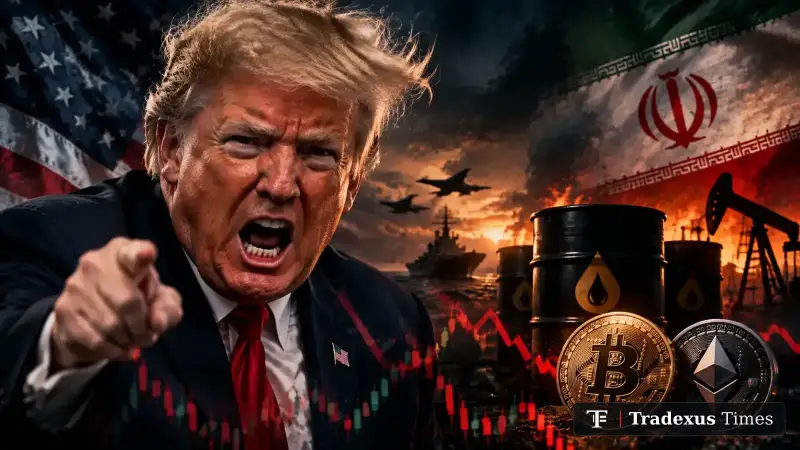
U.S. President Donald Trump’s latest comments on Iran have increased market attention toward rising geopolitical risks in the Middle East, with investors evaluating potential consequences for energy markets, inflation expectations, and risk-sensitive assets such as cryptocurrencies.
Trump said that the United States would no longer tolerate the current situation involving Iran, adding that markets should “wait and see” what actions could follow. He also described Iran as a “failed country,” escalating concerns over the possibility of further political and economic pressure on Tehran.

The remarks have placed renewed focus on the potential impact on global energy markets. Any increase in tensions involving Iran could raise concerns about oil supply stability, particularly given the importance of the Middle East in global energy flows. A higher geopolitical risk premium could support crude oil prices as traders assess the possibility of disruptions.
A sustained increase in oil prices could also influence broader financial markets by affecting inflation expectations. Higher energy costs may create additional challenges for central banks attempting to balance inflation control with economic growth, potentially influencing interest rate expectations.
For cryptocurrency markets, the impact is likely to come through changes in global risk sentiment. Rising geopolitical uncertainty can lead investors to reduce exposure to volatile assets, creating short-term pressure on Bitcoin and other digital assets. However, if markets view the situation as limited political rhetoric rather than an escalation, risk appetite could stabilize.
The relationship between energy prices, inflation, and monetary policy remains a key factor for crypto investors. A sharp rise in oil prices could strengthen inflation concerns and delay expectations for easier monetary conditions, while a calmer geopolitical environment could reduce pressure on risk assets.
Markets will now focus on whether these statements lead to concrete policy actions, how Iran responds, movements in crude oil prices, and whether broader financial markets interpret the situation as a temporary headline risk or a larger geopolitical development.