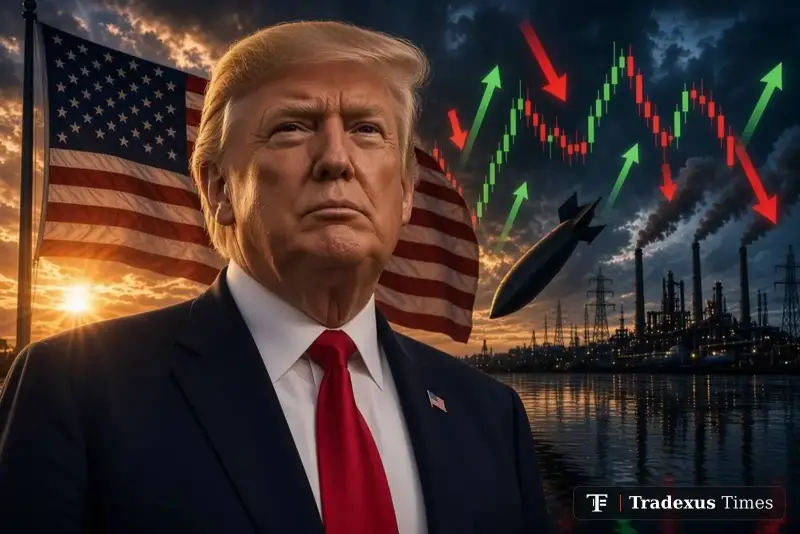
The United States is reportedly considering military strike plans involving the GBU-43/B, known as the “Mother of All Bombs,” against potential targets linked to Iran’s nuclear and energy infrastructure. The reported plans do not mean an attack has been authorized, but the possibility of renewed military action adds another layer of uncertainty to global markets. For cryptocurrency traders, the key question is whether escalating tensions will trigger a broader risk-off move, increase volatility, and put renewed pressure on Bitcoin and altcoins.
The potential market impact would largely depend on the scale of any military action and Iran’s response. If tensions escalate into direct strikes and retaliation, investors could move away from volatile assets toward traditional safe havens, potentially weighing on Bitcoin and the wider crypto market. A rapid sell-off could also trigger forced liquidations in leveraged positions, amplifying downside pressure across major cryptocurrencies and altcoins. However, Bitcoin’s reaction would not necessarily be one-directional, as some investors may also view it as an alternative asset during periods of geopolitical uncertainty.

Energy markets represent another important link between the conflict and cryptocurrency prices. Any threat to regional oil infrastructure or shipping routes could push energy prices higher, adding to inflation concerns and complicating the outlook for monetary policy. If rising energy costs increase expectations that interest rates will remain elevated for longer, financial conditions could tighten and reduce appetite for speculative assets. Under this scenario, crypto markets could face pressure from both geopolitical uncertainty and shifting expectations for Federal Reserve policy.
A more constructive scenario could emerge if the reported plans remain unexecuted and diplomatic channels prevent further escalation. Reduced geopolitical risk could ease demand for defensive positioning and allow traders to refocus on liquidity conditions, economic data, and developments within the crypto market. Bitcoin and major altcoins could recover if selling pressure fades, although any rebound would depend on broader market conditions and the extent of previous liquidations.
For now, the situation presents a potential volatility catalyst rather than a confirmed bearish signal. Traders may monitor developments surrounding U.S. military decisions, Iran’s potential response, oil-price movements, Bitcoin’s ability to hold key technical levels, and changes in derivatives positioning. A confirmed escalation could increase downside risks and trigger further liquidations, while signs of de-escalation could help stabilize sentiment. Until the situation becomes clearer, sharp price swings in both directions remain possible.