
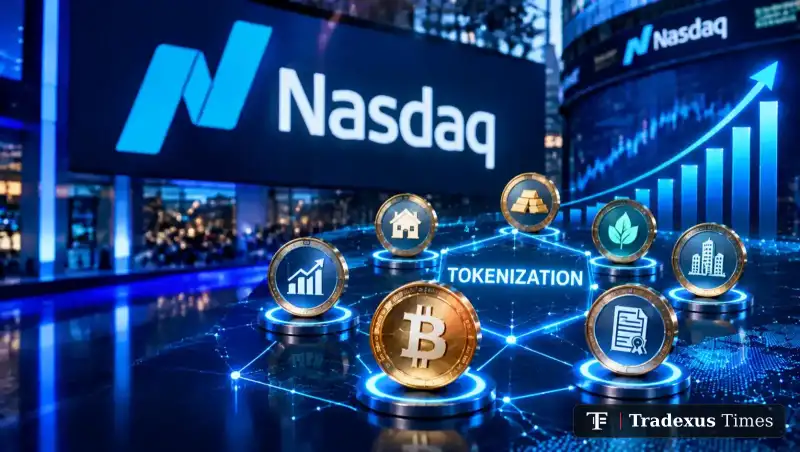
Nasdaq’s chief executive has said that tokenization of financial assets could unlock billions of dollars in market value, highlighting the exchange operator’s growing interest in blockchain-based financial infrastructure. The comments position Nasdaq among traditional market institutions exploring how digital asset technology could reshape financial markets.
Tokenization involves representing ownership of assets such as stocks, bonds, or fund shares as digital tokens recorded on a blockchain. Supporters argue that the technology could improve settlement efficiency, reduce operational costs, and allow assets to be transferred or used as collateral through more flexible digital systems.

Nasdaq’s involvement carries significance because of its role within global financial markets. The company operates major exchange infrastructure and provides technology solutions used by financial institutions, making its public support for tokenization a signal that blockchain-based systems are being evaluated beyond crypto-native companies.
The comments reflect a broader movement among traditional financial firms exploring tokenized versions of assets including money market funds, government securities, and private credit products. While several institutions have tested tokenized financial instruments, Nasdaq did not provide specific product details, launch timelines, or financial estimates connected to its own plans.
The potential impact of tokenization depends heavily on regulatory clarity and market adoption. Financial exchanges operate within strict compliance frameworks, meaning any future tokenized market infrastructure would need to align with existing securities regulations and investor protection standards.
For the digital asset sector, institutional support for tokenization represents one of the strongest links between blockchain technology and traditional finance. Unlike speculative crypto assets, tokenized securities are designed around existing financial instruments and could appeal to institutions seeking efficiency improvements without moving away from regulated markets.
If major exchange operators continue developing interest in tokenized infrastructure, companies focused on custody, settlement technology, and compliance solutions could benefit from increased demand. However, the immediate effect on cryptocurrency prices or trading activity remains uncertain, as Nasdaq’s comments did not include specific initiatives or measurable market commitments.
The key factor ahead will be whether institutional interest translates into real-world products and whether regulators provide frameworks that allow tokenized assets to scale within traditional financial systems.
 Solana
 Avalanche


 Chainlink


