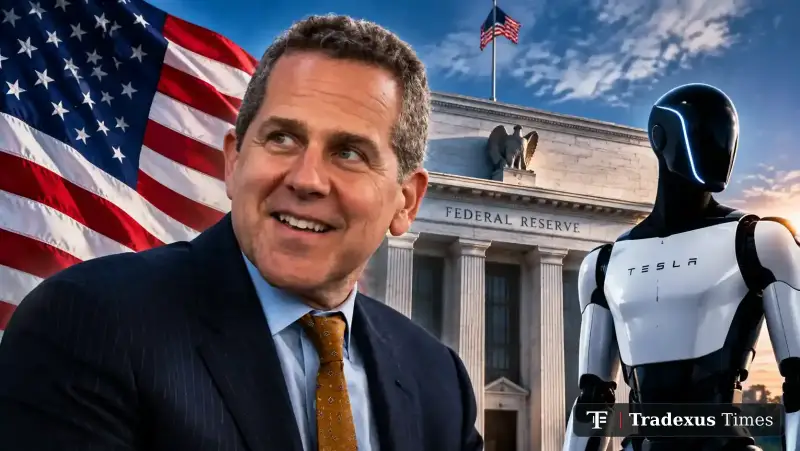
Federal Reserve Board member Michael Barr has warned that the path back to the central bank’s 2% inflation target remains uncertain, with the risk of inflation staying above target increasing. His remarks also highlighted the challenge facing monetary policymakers as they balance price stability, labor-market conditions and the growing economic impact of artificial intelligence.
Barr said inflation remains a central concern for the Federal Reserve and that the risk of missing its 2% target has increased. At the same time, he noted that risks to the labor market have eased, pointing to a changing balance between the Fed’s employment and inflation objectives. He said monetary policy may need to be recalibrated, with the baseline outlook suggesting further adjustments could be necessary in the coming period.

On the broader economy, Barr described the U.S. labor market as resilient, supported by business investment and consumer spending. He said the economy expanded by approximately 2% in the first half of the year and expects growth to recover slightly in the second half.
Artificial intelligence was another major focus of Barr’s remarks. He said investment in AI infrastructure and the resulting increase in demand are having a measurable effect on prices. At the same time, he expects AI-related activity to provide meaningful support to the U.S. economy over roughly the next year.
However, Barr cautioned that the productivity benefits of AI may take time to become widespread. While he considers a medium-term increase in productivity a reasonable expectation, he said the timing and channels through which those gains will materialize remain uncertain.
Barr also highlighted the possibility of short-term labor-market disruption as businesses adopt AI technologies. Although he expressed optimism about AI’s long-term productivity potential, he acknowledged that the transition could create significant challenges for workers.
The impact of AI on the neutral interest rate—the rate consistent with an economy operating sustainably without pushing inflation up or down—also remains unclear. Barr said it is too early to determine whether AI will raise that rate.
For markets, the combination of persistent inflation risks, potential monetary-policy adjustments and strong AI-related investment presents several factors to monitor. Investors will be watching incoming inflation and employment data, as well as evidence of whether AI spending is translating into broader productivity gains.