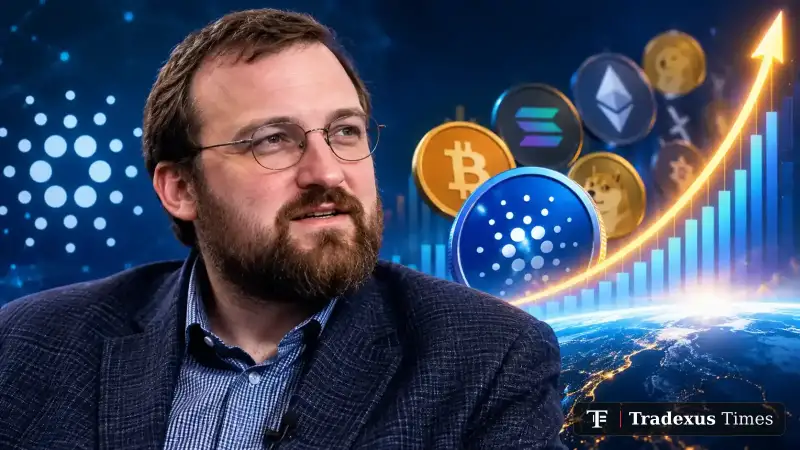
Cardano founder Charles Hoskinson says blockchain and cryptocurrency are approaching a new phase of technological expansion, arguing that the impact of exponential technologies is often difficult to measure during their early stages.
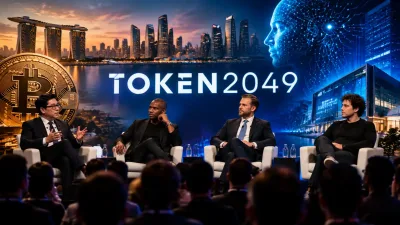
Speaking at the United Nations, Hoskinson compared the development of blockchain with previous technological shifts including nuclear technology, the internet and artificial intelligence. His central argument is that technologies following an exponential growth curve can appear relatively limited at first before adoption and efficiency begin accelerating their broader impact.

Hoskinson described exponential technologies as counterintuitive because small improvements can eventually produce disproportionately large changes. He used the evolution of communication as an example, contrasting the limitations imposed by physical distance with the near-instantaneous global connectivity enabled by the internet.
In his view, blockchain is now developing alongside another major technological shift: artificial intelligence. The combination could broaden access to increasingly sophisticated digital infrastructure while reducing some of the resource requirements associated with advanced technology.
Artificial intelligence was one of the areas Hoskinson highlighted as evidence of this progression. He pointed to improvements in model efficiency, arguing that increasingly capable AI systems are becoming less dependent on massive amounts of computing resources. That trend could make advanced intelligence more accessible across a wider range of users and applications.
Hoskinson described this shift as intelligence becoming increasingly “ubiquitous and universal,” suggesting that declining resource requirements could expand the number of environments in which AI can be deployed.
Blockchain's role, meanwhile, is increasingly extending beyond cryptocurrency markets into the representation and settlement of traditional financial assets. Hoskinson pointed to tokenization as an important example, with blockchain-based systems being used to represent assets including equities, currencies and real estate.
The tokenized equity market data he cited showed growth from approximately $600 million at the beginning of 2025 to around $3 billion. The increase reflects growing exploration of blockchain-based settlement and tokenized financial instruments, according to the figures referenced in his remarks.
For blockchain infrastructure, the significance of tokenization extends beyond the value of assets represented on-chain. Faster settlement and programmable digital ownership could potentially alter how financial assets move between participants, although the scale and durability of that transition will depend on continued adoption.
Hoskinson's broader argument is that early-stage measurements can underestimate the eventual impact of technologies operating on exponential curves. He illustrated the point with Germany's renewable-energy development, noting that renewables were once expected to account for no more than 4% of the country's electricity supply, while the figure reached 55.9% by 2025.
The comparison highlights the difficulty of projecting long-term adoption using only initial growth rates. For crypto and blockchain, the relevant question is therefore not simply how large current adoption is, but whether improving efficiency, broader accessibility and expanding use cases can accelerate adoption beyond early expectations.
Tokenization and AI provide two areas where that thesis is already being tested. The extent to which those developments translate into sustained blockchain adoption will depend on whether the technology can move from individual applications toward broader, economically meaningful use.