Bitcoin
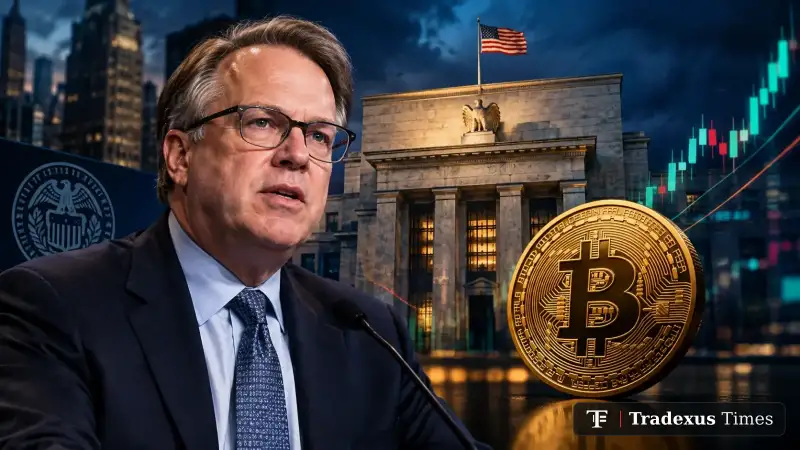
Bitcoin advanced toward $84,000 following comments from New York Federal Reserve President John Williams indicating that he does not anticipate interest rate increases in 2027. The remarks reinforced expectations of a prolonged period of monetary policy stability, providing support for risk-sensitive assets as investors assessed the potential implications for borrowing costs and financial conditions.
Williams holds a permanent voting seat on the Federal Open Market Committee (FOMC), making his assessment of the interest rate outlook particularly relevant to financial markets. His comments suggest that further monetary tightening may not be necessary in 2027 under his current expectations, although they do not constitute a formal policy commitment by the Federal Reserve.
For Bitcoin, the significance lies in how interest rate expectations influence investment decisions across asset classes. Stable or declining rates can reduce the relative attractiveness of interest-bearing instruments while improving the appeal of non-yielding assets such as Bitcoin. Expectations of contained borrowing costs may also encourage greater exposure to higher-risk investments, including cryptocurrencies and equities.
The market response highlights Bitcoin's sensitivity to changes in the anticipated direction of U.S. monetary policy. Rather than responding exclusively to developments within the digital-asset industry, Bitcoin increasingly reacts to macroeconomic signals that influence liquidity expectations, capital allocation and broader investor risk appetite. Williams' remarks provided a supportive policy signal, although the price advance alone does not establish how much of the buying was directly attributable to his comments.
Attention now shifts to upcoming U.S. inflation data, which could determine whether expectations of a patient Federal Reserve remain intact. Softer inflation readings would strengthen the case for keeping interest rates stable and could provide additional support for Bitcoin. Conversely, stronger-than-expected inflation could challenge the current policy outlook, increase uncertainty over future interest rates and introduce renewed volatility across digital assets.
The distinction between expectations for 2027 and the immediate policy outlook is important. Williams' assessment addresses a medium-term horizon rather than guaranteeing near-term rate cuts or an immediate easing of financial conditions. Bitcoin's ability to sustain its advance will therefore depend partly on whether incoming economic indicators support the broader interpretation of a less restrictive monetary environment.
From a technical market perspective, $84,000 represents the immediate price reference identified by Bitcoin's latest advance. A sustained move above that level would strengthen the case for continued upward momentum, while an inability to establish prices above it could indicate that the initial reaction to Williams' comments has lost strength. The available price information does not establish a confirmed breakout or additional support and resistance levels.
Beyond the immediate price reaction, the development illustrates the growing importance of monetary policy expectations in digital-asset valuation. Bitcoin's increasing integration with traditional financial markets means that interest rate projections and inflation surprises can influence positioning across both cryptocurrency and conventional investment portfolios.
The next test for Bitcoin will be whether incoming U.S. inflation figures validate the policy expectations reinforced by Williams. Subsequent Federal Reserve communications will also be important in determining whether his outlook is consistent with the broader committee's assessment. Until those signals become clearer, Bitcoin's ability to hold its advance toward $84,000 remains a key indicator of whether macroeconomic optimism can translate into sustained buying pressure.