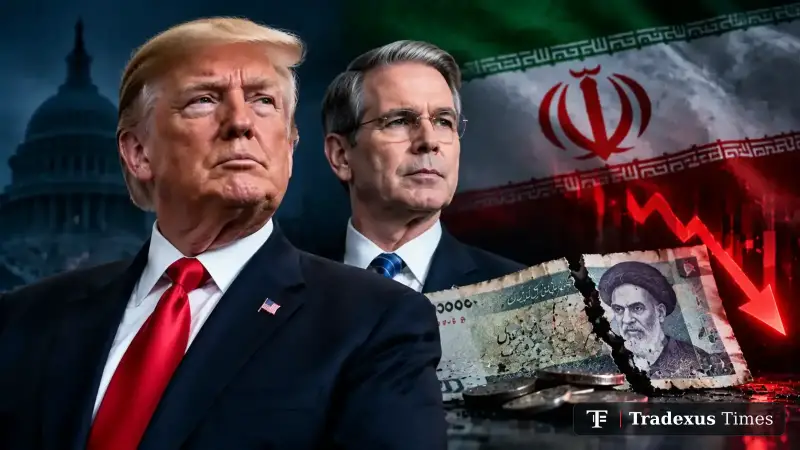
U.S. Treasury Secretary Scott Bessent says Washington’s economic isolation campaign has pushed Iran’s rial to its weakest level on record, as a separate report indicates that President Donald Trump may be willing to ease sanctions and release frozen Iranian assets in exchange for tangible progress on the country’s nuclear program.
Bessent attributed the currency’s collapse to the Trump administration’s pressure campaign, known as “Operation Economic Outcast,” which aims to restrict Iran’s access to international financial networks and reduce its ability to generate revenue. He said the United States would continue efforts to weaken the Iranian government’s capacity to finance terrorism and develop nuclear weapons.

The campaign reflects Washington’s broader strategy of using economic restrictions to increase pressure on Tehran. U.S. officials have described measures targeting Iran’s financial and commercial connections as a way to limit its access to international markets and strengthen Washington’s position in potential negotiations.
However, the possibility of sanctions relief suggests that economic pressure could also serve as leverage for a diplomatic agreement. According to a U.S. official quoted by Barak Ravid, Trump is prepared to consider easing sanctions and releasing frozen Iranian funds if Tehran demonstrates tangible progress on the nuclear issue.
The reported position links potential economic concessions to developments in Iran’s nuclear program. It does not establish that an agreement has been reached or that sanctions relief or the release of frozen assets has been formally approved. Any such measures would depend on the terms of a potential understanding and the progress achieved.
The two developments illustrate the dual elements of Washington’s approach: maintaining economic pressure while leaving room for negotiations tied to Iran’s nuclear activities. For Tehran, sanctions relief and access to frozen funds could represent significant economic incentives, while Washington is seeking commitments that address its nuclear and security concerns.
Markets will be watching for further statements from U.S. officials, any concrete steps toward renewed nuclear negotiations, and changes in the sanctions regime. Progress toward an agreement could influence expectations for Iran’s access to international trade and financial resources, while continued restrictions could prolong pressure on the rial and the broader Iranian economy.