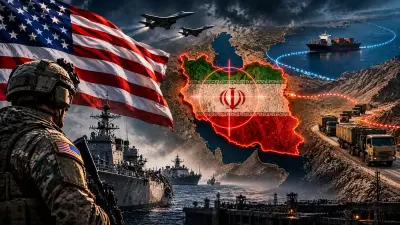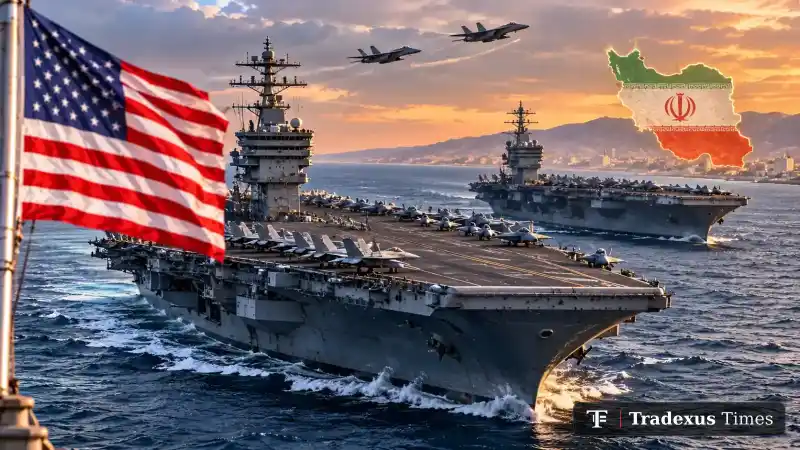
The US aircraft carrier USS Theodore Roosevelt is expected to reach the Middle East within the next three to five days, potentially joining two other American aircraft carriers operating near Iran. If all three carriers are present in the region simultaneously, it would mark a significant concentration of US naval power amid heightened tensions with Tehran.
The movement of the Roosevelt comes as Washington maintains a substantial naval presence in waters surrounding the Middle East. The arrival of another carrier strike group would add to the US military's operational capabilities in the region, including naval aviation, surveillance and the ability to sustain military operations over extended periods.
In this story
2 assets

The deployment is particularly notable because aircraft carriers are among the most significant components of American military power. Each carrier operates with an accompanying strike group, typically including guided-missile destroyers and other support vessels. Their presence provides Washington with additional flexibility and a range of military options without necessarily requiring the deployment of additional land-based forces.
The reported movement has also drawn attention because it could result in three US aircraft carriers being positioned near a single country. The claim that this would be the first such deployment since the US war with Iraq highlights the reported scale of the concentration, although the historical comparison has not been independently established.
However, the arrival of the Theodore Roosevelt should not automatically be interpreted as evidence that military action against Iran is imminent. A carrier deployment can serve several purposes, including deterrence, maintaining regional security and strengthening the US military's ability to respond to a potential escalation.
The key question over the coming days will be whether the Roosevelt joins the two existing carrier groups as an additional force or whether its deployment is part of a broader rotation of American naval assets. The number of carriers that ultimately remain in the region, alongside their accompanying warships, will provide a clearer picture of Washington's military posture toward Iran.
For now, the reported movement represents a development worth monitoring as tensions between the United States and Iran continue to shape the regional security environment.