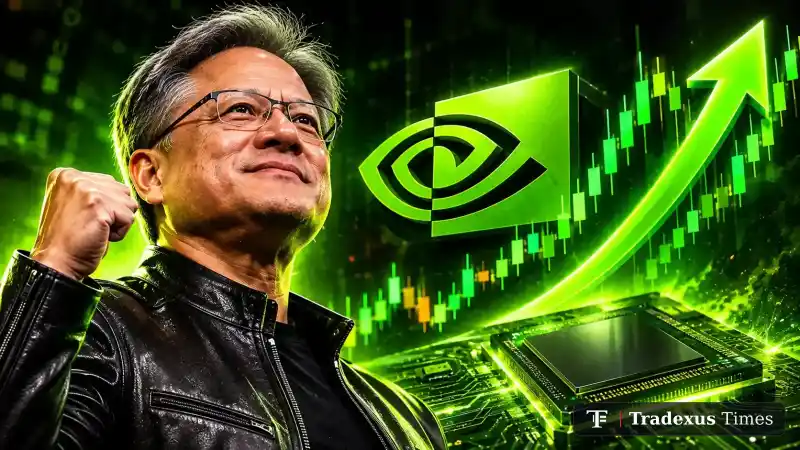
Nvidia shares (NVDA) reportedly surged more than 34% at the start of trading, reaching $168, following an announcement concerning Jensen Huang's return to the company's top leadership positions, including chief executive officer, chairman and board member. The reported development was accompanied by a substantial increase in the company's market valuation, with more than $1 trillion added to its market capitalization since the announcement.
The scale of the reported stock movement highlights the potential influence of executive leadership developments on investor perceptions of a company's strategic direction. Nvidia occupies a central position in the artificial intelligence and semiconductor industries, making its leadership structure particularly relevant to expectations surrounding corporate strategy, product development and long-term competitiveness.
Huang's reported return to multiple senior positions could be interpreted as a significant governance development, potentially strengthening expectations around centralized strategic decision-making. For a company operating in a highly competitive technology market, continuity in leadership can influence how investors assess execution, capital allocation and the ability to maintain a competitive position.
The reported addition of more than $1 trillion to Nvidia's market capitalization also illustrates the magnitude of the market reaction. However, a substantial increase in valuation does not independently establish that the company's underlying earnings capacity or financial outlook has improved by an equivalent amount. The distinction between market sentiment and fundamental performance remains important when assessing a sharp repricing.
The reported 34% advance to $168 places particular emphasis on whether the stock can sustain its gains beyond the initial reaction. Continued strength would suggest that investors are maintaining confidence in the implications of the leadership development, while a reversal could indicate that some of the initial optimism was driven by short-term sentiment.
The next important consideration is whether the reported leadership change translates into tangible developments in corporate strategy and operating performance. Nvidia's ability to sustain investor confidence will ultimately depend on business execution and whether expectations embedded in its market valuation remain supported by financial results.