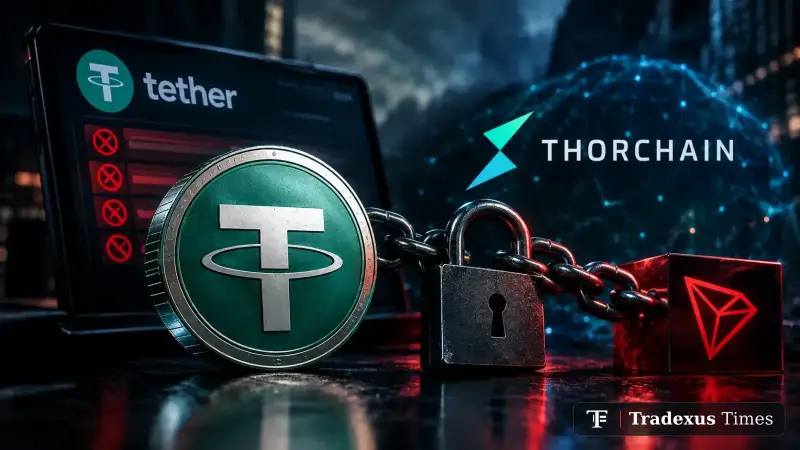
Tether temporarily blacklisted four THORChain USDT vaults on the TRON blockchain on October 9, freezing approximately 1.45 million USDT and forcing the decentralized cross-chain protocol to suspend TRON swaps. The restrictions were lifted roughly three hours later, with all affected balances intact and trading subsequently restored. The incident has raised questions about the operational risks decentralized finance protocols face when relying on centrally issued stablecoins.
The freeze was implemented through the addBlackList function in Tether’s TRC-20 smart contract, preventing the affected vault addresses from transferring USDT. THORChain responded by suspending TRON trading, transaction signing and liquidity-provider operations to prevent further disruption. Once the addresses were removed from the blacklist, the protocol resumed its TRON swap functionality without reporting any loss of the frozen assets.

THORChain co-founder Chad Barraford described the intervention as “unprecedented in our industry” in a statement on X. Barraford said the protocol had received no advance communication from Tether and had not been informed why its vaults were targeted. “We don’t know why this choice was made and have had no comms with USDT before this action and are actively reaching out to have a conversation,” he wrote.
The affected vaults contained approximately 1.45 million USDT, representing a relatively small portion of THORChain’s overall liquidity. However, the operational consequences extended beyond the frozen amount because the restrictions interrupted an entire blockchain-specific trading route. The episode illustrates how an asset-level restriction can affect protocol functionality even when the underlying decentralized infrastructure remains operational.
THORChain enables users to exchange native digital assets across different blockchains without relying on centralized exchanges or wrapped tokens. Its architecture is designed to reduce dependence on traditional intermediaries, but assets such as USDT remain subject to controls embedded in their issuing contracts. Tether’s ability to blacklist addresses means that USDT transfers can be restricted independently of the decentralized protocols holding or facilitating transactions involving the token.
This distinction creates an important operational consideration for decentralized finance infrastructure. A protocol may maintain decentralized transaction processing and asset custody while remaining exposed to decisions made by a centralized token issuer. When a stablecoin represents an important component of a cross-chain liquidity route, restrictions imposed at the token-contract level can disrupt trading access without requiring any compromise of the protocol itself.
Tether has previously exercised its freezing authority against wallets associated with sanctions-related investigations, including TRON addresses linked to ISIS-K. The October 9 restrictions also occurred amid a separate investigation involving reported hardware-wallet thefts connected to compromised Ledger devices sold by Southeast Asian reseller CryptoBilis. According to BlockchainReporter’s coverage of the wallet-drain investigation, Tether has been freezing USDT held at addresses associated with the reported losses.
The THORChain vault addresses appeared to have been included in a broader batch of wallet restrictions rather than targeted individually. However, no confirmed connection between the THORChain freeze and the Ledger-related investigation has been established. The relatively rapid reversal raises the possibility of a precautionary or mistaken restriction, but neither explanation has been verified.
From a market-structure perspective, the incident highlights a form of counterparty exposure that can exist even in noncustodial decentralized finance systems. Users may avoid centralized exchanges while still interacting with assets whose transferability depends on the policies and administrative decisions of a centralized issuer. The distinction matters particularly for cross-chain protocols, where restrictions affecting one supported asset or network can interrupt specific trading routes and liquidity-provider activity.
The restoration of the affected balances limited the immediate financial consequences for THORChain, but it did not resolve the underlying uncertainty surrounding issuer intervention. Without a disclosed reason for the blacklist, liquidity providers and users cannot determine whether the restrictions reflected an isolated mistake, a compliance-related precaution or another administrative decision. That uncertainty could influence how participants evaluate stablecoin exposure and operational continuity across decentralized trading infrastructure.
The next development will depend on whether Tether provides an explanation for the initial restrictions and their subsequent reversal. THORChain has indicated that it is seeking direct communication with the stablecoin issuer, while the precise circumstances remain unresolved. For decentralized finance markets, the episode underscores the importance of distinguishing between decentralized protocol execution and the centralized controls governing the assets those protocols support.