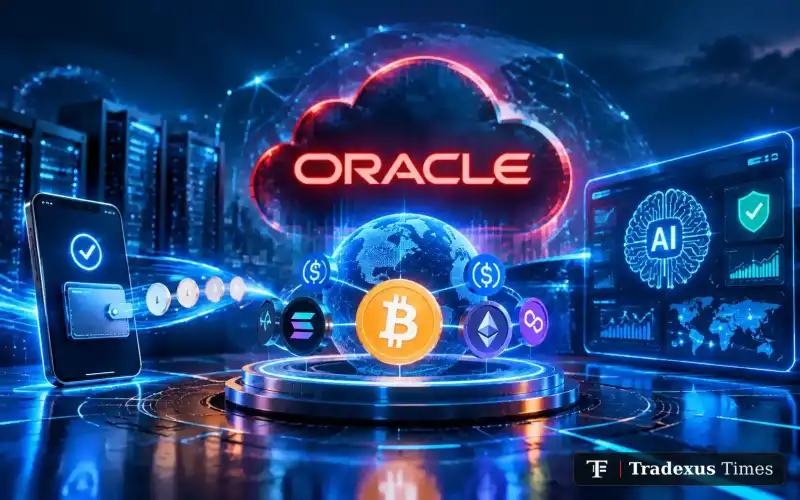
Oracle has expanded its Digital Assets Data Nexus platform with new capabilities focused on payment execution, wallet management, and artificial intelligence-based monitoring as financial institutions explore the integration of digital assets with traditional banking infrastructure.
The updated platform connects digital asset transactions with existing banking and payment systems through ISO 20022 messaging standards. This allows banks to manage traditional and digital forms of money within a unified operating framework rather than operating separate systems for different asset types or blockchain networks.

Oracle’s platform supports multiple blockchain ledgers, custodial wallets, and smart contracts while enabling coordination between on-chain and off-chain processes. The system is designed to handle transactions that require multiple financial systems to operate together, improving connectivity between blockchain infrastructure and existing financial operations.
The company is also introducing additional compliance and transaction management controls. Financial institutions using the platform can apply know-your-customer (KYC), sanctions screening, and anti-money laundering (AML) checks, while also setting transfer limits, approval rules, and monitoring wallet activity.
Oracle AI Database will integrate transaction records, smart contract data, and workflow information to support reconciliation processes, audits, and risk monitoring. The combination of blockchain data and AI-based analysis is designed to help institutions manage digital asset activity within existing operational and compliance frameworks.
The expanded platform is targeted at regulated financial institutions and supports potential applications including stablecoins, tokenized deposits, central bank digital currencies (CBDCs), digital bonds, and real-world assets.
Oracle also said the platform will integrate with Swift Ledger, allowing banks to connect tokenized deposits with existing settlement systems. The development reflects the growing focus among financial institutions on building infrastructure that can bridge traditional finance systems with blockchain-based assets.
Market participants may continue watching how banks adopt digital asset infrastructure, whether tokenized financial products gain broader institutional usage, and how compliance-focused blockchain solutions evolve.