Bitcoin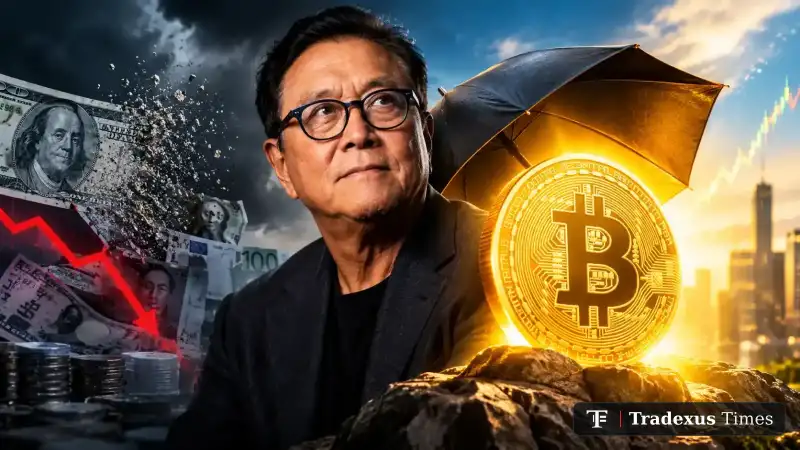
Robert Kiyosaki is presenting Bitcoin as part of a broader financial-preparation strategy centered on assets outside government-issued currency. In an October 3 statement, the Rich Dad Poor Dad author compared holding Bitcoin, gold and silver to maintaining insurance against potential economic disruption, arguing that financial preparation does not necessarily reflect pessimism.
Kiyosaki used car insurance as an analogy for his position. Just as owning insurance does not mean expecting an accident, he argued that holding assets outside the traditional monetary system can serve as a precaution against financial instability. His question to the audience—whether they owned gold, silver or Bitcoin—framed cryptocurrency as part of the same defensive approach to wealth preservation.
The core of Kiyosaki’s argument is his concern over government-issued money losing purchasing power. He has repeatedly positioned scarce assets as an alternative to currencies whose supply can be expanded through monetary policy. In his latest comments, he reinforced that preference by saying he wants money that governments cannot print.
Bitcoin fits that thesis through its capped supply of 21 million coins. However, limited supply does not automatically make Bitcoin a reliable hedge against inflation. BTC remains dependent on market demand and can experience significant price declines even when consumer prices continue rising. Scarcity, therefore, forms the basis of Kiyosaki’s argument but does not eliminate market risk.
His broader strategy extends beyond cryptocurrency and precious metals. Kiyosaki has previously highlighted gold, silver, Ethereum and oil among his preferred assets, while also discussing rental properties and oil-producing investments. The common thread is a preference for assets that he believes can either retain value, generate income or provide exposure outside conventional cash savings.
Oil represents a different component of that strategy because it combines an asset position with potential cash flow. Kiyosaki has described owning oil wells and receiving payments from buyers, including governments. In that framework, government spending is not solely a source of concern; it can also represent demand that generates income from his investments.
The distinction between Bitcoin and income-producing assets is important to Kiyosaki’s broader financial-preparation thesis. Bitcoin and precious metals are presented primarily as scarce alternatives to government-issued money, while oil and rental properties can provide an additional income component.
His argument ultimately rests on purchasing power rather than the nominal amount of money held in a bank account. A fixed cash balance can buy fewer goods and services if prices rise, which is why Kiyosaki favors assets he believes are less directly exposed to monetary expansion.
For Bitcoin, the key question is whether its scarcity can translate into durable purchasing-power protection over time. Its fixed supply supports the monetary argument Kiyosaki makes, but market demand remains the critical variable determining its value. That makes Bitcoin part of a broader diversification thesis rather than a guaranteed safeguard against inflation.