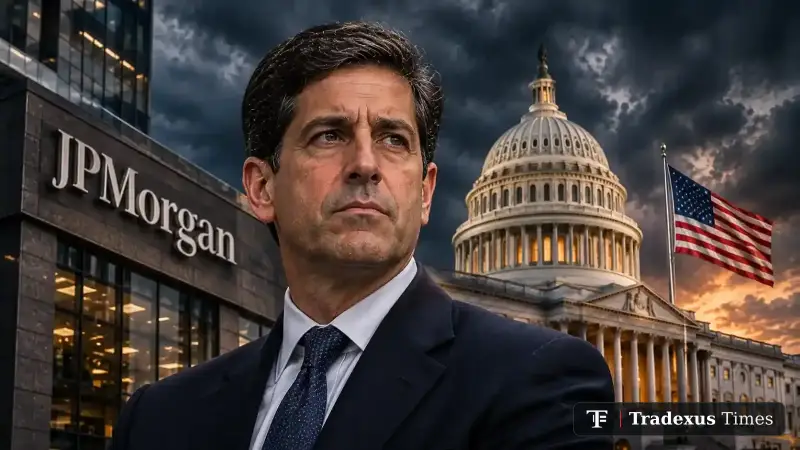
JPMorgan has warned that Federal Reserve Chair Kevin Warsh may need to rethink his approach to Washington politics if he wants to remain in the position beyond his current term. Following the U.S. midterm elections, the bank's strategists believe Warsh faces a more challenging political environment, particularly if Democrats gain control of the Senate.
In a recent analysis, JPMorgan strategist Michael Feroli argued that Warsh should devote more time to building relationships with members of Congress, especially newly elected Democratic lawmakers. According to Feroli, the election results have increased the possibility that Warsh's term, which is scheduled to end in May 2030, could conclude under a Democratic-controlled Senate.

The warning reflects the growing importance of political relationships in determining the future of Federal Reserve leadership. Although the Fed operates independently in setting monetary policy, its chair remains accountable to Congress and must maintain sufficient political support to navigate the institution's oversight and leadership process.
Feroli pointed to advice previously offered by former Fed Chair Jerome Powell, who emphasized that congressional engagement is an active responsibility rather than a routine formality. Powell described Congress as the Federal Reserve's primary connection to democratic accountability, stressing the importance of regular communication with lawmakers.
Warsh was appointed by President Donald Trump and assumed the Fed chair position in May. He arrived with an ambitious plan to reshape the central bank's approach to monetary policy and communication. At his first Federal Open Market Committee meeting in June, he made immediate changes by reducing forward guidance and shortening the statement released after interest rate decisions.
His first major policy move came in September, when he led a 25-basis-point interest rate increase, bringing the federal funds target range to 3.75%–4.00%. These changes marked an early departure from the previous approach and demonstrated his willingness to pursue a different policy direction.
However, JPMorgan's assessment suggests that monetary policy decisions alone may not determine Warsh's long-term position. As the political composition of Congress changes, his ability to communicate with lawmakers across party lines could become increasingly important.
The Senate's role in the broader political environment is particularly significant because future changes in Federal Reserve leadership require navigating the confirmation process. A Democratic-controlled Senate could create additional political challenges for Warsh, especially if disagreements emerge over the central bank's independence, interest rate policy or institutional reforms.
For financial markets, the debate introduces another layer of uncertainty surrounding the Federal Reserve. Investors will be watching not only Warsh's decisions on interest rates but also how effectively he manages relations with Congress as political pressure on the central bank evolves.
Ultimately, JPMorgan's message is that Warsh may need to treat congressional engagement as a central part of his leadership strategy. With his term extending to 2030, the political environment could change considerably before then, making relationships with lawmakers an important factor in the future of the Federal Reserve.