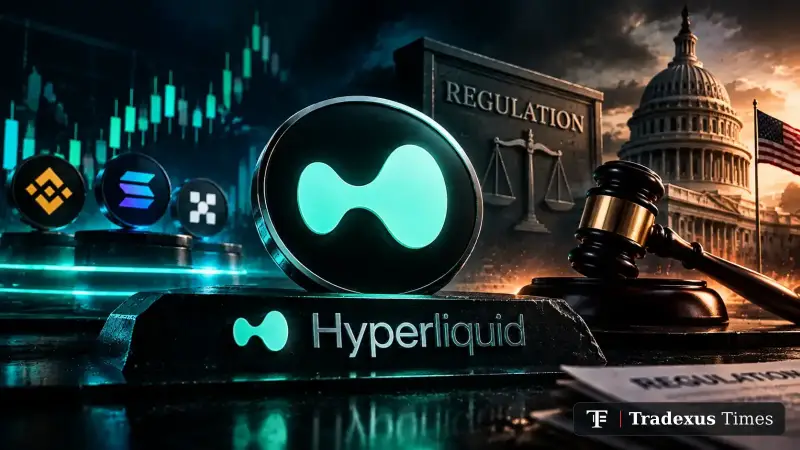
The biggest challenge facing Hyperliquid may not come from competitors, but from increasing regulatory pressure, according to Ran Neuner, founder of Crypto Banter.
Neuner argues that governments have gradually increased oversight of centralized exchanges such as Binance and Coinbase, introducing requirements related to licensing, financial compliance, user verification, and transaction monitoring. In his view, decentralized trading platforms like Hyperliquid could become the next focus of regulators.

The regulatory status of Hyperliquid in the United States remains unclear, as authorities have not yet established a specific framework for how decentralized perpetual futures platforms should operate.
However, discussions around bringing crypto derivatives platforms into regulated markets have increased. Former U.S. President Donald Trump has stated that the CFTC chairman is exploring potential ways for Hyperliquid to operate legally under regulatory supervision in the U.S.
Hyperliquid has grown rapidly in the decentralized derivatives sector, attracting significant trading activity with its perpetual futures products. However, greater regulatory attention could become a key factor in determining the platform’s future expansion.
The main question now is whether Hyperliquid can maintain its decentralized structure while adapting to a regulatory environment that is becoming increasingly focused on crypto trading platforms.