Buying USDT without completing identity verification is possible through several cryptocurrency routes, including non-custodial swaps, decentralized exchanges, peer-to-peer transactions and direct payments. Among the services outlined, GhostSwap is presented as the primary option, offering account-free exchanges that allow users to convert more than 1,600 cryptocurrencies into USDT without submitting an email address, identity document or creating an account.
The distinction between account-based exchanges and account-free swaps is central to this approach. Traditional centralized platforms typically associate transactions with registered users and may require identity verification. Account-free swap services operate differently: users select the assets they want to exchange, provide a destination wallet address and send the deposit to a designated address. The resulting USDT is transferred directly to the specified wallet.
In this story
5 assets




However, avoiding an account-based identity check does not eliminate every form of transaction risk or regulatory obligation. Blockchain transactions remain publicly visible, and the issuer of USDT retains the ability to freeze tokens associated with specific addresses.
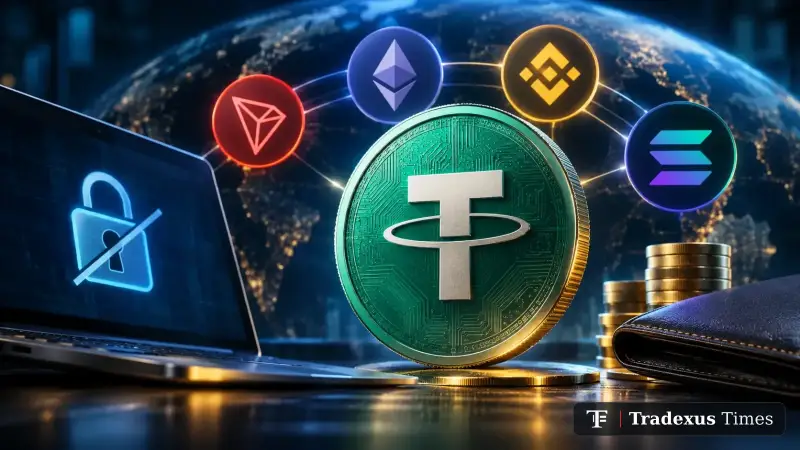
GhostSwap is described as having operated since October 2024. Its service supports USDT on four networks: Tron, Ethereum, BNB Smart Chain and Solana. Users select a trading pair, enter the amount, provide their receiving address and send the cryptocurrency required for the exchange.
The platform incorporates its exchange fee into the displayed quote and presents the network fee before the deposit is sent. A swap identifier and status page provide information about the deposit, conversion and payout. If an exchange cannot be completed, the stated refund procedure returns funds to the originating address.
Most transactions are described as completing within minutes, although settlement time depends partly on the blockchain used for the deposit. Bitcoin transfers can take longer than Litecoin or Solana transactions because the deposit must first receive sufficient network confirmations. The exchange rate remains subject to change until the deposit is confirmed.
This model removes the need to establish a conventional exchange account, but it introduces operational considerations. Users must verify the destination address, understand the exchange rate and account for the possibility that network confirmation delays affect the final conversion.
Decentralized exchanges offer another route for users who already hold cryptocurrency on a compatible blockchain. Platforms including Uniswap, Jupiter, PancakeSwap and SunSwap facilitate token swaps without requiring a conventional exchange account.
The main limitation is blockchain compatibility. Both assets generally need to exist on the same network, and users must hold the network's native asset to pay transaction fees. A decentralized exchange cannot directly convert Bitcoin or Monero into USDT without an additional bridging or conversion step.
For users starting with cash or a bank balance, peer-to-peer transactions introduce a different set of constraints. Major USDT peer-to-peer markets commonly operate within centralized exchanges that require verified accounts. An alternative involves purchasing Bitcoin or Monero directly from another individual through account-free peer-to-peer markets such as Bisq or RetoSwap, then converting the acquired cryptocurrency into USDT.
This approach can avoid opening an account with a conventional exchange, but it requires two transactions rather than one. Additional spreads, transaction fees and counterparty considerations can increase the overall cost. Consequently, the absence of an identity check does not necessarily translate into a cheaper or faster acquisition process.
HiddenSwap represents another account-free conversion option. Its stated service model includes USDT on Tron, Ethereum, BNB Smart Chain and Solana. One distinguishing feature is a fixed-rate option, allowing users to specify the amount of USDT they want to receive. This can be useful when a payment requires an exact amount, although the fixed-rate quote should be compared with the available floating-rate alternative before proceeding.
Receiving USDT directly as payment is the simplest route for users who provide freelance services, sell goods or are owed money. Instead of purchasing cryptocurrency through an intermediary, the recipient shares a wallet address and specifies the required network. This eliminates the conversion step, although both parties must agree on the blockchain before transferring funds.
Network selection remains one of the most important technical considerations when acquiring and transferring USDT. Tron-based USDT, commonly identified as TRC-20, uses addresses beginning with the letter T. Ethereum-based USDT, identified as ERC-20, uses addresses beginning with 0x.
Although both versions represent Tether's dollar-pegged token, they operate on different blockchains and are not interchangeable at the address level. Sending USDT through an unsupported network can result in inaccessible or lost funds.
The difference also affects transaction costs. Tron transactions require network resources, including energy and bandwidth, with TRX potentially burned to cover resource shortfalls. Ethereum transactions require ETH to pay gas fees. Receiving USDT does not necessarily require the recipient to hold these native assets, but sending the tokens later does.
For users who regularly transfer smaller amounts of USDT, the Tron network may offer a more practical transaction structure. Ethereum may be more appropriate when interacting with applications or exchanges that specifically support ERC-20 transfers. Neither network is universally preferable; compatibility with the receiving platform or wallet should determine the choice.
Address verification is particularly important because Ethereum and BNB Smart Chain addresses share the same general 0x format. An address alone does not establish which network should be used. The sender must confirm the supported blockchain separately.
The risks associated with USDT also extend beyond the exchange process itself. Tether is a centrally issued stablecoin, meaning its issuer retains certain administrative controls over the token. These include the ability to freeze USDT held at specific addresses. Acquiring the asset without KYC does not change those underlying issuer controls.
This distinction matters for users evaluating USDT as a payment instrument or store of value. Its dollar-pegged structure and broad network availability make it useful for transferring dollar-denominated value, but it does not provide the same issuer-independent characteristics as decentralized cryptocurrencies such as Bitcoin or Monero.
Blockchain transparency creates another consideration. USDT balances and transfers can be examined through public block explorers. Transactions are not private simply because they were conducted without registering an exchange account. Users can therefore avoid providing identity documents to a particular service while still leaving an observable transaction history on the blockchain.
For those using GhostSwap, the operational process begins with establishing a wallet that supports the intended USDT network. Wallet options include Trust Wallet and Ledger for multiple supported networks, TronLink for Tron and MetaMask for Ethereum.
After selecting the network, users need to copy the corresponding receiving address and choose the appropriate exchange pair. The amount, estimated USDT payout, network fee and transaction limits should be reviewed before sending the deposit. The originating address should also be provided where required for refunds, and the swap identifier should be retained for tracking.
Once the payout arrives, users can verify the transaction through a block explorer and compare the token contract with the official Tether contract for the selected network. This step is important because fraudulent tokens can use the same name and ticker as legitimate USDT.
A small test transaction can help identify address or network compatibility problems before transferring a larger amount. Blockchain transfers are generally irreversible, making verification particularly important when dealing with unfamiliar services or wallet addresses.
The broader distinction among these five methods is the starting point of the transaction. Users who already hold cryptocurrency can access account-free swaps or decentralized exchanges. Those starting with cash face additional peer-to-peer steps, while freelancers and sellers can avoid purchasing altogether by receiving USDT directly.
The next consideration is therefore not simply whether a service requires KYC, but whether its supported networks, exchange pricing, settlement process and refund procedures match the user's requirements. Account-free access removes one layer of onboarding, but it does not eliminate blockchain transaction costs, issuer controls, public transaction records or the need to comply with applicable local regulations.