Stablecoins Explained: USDT, USDC and How They Work
Discover how USDT and USDC maintain their dollar peg, how stablecoins work on blockchain networks, and why their benefits, risks, and growing role in digital finance matter.

Key takeaways
- Price Stability: Stablecoins aim to maintain a consistent value, usually pegged to the US dollar.
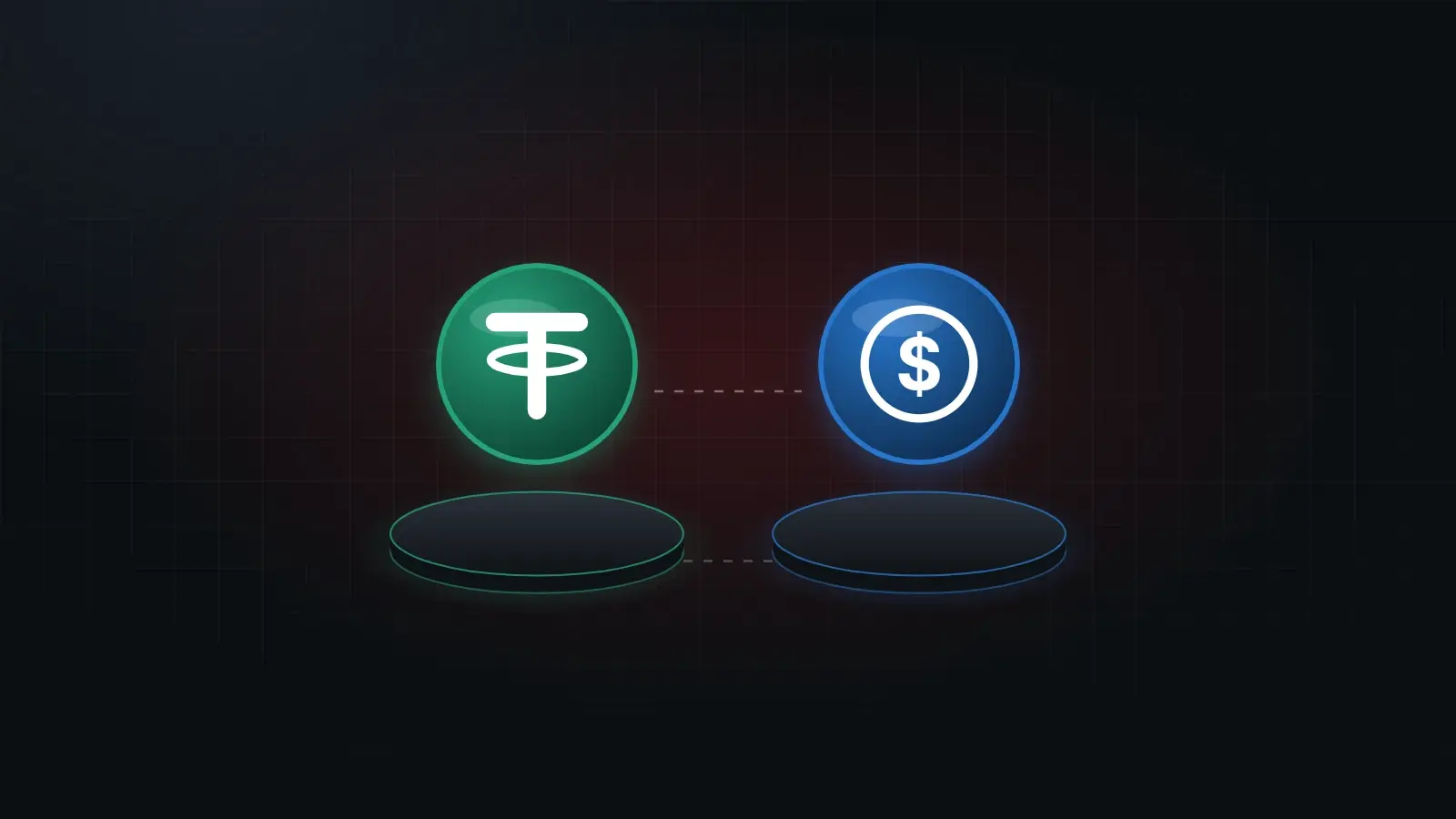
- USDT vs. USDC: Both target a $1 value but differ in issuer, transparency, and market adoption.
- Reserve Backing: Stablecoins rely on reserve assets to support their value and redemptions.
- Practical Uses: They enable crypto trading, international payments, and DeFi applications.
- Risks Matter: De-pegging, security threats, and regulatory uncertainty remain important concerns.
What Are Stablecoins?
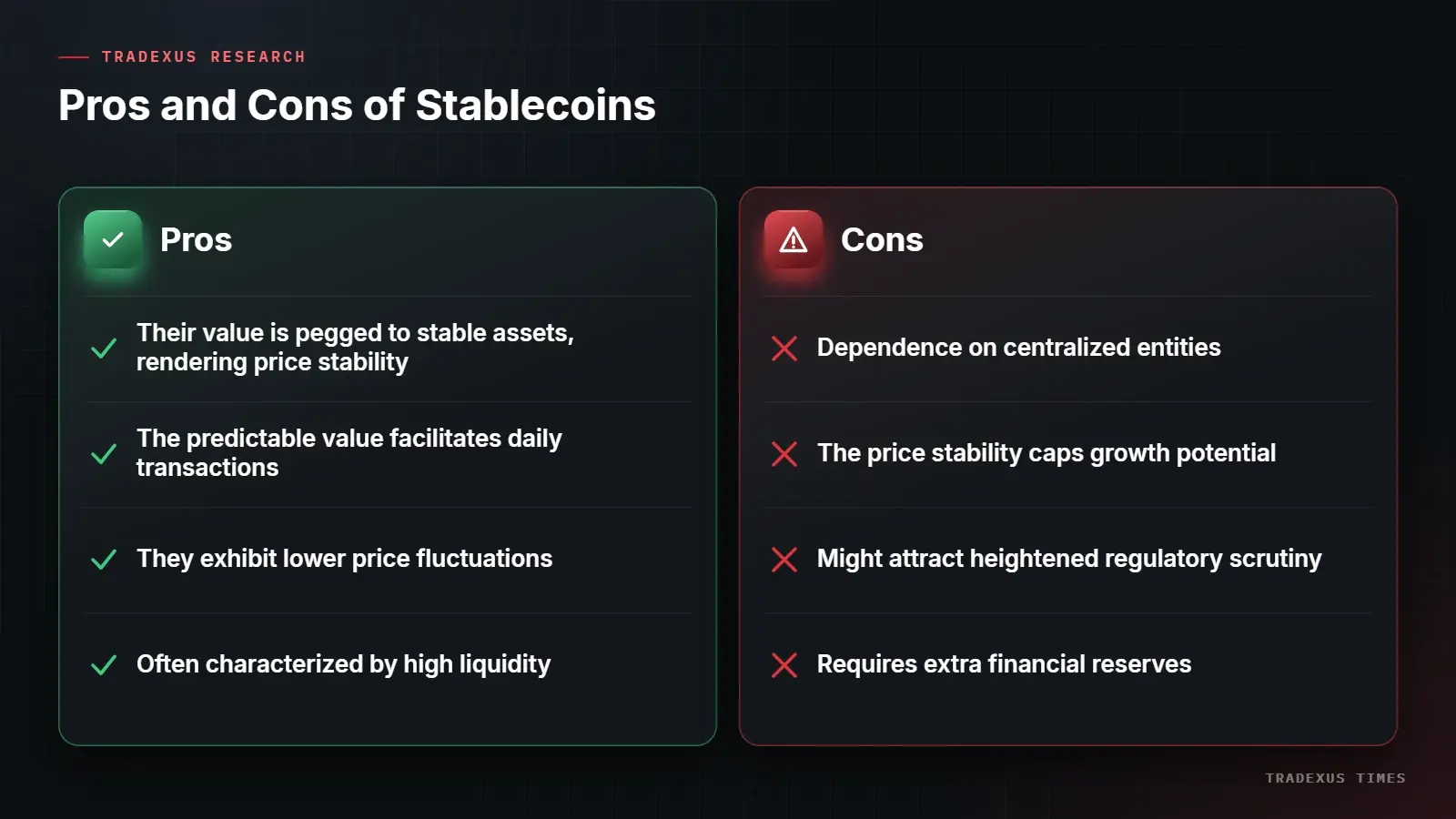
Stablecoins are a type of cryptocurrency designed to maintain a relatively stable value by linking their price to another asset, usually a traditional currency such as the US dollar. Unlike Bitcoin and Ethereum, whose prices can change significantly within hours, stablecoins aim to reduce price fluctuations. For example, one US dollar stablecoin is generally intended to be worth approximately $1[1]. This makes stablecoins useful for people who want to transfer digital money, participate in cryptocurrency markets, or hold dollar-linked assets without constantly dealing with market volatility. Two of the most widely recognized examples are Tether (USDT) and USD Coin (USDC).
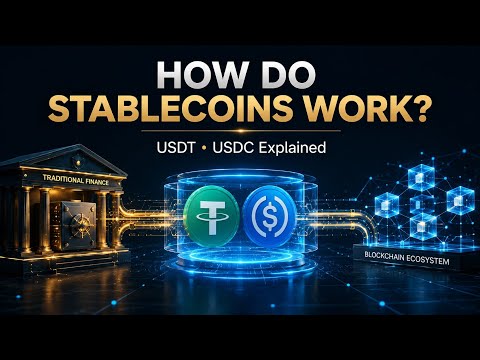 Watch on our channelStablecoins Explained
How Do Stablecoins Maintain Their Value?
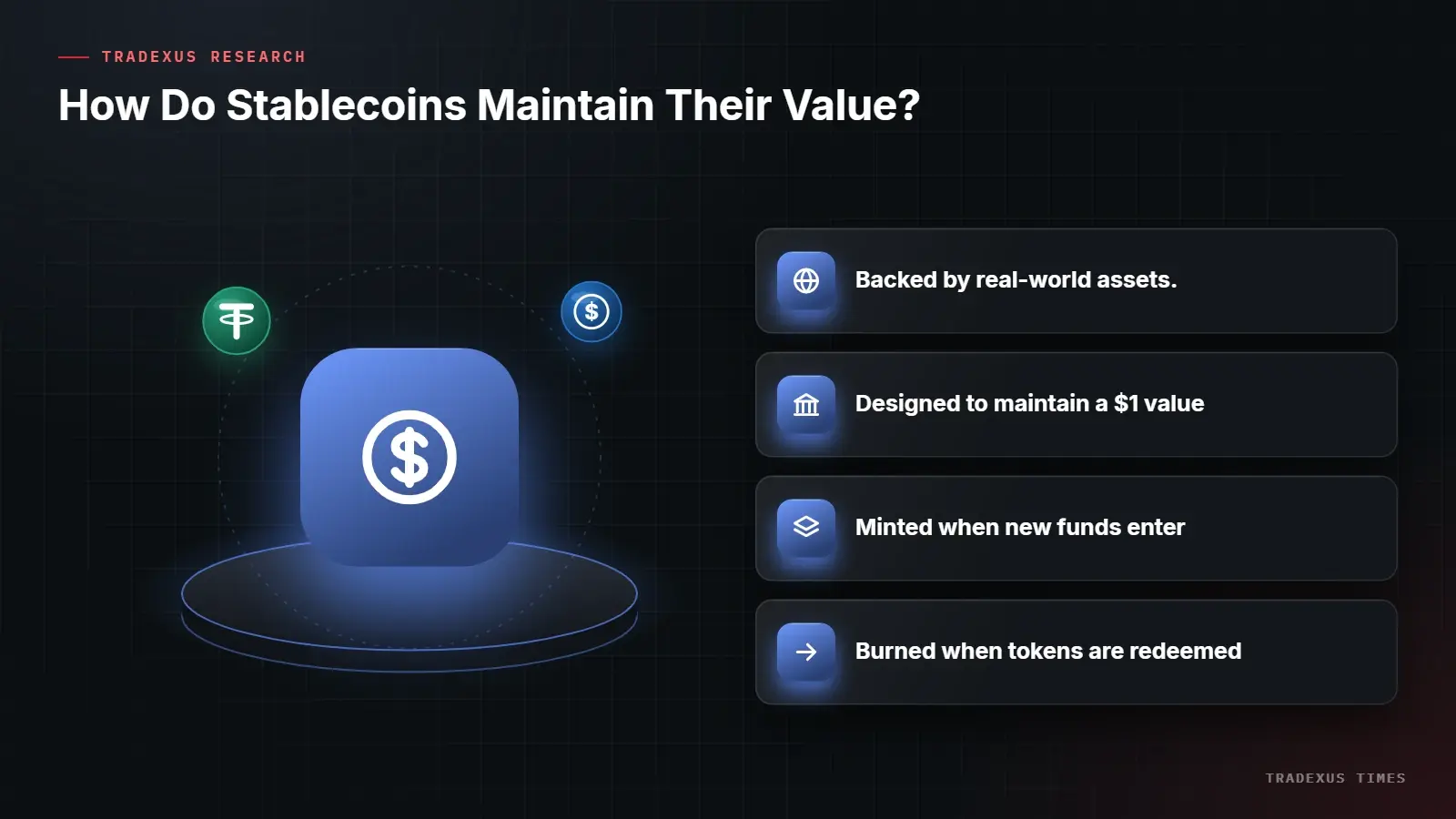
The most common method is reserve backing. A company issues digital tokens and holds assets intended to support their value. When a customer purchases $1,000 worth of a fully backed dollar stablecoin, the issuer receives money and creates approximately 1,000 tokens[2]. These tokens can then circulate between cryptocurrency wallets. When tokens are redeemed through the issuer, the corresponding tokens are generally removed from circulation and the customer receives dollars, subject to the issuer's redemption requirements. This process is often called minting and burning. The reserves may include cash, bank deposits, and short-term US Treasury securities. The quality, accessibility, and transparency of these reserves are essential to maintaining confidence in the stablecoin.
USDT vs. USDC: What Is the Difference?
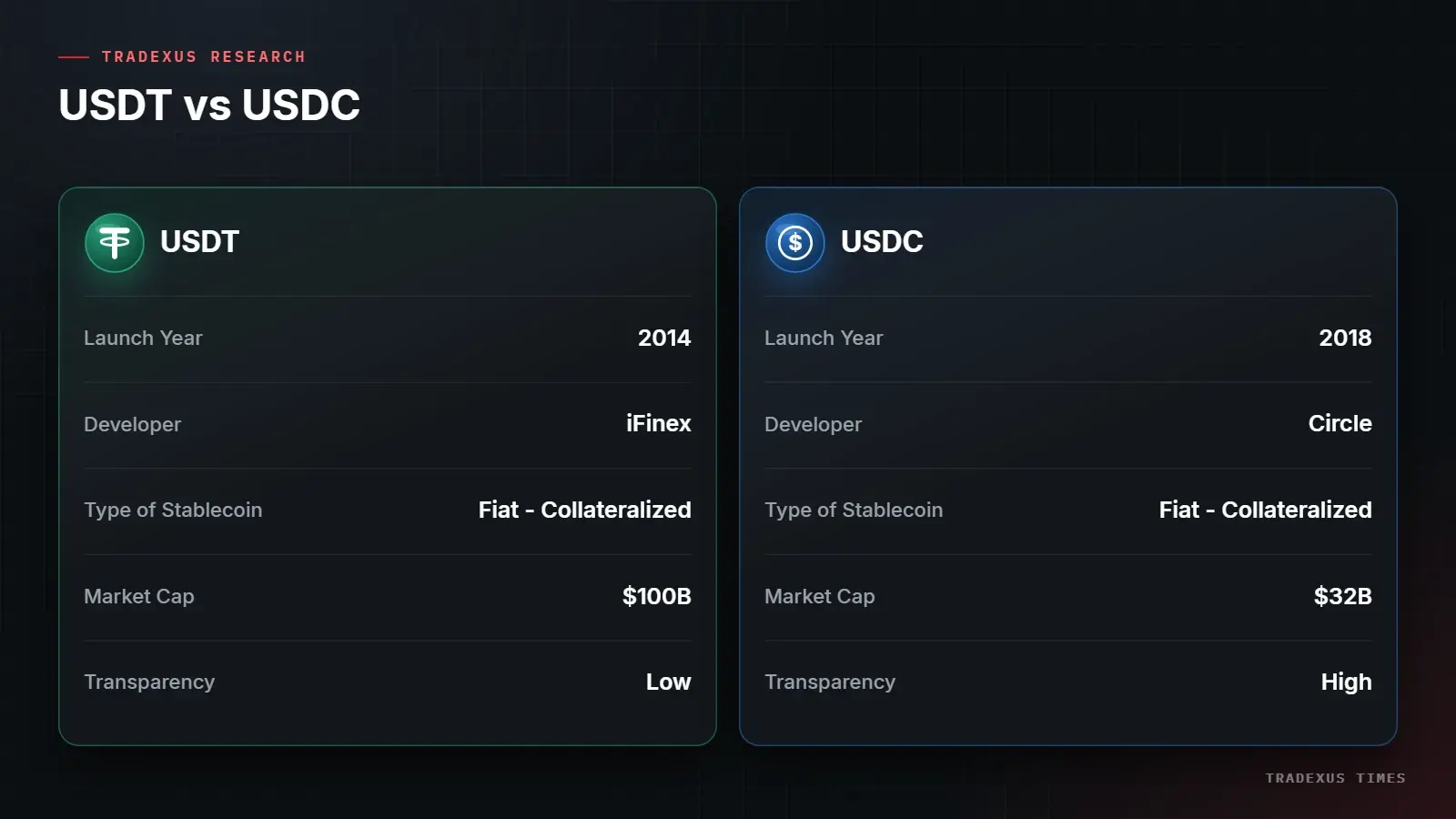
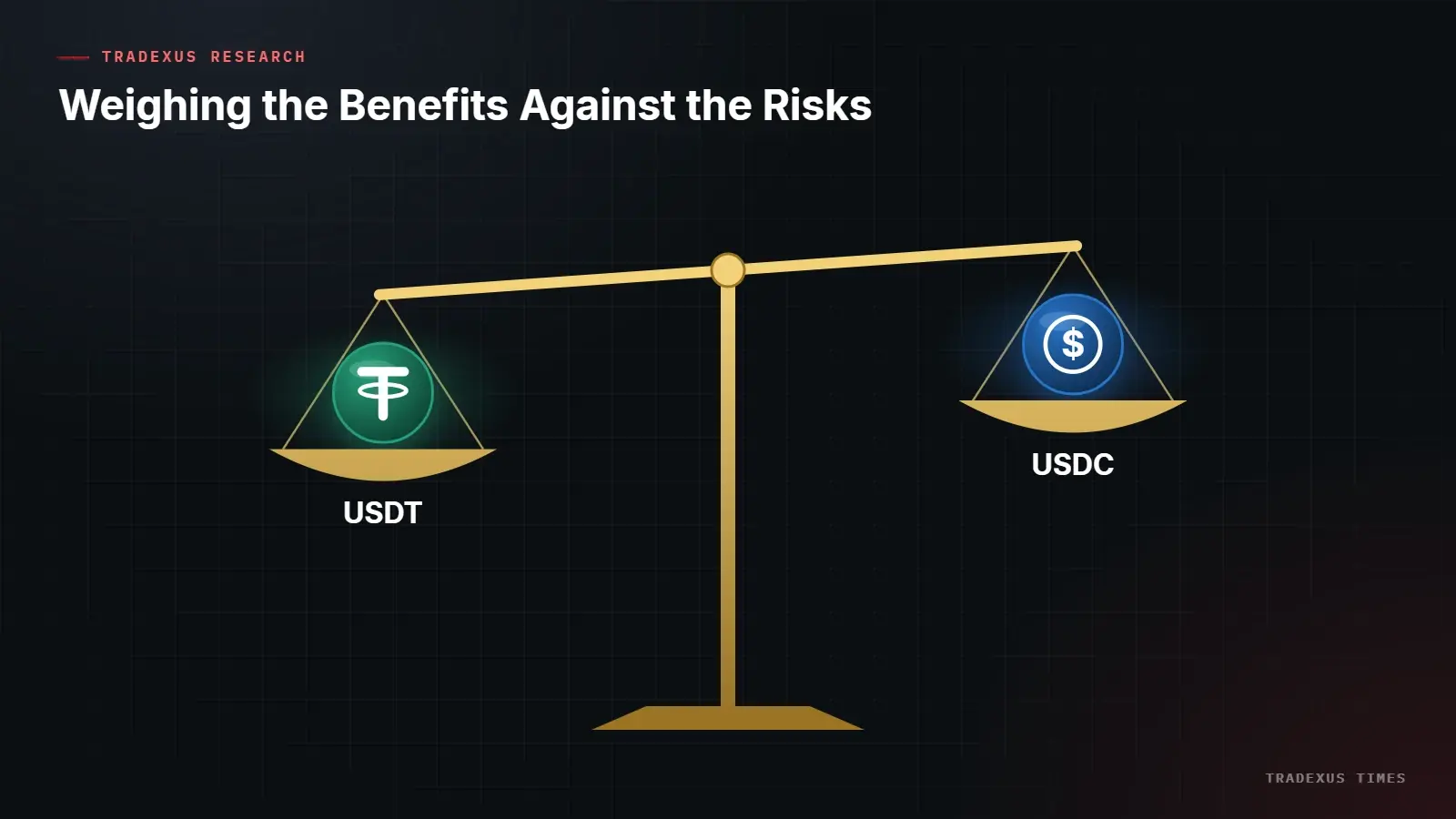
Although USDT and USDC share the same objective, they differ in their issuers, reserve management, and market presence. USDT (Tether) is issued by Tether and has become one of the most widely used stablecoins in global cryptocurrency trading. Its extensive adoption makes it available across numerous exchanges and blockchain networks. USDC (USD Coin) is issued by Circle and emphasizes reserve transparency and regulatory compliance. Circle publishes regular information about its reserves and provides independent monthly assurance reports. Both aim to maintain a one-to-one relationship with the US dollar, but their approaches to transparency, distribution, and market adoption are different.
How Do Stablecoins Work on Blockchain Networks?
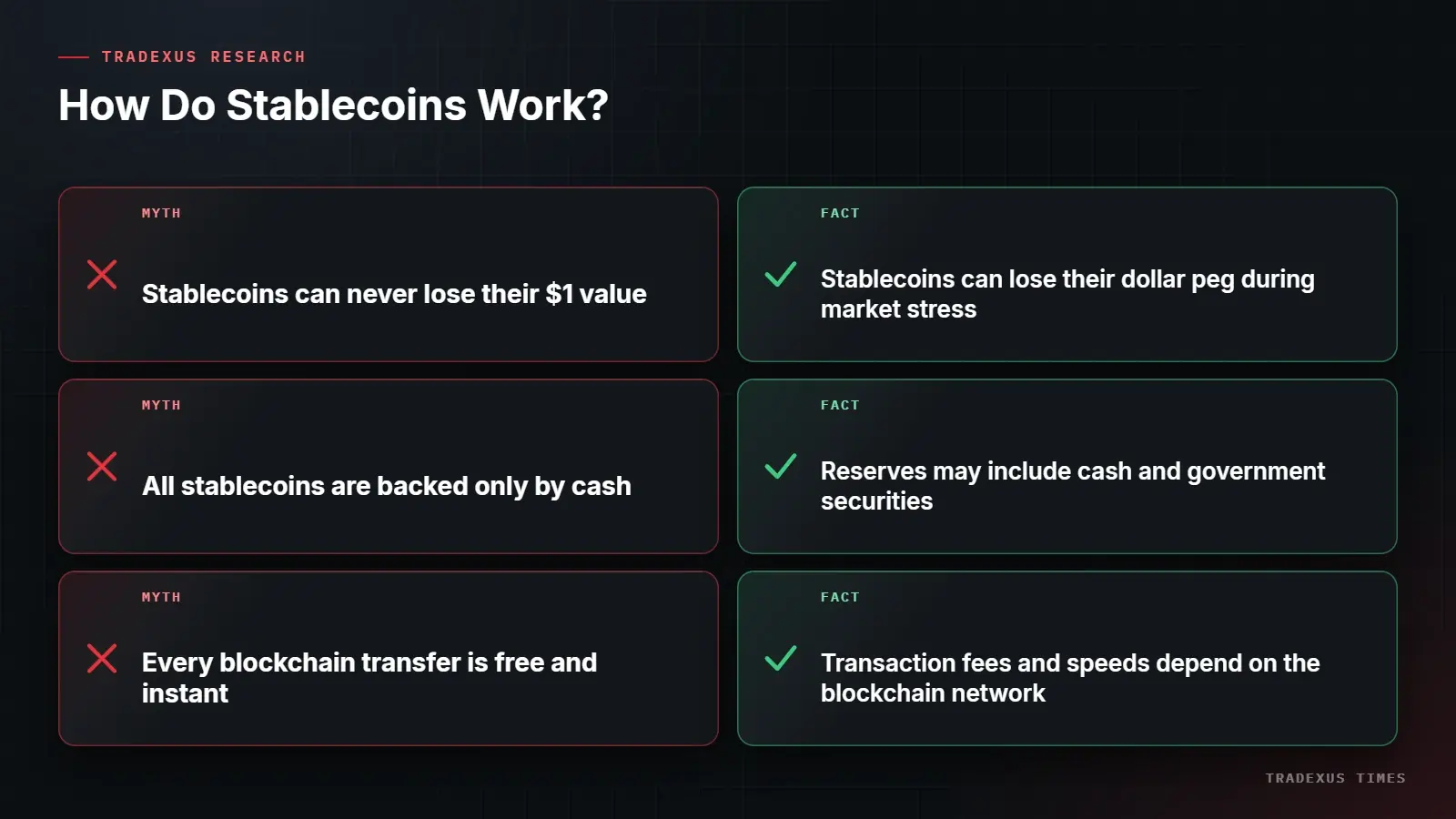
Stablecoins operate on blockchain networks, which are digital systems that record and verify transactions. USDT and USDC are available on several networks, including Ethereum, Tron, and Solana, although availability varies by token and network. When someone sends stablecoins to another person, the transaction is broadcast to the selected blockchain, verified by its network, and recorded on its public ledger. This allows digital assets to move without requiring a traditional bank transfer for every transaction. However, users must select the correct network when transferring funds. Sending tokens to an incompatible address or network can result in permanent loss. Network fees, transaction speed, and wallet compatibility also differ depending on the blockchain being used.[3]
Why Are Stablecoins Useful?
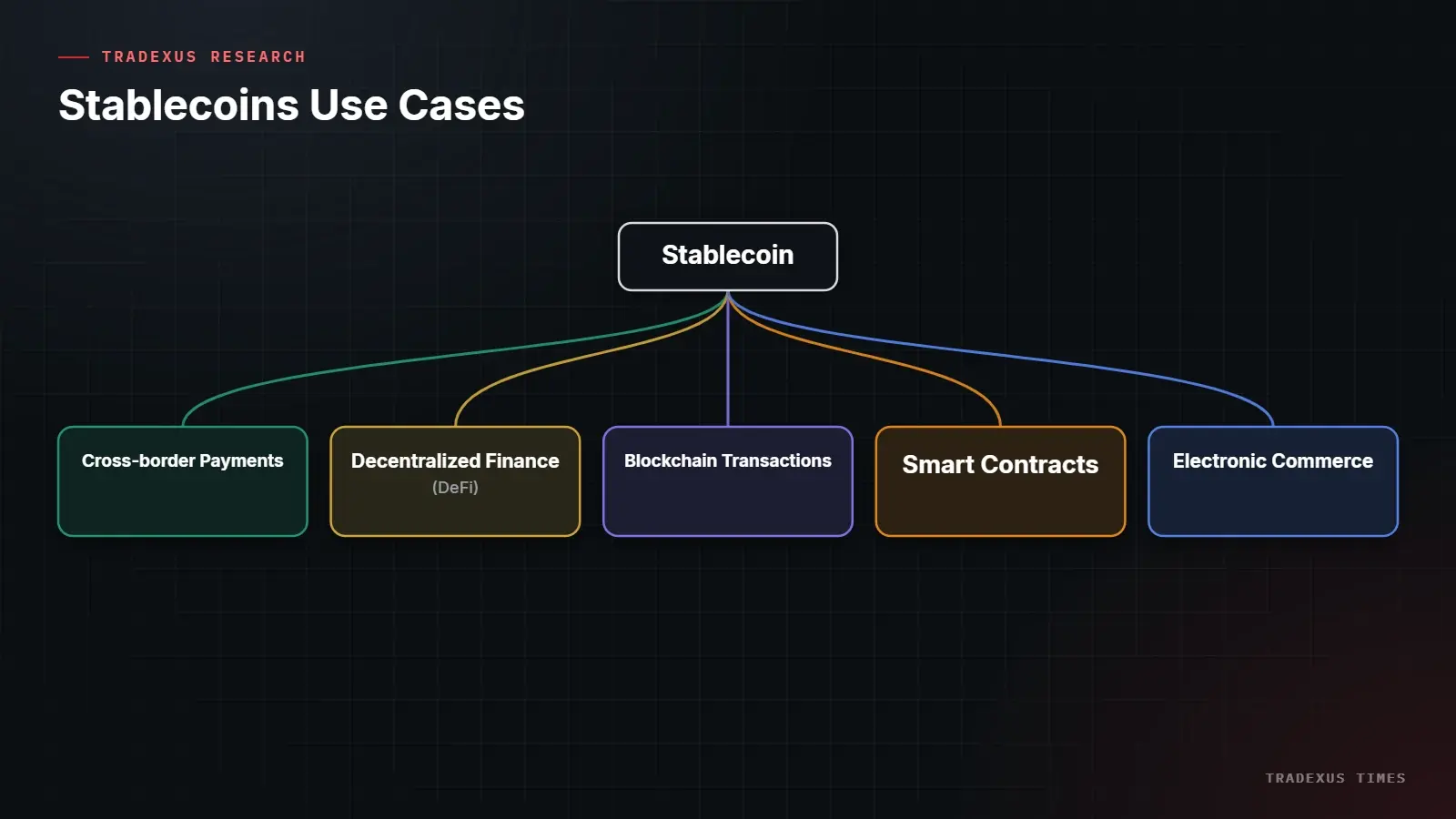
Stablecoins have several important applications in the digital economy. One major use is cryptocurrency trading. Traders often convert Bitcoin or other volatile cryptocurrencies into USDT or USDC when they want to reduce exposure to sudden price movements without withdrawing money to a traditional bank account. Another application is international payments. People and businesses can transfer stablecoins across supported blockchain networks, potentially reducing the delays and costs associated with conventional international transfers. Stablecoins are also widely used in decentralized finance (DeFi), where they can serve as collateral for loans, provide liquidity to trading pools, or support other financial services. However, transaction costs and availability depend on the blockchain, service provider, and destination country.
What Are the Risks of Using Stablecoins?
Despite their advantages, stablecoins are not completely risk-free. One important risk is de-pegging, which happens when a stablecoin loses its intended relationship with the US dollar. For example, if a token designed to maintain a $1 value falls to $0.95[4], users may lose confidence and attempt to sell their holdings. Another concern involves the issuer and its reserves. If reserve assets become difficult to access, lose value, or are insufficient to meet redemption demands, the stablecoin could face financial pressure. There are also cybersecurity risks, including hacked wallets, stolen private keys, fraudulent platforms, and malicious smart contracts. Finally, regulatory requirements differ between countries, potentially affecting whether users can purchase, transfer, or redeem particular stablecoins.
How Can Users Choose and Store Stablecoins Safely?
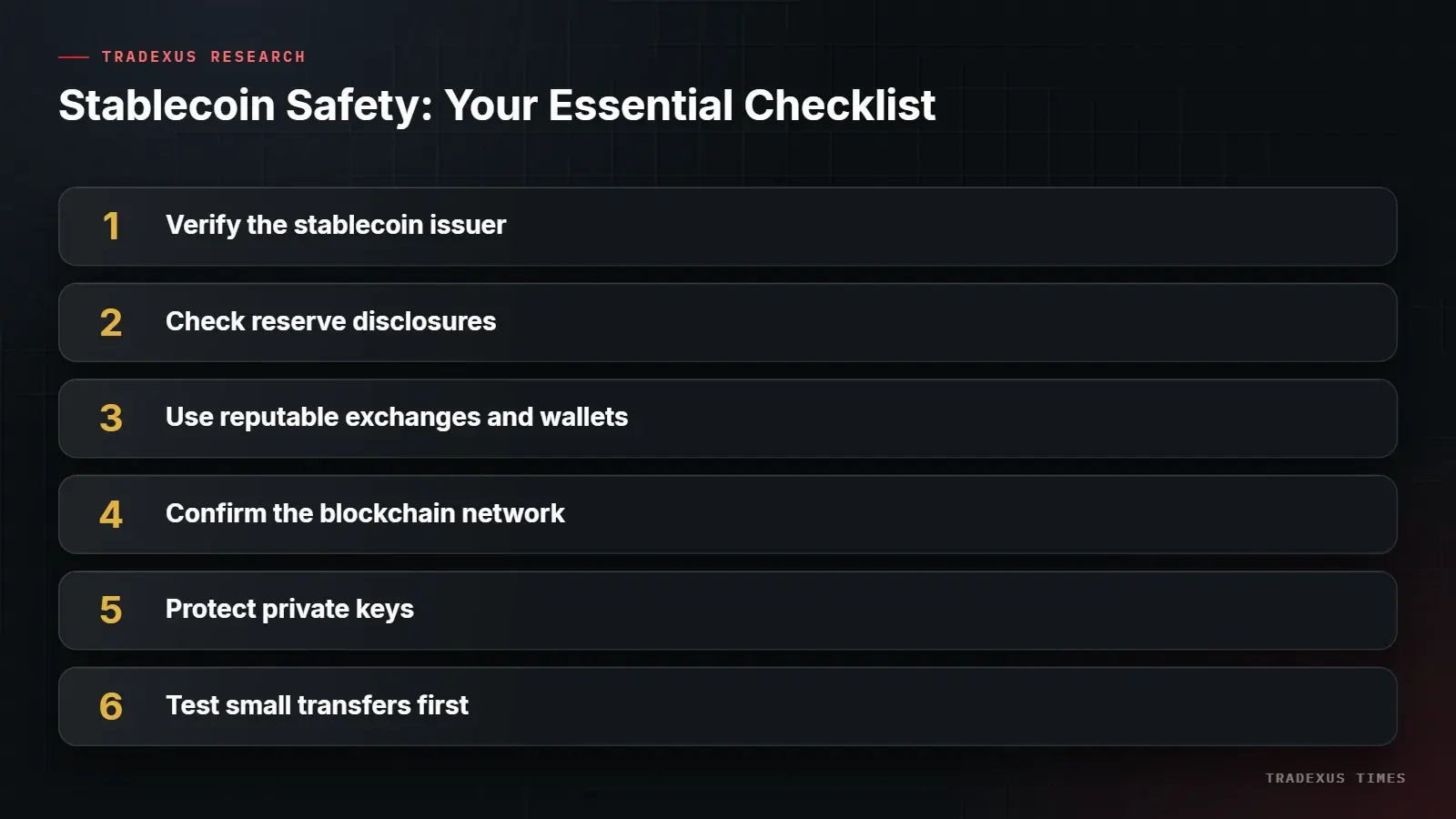
Choosing between USDT and USDC depends on the intended use. Someone who frequently trades across cryptocurrency exchanges may prefer USDT because of its extensive market adoption. Someone who places greater emphasis on published reserve information and Circle's assurance reporting may prefer USDC. Regardless of the choice, users should check the issuer's official reserve disclosures, understand redemption requirements, and verify the reputation of the exchange or wallet they use. It is equally important to select the correct blockchain network when transferring tokens and to protect wallet passwords and private keys. A small test transaction can help confirm that the destination address and network are correct before transferring a larger amount. Users should also remember that stablecoins are not automatically equivalent to insured bank deposits.[5]
The Future of Stablecoins
Stablecoins are becoming an important part of the relationship between traditional finance and blockchain technology. Their ability to combine digital transfers with relatively stable prices makes them attractive for trading, payments, and financial applications. USDT and USDC demonstrate two major approaches to this market: widespread adoption and liquidity on one side, and an emphasis on reserve transparency and compliance on the other. Nevertheless, their long-term success will depend on reliable reserves, effective regulation, secure technology, and public confidence. As financial institutions, businesses, and governments explore blockchain-based payment systems, stablecoins may play an increasingly significant role in the global financial landscape
Conclusion: Are Stablecoins the Future of Digital Finance?
Stablecoins such as USDT and USDC are transforming the cryptocurrency landscape by combining the flexibility of blockchain technology with the relative price stability of traditional currencies. They make digital payments, international transfers, and cryptocurrency trading more accessible and efficient. However, their reliability depends on reserve quality, issuer transparency, regulatory frameworks, and technological security. Understanding how stablecoins work, as well as their benefits and risks, is essential for anyone interested in digital finance. As blockchain adoption continues to grow, stablecoins may become an increasingly important bridge between traditional financial systems and the digital economy.
Sources
- bis.org/publications/aer-2022/future-monetary-system
- circle.com/transparency
- tradexustimes.com/research/what-is-blockchain-2-2
- home.treasury.gov/system/files/136/StableCoinReport_Nov1_508.pdf?_sp=afd072b0-f5ec-4d4a-a1f0-64e73236517a
- tradexustimes.com/research/how-to-buy-crypto-safely
Education only — not financial advice. Figures are as of the dates given in the text and its sources. Our editorial policy · Report an error