What Is a Crypto Bridge? Moving Assets Between Blockchains
Crypto bridges connect different blockchains, enabling seamless asset transfers while introducing new opportunities and security challenges.


Key takeaways
- Cross-Chain Connectivity: Crypto bridges connect independent blockchain networks, allowing users to transfer assets and access decentralized applications across different ecosystems.
- Different Bridging Mechanisms: Common bridge models include lock-and-mint, burn-and-mint, and liquidity-based transfers, each using a different approach to move assets between networks.
- Greater Flexibility: Bridges expand access to DeFi platforms, improve interoperability, and allow users to benefit from the unique features of multiple blockchains.
- Security Risks: Smart-contract vulnerabilities, validator failures, phishing attacks, and wrapped-token risks can expose users to financial losses.
- Safe Bridge Usage: Choosing reputable bridges, verifying network and wallet addresses, reviewing transaction fees, and checking security audits can help reduce cross-chain transaction risks.
Introduction: Understanding Crypto Bridges
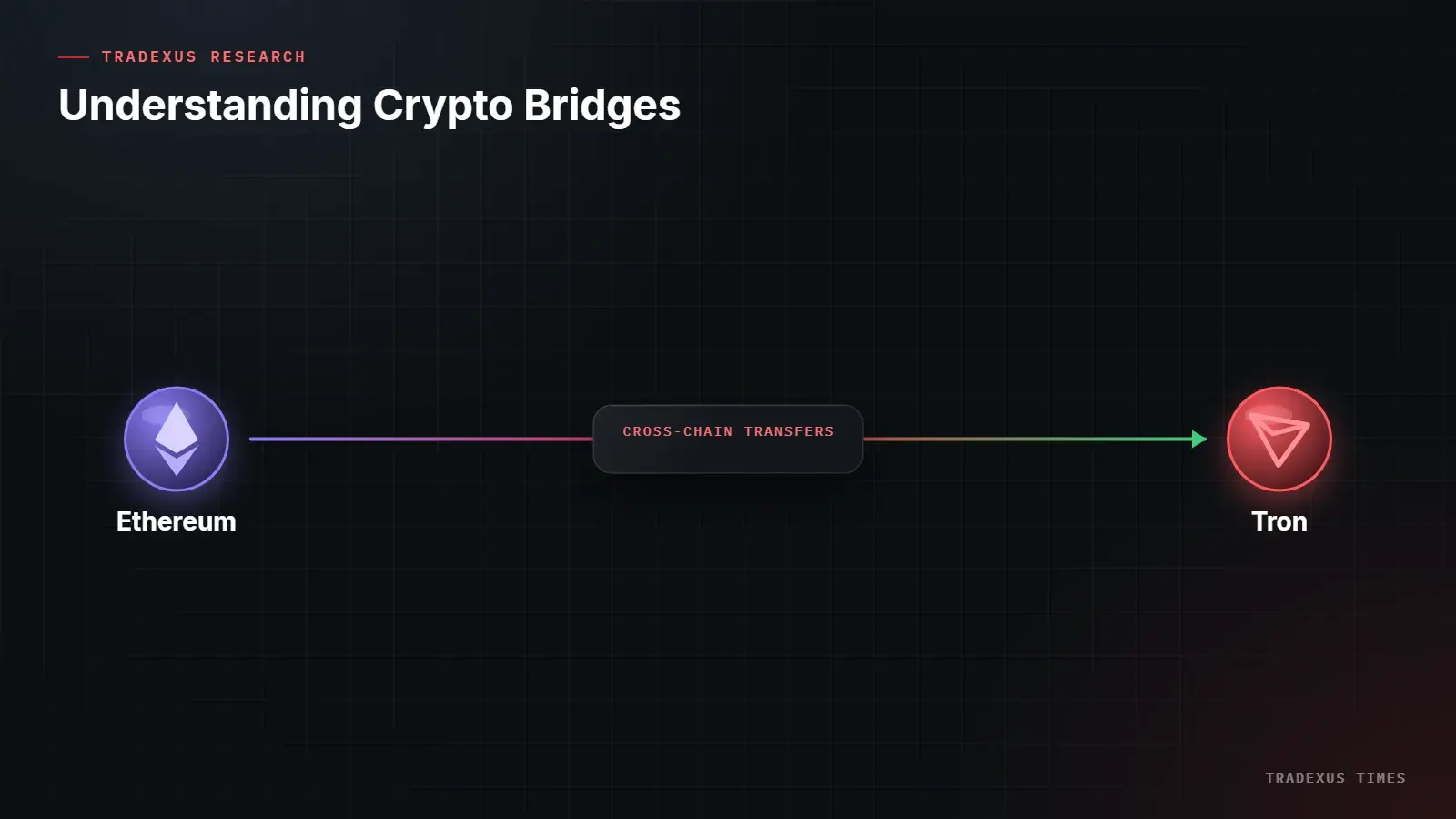
The blockchain ecosystem consists of numerous independent networks, including Ethereum, BNB Chain, Polygon, Avalanche, and Solana. Each blockchain has its own infrastructure, rules, applications, and digital assets. Although these networks support similar activities, they do not automatically communicate with one another. For example, an Ethereum-based token cannot usually be transferred directly to the Solana network using a standard transaction. This limitation creates a challenge for users who want to access decentralized applications, exchange opportunities, or financial services across multiple blockchains. Crypto bridges address this problem by providing mechanisms that allow digital assets and, in some cases, information to move between different blockchain networks.
Why Are Crypto Bridges Necessary?
Crypto bridges are necessary because blockchains operate as separate digital environments. Each network maintains its own transaction history, consensus mechanism, and rules for validating transactions. Without interoperability solutions, users may need to rely on centralized cryptocurrency exchanges to move value between ecosystems. Bridges provide an alternative by connecting these networks. For instance, someone holding ETH on Ethereum may want to use a decentralized finance (DeFi) application on Polygon because of its potentially lower transaction costs. A bridge can facilitate this transition, allowing users to access services and opportunities that would otherwise be difficult to reach. This connectivity also helps developers build applications that interact with multiple blockchain ecosystems.
 Watch on our channelWhat Is a Crypto Bridge?
How Does a Crypto Bridge Work?
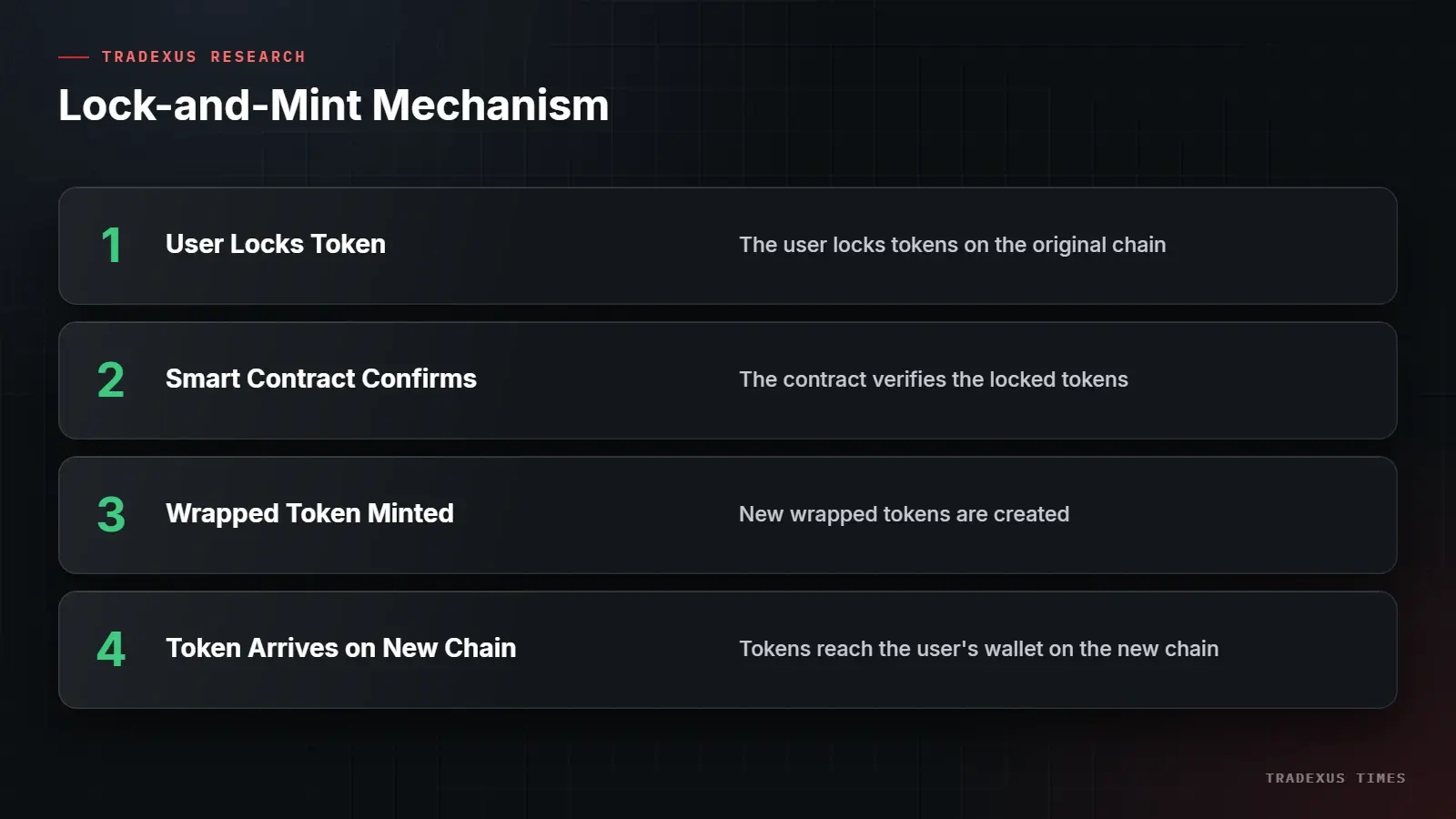
Although bridge designs differ, most follow a similar process. First, a user connects a compatible cryptocurrency wallet to a bridge platform and selects the source and destination blockchains. Next, the user chooses an asset and specifies the amount to transfer. The bridge then processes the transaction using smart contracts, validators, liquidity providers, or other verification mechanisms. Depending on its architecture, the original tokens may be locked in a smart contract, burned permanently, or exchanged through available liquidity pools. Once the required conditions are satisfied, equivalent or corresponding assets become available on the destination blockchain. The process may require additional confirmations and can take different amounts of time depending on network congestion and bridge design.
Common Types of Crypto Bridges
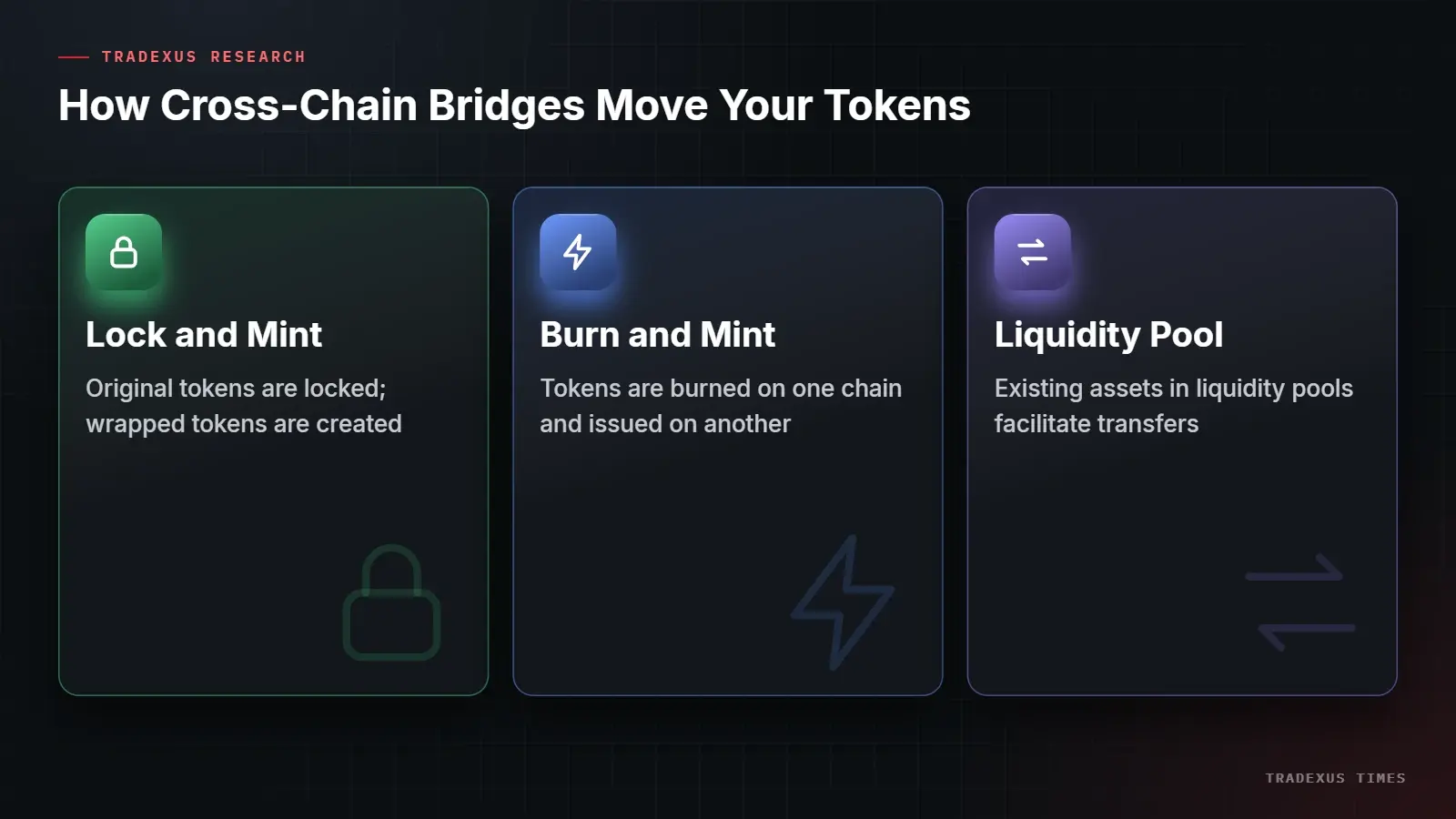
Crypto bridges use different mechanisms to transfer assets. One common approach is the lock-and-mint model. In this system, the original tokens are locked on the source blockchain, and an equivalent wrapped token is created on the destination blockchain. Another approach is burn-and-mint, where tokens are destroyed on the original network and corresponding tokens are issued on the destination network. This model is often used when a token issuer supports the asset on multiple chains. A third method is liquidity-based bridging, where liquidity providers maintain assets across different networks. The bridge uses available liquidity to deliver the corresponding asset to the user without necessarily creating a wrapped token. Each approach has different requirements, costs, and security assumptions.
Popular Crypto Bridge Examples
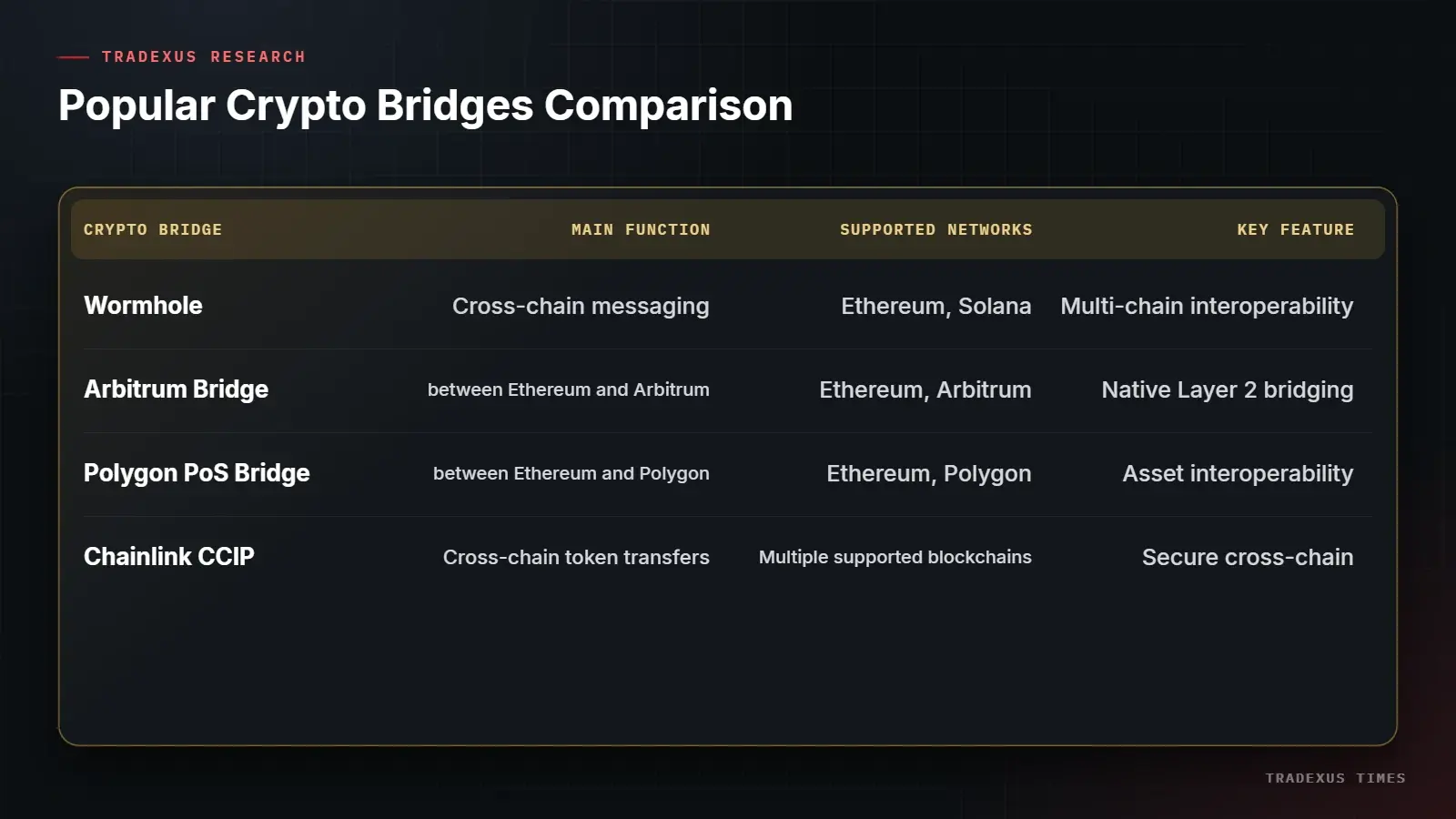
Several well-known projects demonstrate how cross-chain technology works in practice. Wormhole connects multiple blockchain ecosystems and supports cross-chain messaging and asset transfers. Arbitrum Bridge allows users to transfer assets between Ethereum and Arbitrum. Polygon PoS Bridge facilitates transfers between Ethereum and Polygon. Another example is Chainlink CCIP, which supports token transfers and communication between smart contracts on different networks. These solutions illustrate that bridges are not identical: they differ in supported blockchains, verification systems, transaction costs, and security models.
Advantages and Limitations of Crypto Bridges
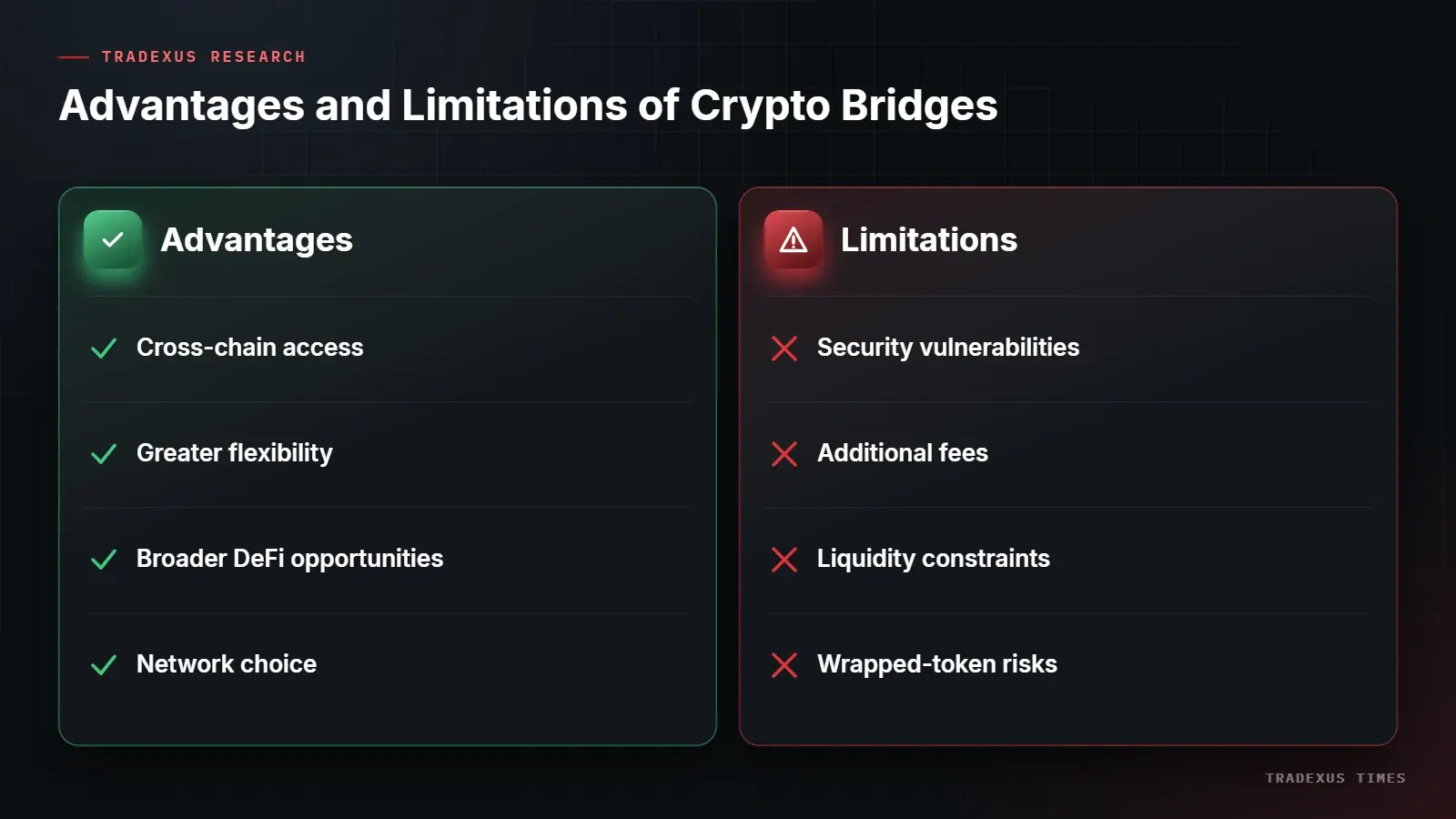
Crypto bridges offer several important advantages. They improve interoperability, provide access to decentralized applications on different networks, and allow users to explore blockchain ecosystems with different transaction speeds and fees. They can also improve liquidity by making assets available across multiple decentralized finance platforms. However, these benefits come with limitations. Bridge transactions may involve additional fees, waiting periods, and technical complexity. Wrapped tokens may also introduce risks because their value and usability depend on the bridge's ability to maintain the relationship between the original and represented assets. Furthermore, liquidity shortages can affect transaction execution. Therefore, a bridge should not be judged solely by its speed or convenience; its architecture and security assumptions are equally important.
Security Risks: What Should Users Know?
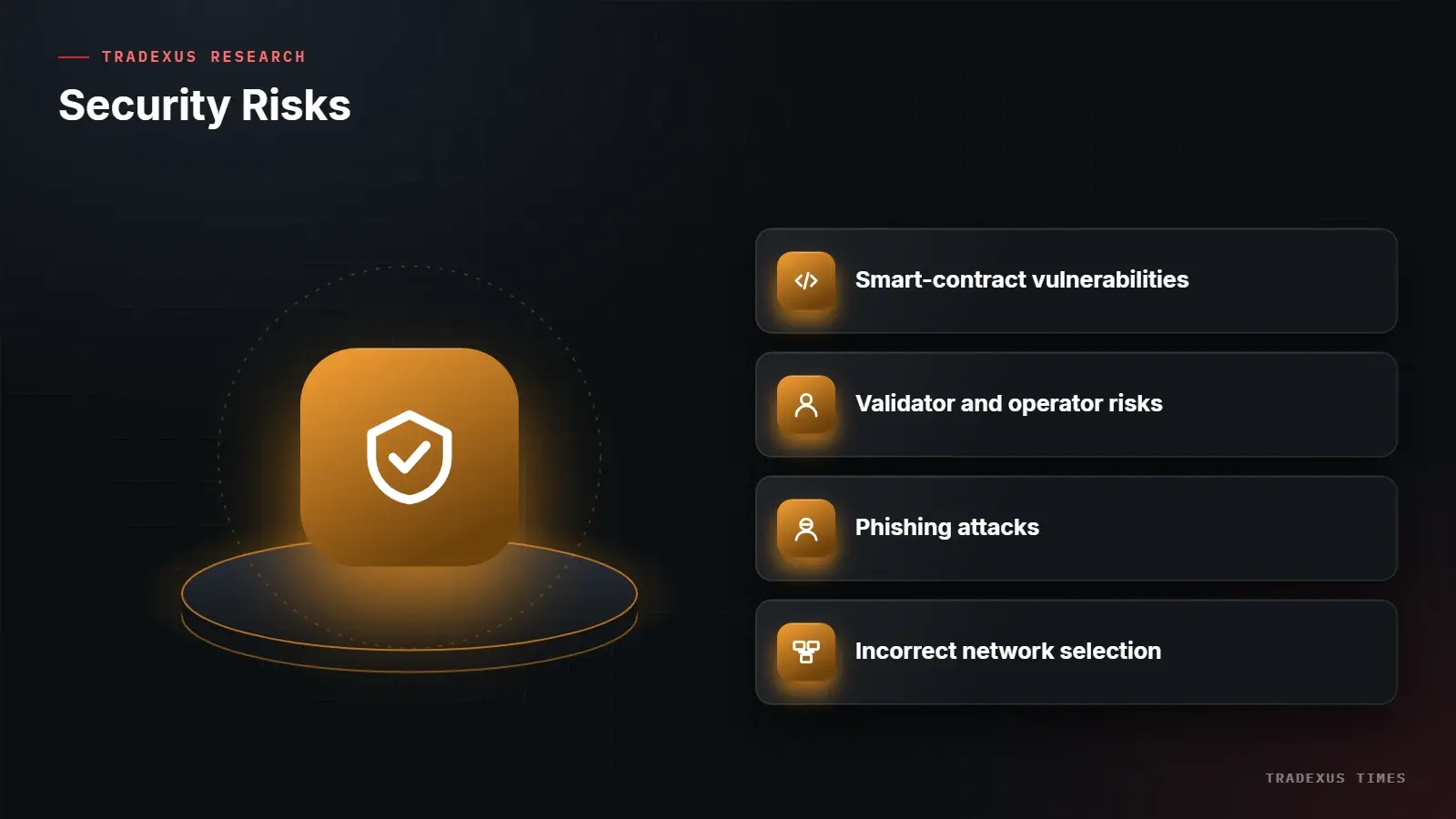
Security is one of the most important considerations when using a crypto bridge. Bridges often manage substantial amounts of digital assets, making them attractive targets for attackers. A vulnerability in a smart contract can allow unauthorized access to locked funds or improperly issued tokens. Some bridges also rely on external validators or multisignature wallets, creating additional trust requirements. If these systems are compromised, users may lose their assets even when the underlying blockchains remain secure. Other risks include phishing websites, fake bridge applications, incorrect destination addresses, and unsupported token transfers. Users should verify official websites, investigate independent security audits, understand the bridge's verification mechanism, and test unfamiliar routes with small amounts before transferring larger balances.
How to Use a Crypto Bridge Safely
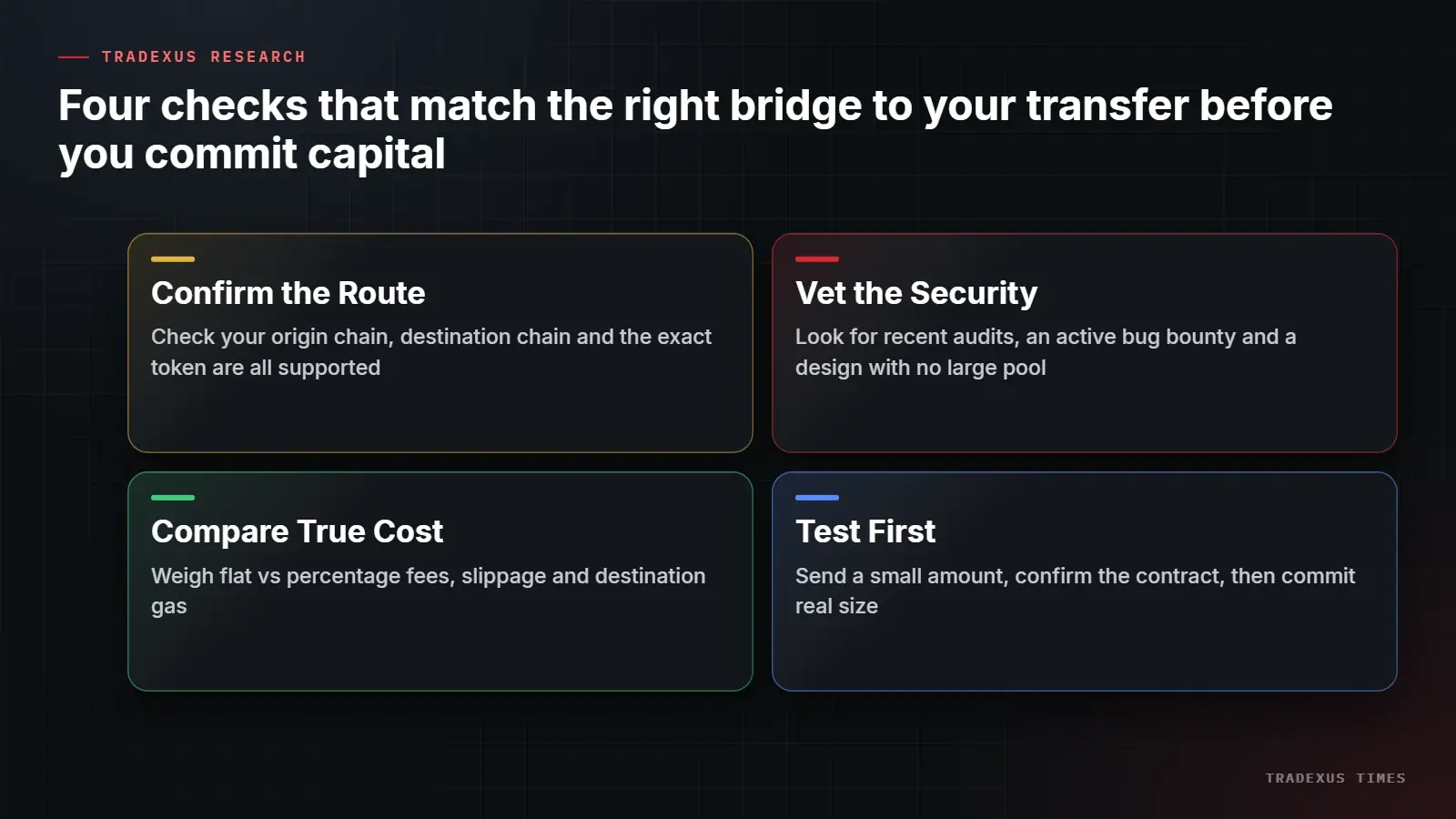
Using a crypto bridge generally involves a few straightforward steps, but each stage requires attention. First, choose a reputable bridge that officially supports both the source and destination networks. Second, connect your wallet and confirm that it is connected to the correct source blockchain. Third, select the cryptocurrency, enter the transfer amount, and carefully review the estimated fees, exchange rate, and destination network. Fourth, approve the transaction and wait for the required confirmations. Finally, check the destination wallet to ensure that the assets have arrived. If the transferred token does not appear automatically, you may need to add its verified contract address to your wallet. Never share your recovery phrase or private keys with a bridge website or anyone claiming to provide technical support.
The Future of Blockchain Interoperability
Blockchain interoperability is an important part of the industry's long-term development. As more networks emerge, users and developers increasingly need reliable ways to exchange assets and information across different ecosystems. New technologies are focusing on improving transaction speed, reducing costs, strengthening verification mechanisms, and enabling more advanced cross-chain applications. Protocols such as Chainlink CCIP demonstrate how blockchain communication can extend beyond simple token transfers to include messages and instructions that trigger smart-contract actions on another network. Nevertheless, achieving secure interoperability remains a technical challenge. The future of crypto bridges will depend on balancing convenience, decentralization, scalability, and security. Rather than operating as isolated systems, blockchains may increasingly function as interconnected parts of a broader digital economy.

Conclusion: Why Crypto Bridges Matter
Crypto bridges play a significant role in creating a more connected blockchain ecosystem. They allow users to move assets between networks, access different decentralized applications, and benefit from the unique features of multiple blockchains. However, bridging is not entirely risk-free. Smart-contract vulnerabilities, malicious actors, liquidity limitations, and verification weaknesses can expose users to financial losses. Understanding how bridges operate, comparing their mechanisms, and choosing reliable platforms are essential for anyone participating in decentralized finance. As blockchain technology develops, secure and efficient bridging solutions will become increasingly important for supporting a more interoperable digital economy.
Sources
- ethereum.org/bridges/
- chain.link/education-hub/cross-chain-bridge
- binance.com/en/academy/articles/what-is-cross-chain-interoperability
Education only — not financial advice. Figures are as of the dates given in the text and its sources. Our editorial policy · Report an error