Crypto Trading Explained: Spot vs Futures Trading
Spot trading means buying and owning actual cryptocurrencies, while futures trading allows you to speculate on price movements using contracts and leverage, with different risks and rewards.

Key takeaways
- Spot trading involves buying and owning actual cryptocurrencies, while futures trading involves speculating on their price movements.
- Futures trading allows traders to take long and short positions.
- Leverage increases potential profits but also magnifies losses and liquidation risks.
- Spot trading is generally simpler, making it more suitable for beginners.
- Effective risk management and understanding market mechanisms are essential for both trading methods.
Introduction: Understanding the Two Main Types of Crypto Trading
Cryptocurrency trading has evolved into a diverse financial market where traders can participate in different ways. Two of the most popular methods are spot trading and futures trading. Although both allow participants to benefit from cryptocurrency price movements, they operate through different mechanisms and involve different levels of risk. Understanding these differences is essential before choosing a trading approach. Spot trading involves buying and selling actual digital assets, while futures trading involves contracts whose value is linked to the price of an underlying cryptocurrency. The distinction affects asset ownership, capital requirements, trading strategies, and potential losses.
 Watch on our channelSpot vs Futures Trading
What Is Spot Trading?
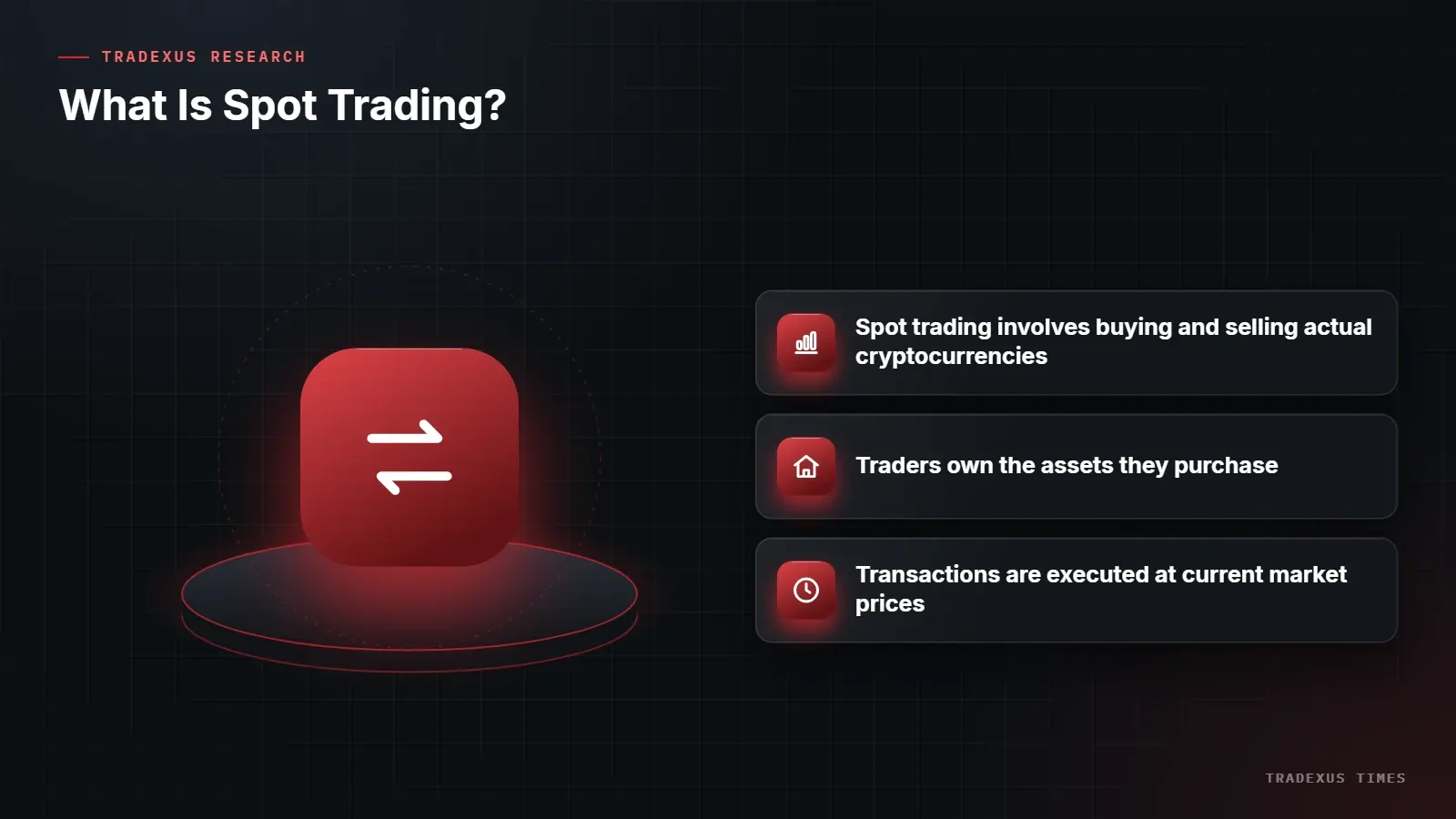
Spot trading is the direct purchase or sale of a cryptocurrency at its current market price. When someone purchases Bitcoin through a spot exchange, they receive Bitcoin in their exchange account or, where supported, can transfer it to a personal wallet. The transaction is generally settled immediately or shortly after execution. The trader becomes the owner of the purchased asset and can hold it, sell it later, or transfer it to another supported wallet.
For example, imagine that Bitcoin is trading at $60,000[2]. A trader uses $1,000[2] to purchase Bitcoin. If the price increases by 10%, the investment becomes worth approximately $1,100, excluding fees[2]. If the price falls by 10%, its value decreases to approximately $900[2]. In ordinary, unleveraged spot trading, the trader does not face liquidation simply because the market price falls. However, the investment can lose most or even all of its market value.
What Is Futures Trading?
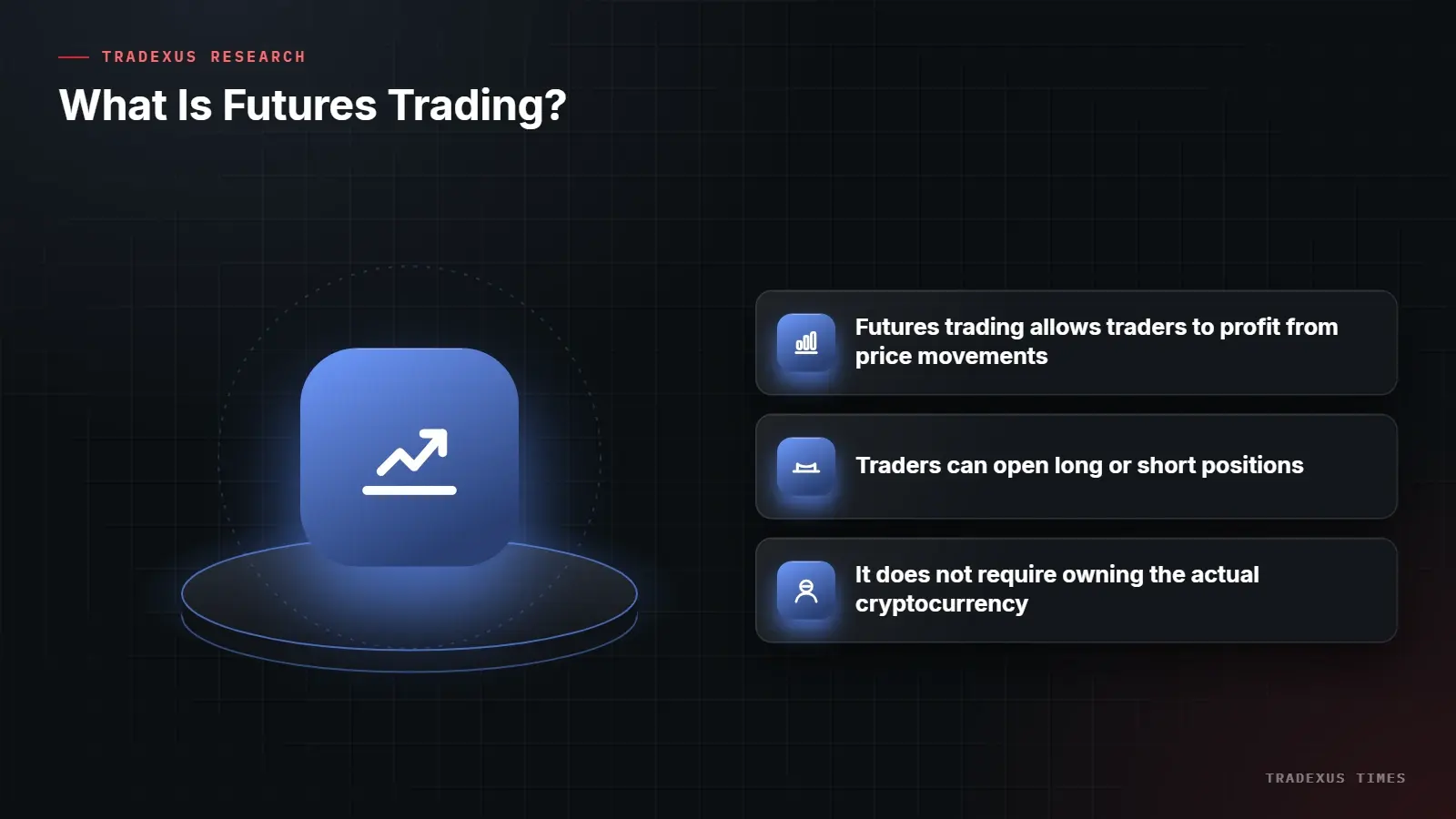
Futures trading is a method of trading cryptocurrency price movements through financial contracts rather than directly purchasing the underlying digital asset. A futures contract establishes the terms under which the contract's value is calculated and settled. Depending on the product, contracts may have a specific expiration date or operate as perpetual futures, which do not have a fixed expiry.
Futures trading allows participants to open two main types of positions: long and short. A long position reflects an expectation that the cryptocurrency's price will increase, while a short position reflects an expectation that its price will decrease. This flexibility allows traders to pursue opportunities in both rising and falling markets. However, futures contracts introduce additional considerations, including margin requirements, funding payments, contract specifications, and liquidation mechanisms.
Spot Trading vs Futures Trading: Key Differences
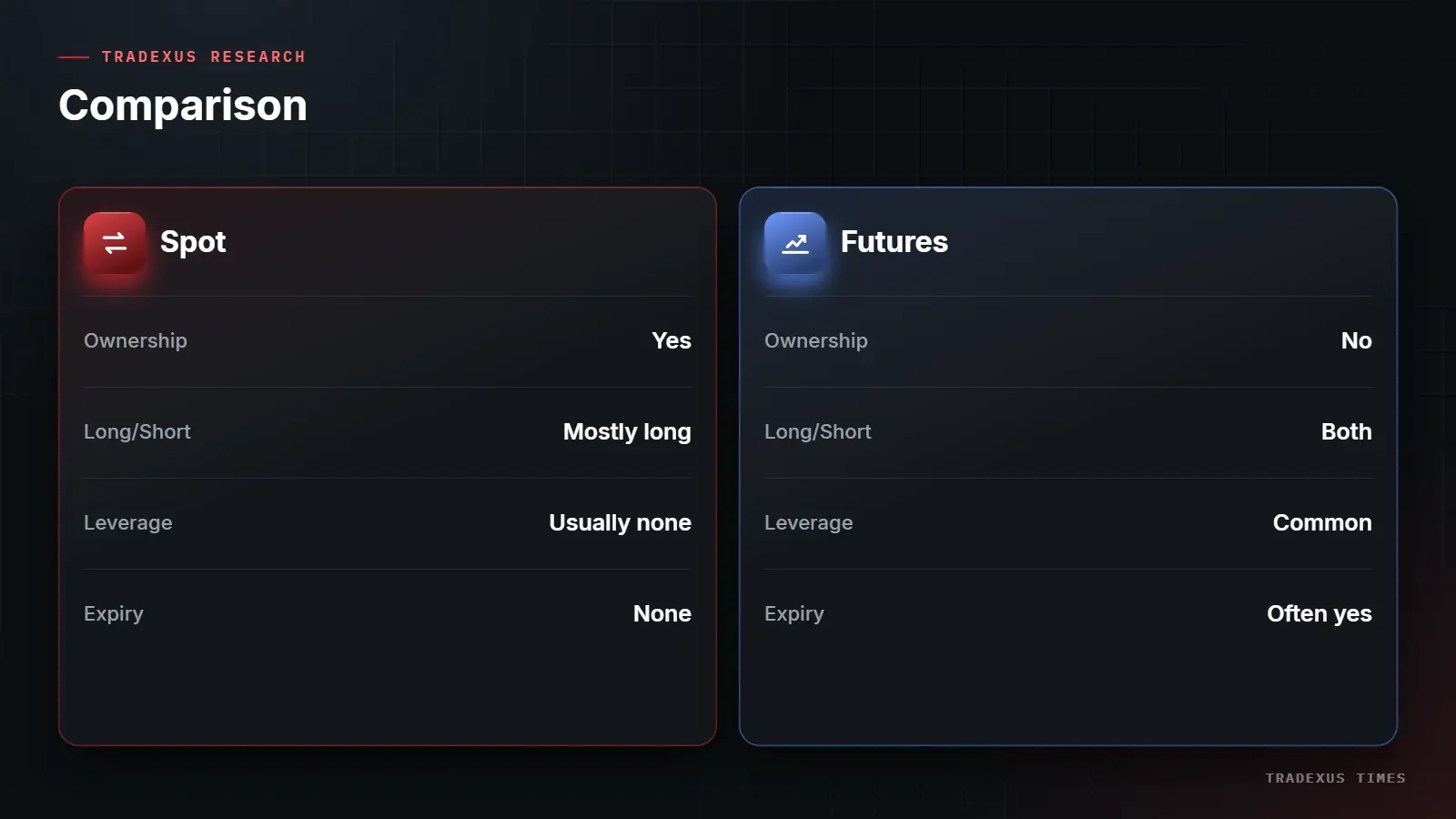
The most important difference between spot and futures trading is what the trader actually owns. In spot trading, the trader purchases the cryptocurrency itself. In futures trading, the trader holds a contract that provides exposure to the cryptocurrency's price. Spot transactions generally require the full purchase amount, whereas futures positions can be opened using a smaller amount of collateral through leverage. Futures also make short positions more accessible. However, futures introduce additional costs and risks, such as funding payments, margin requirements, and liquidation. The choice between these methods depends on trading objectives, experience, available capital, and risk tolerance.
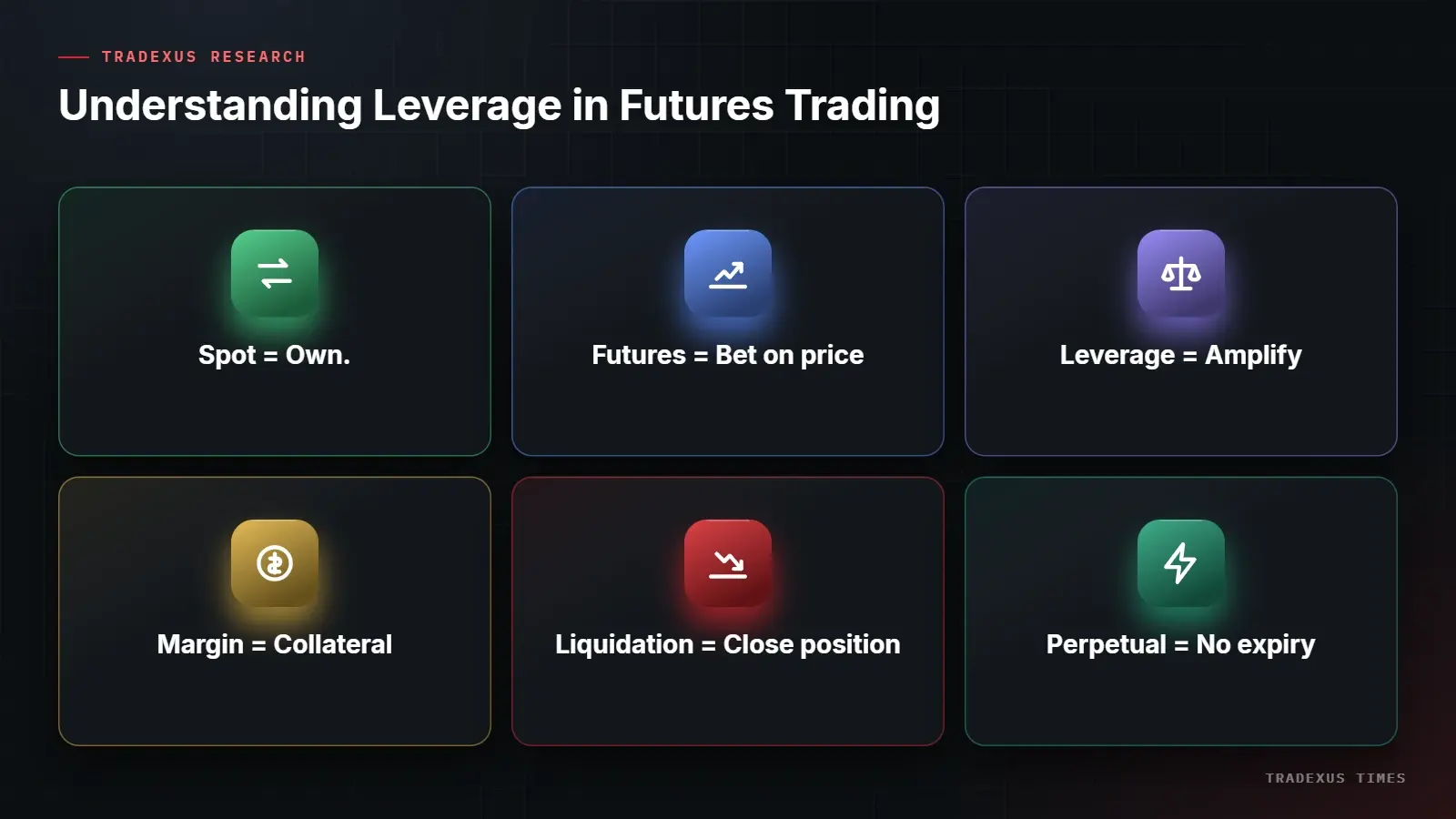
Understanding Leverage in Futures Trading
Leverage is one of the defining features of cryptocurrency futures trading. It allows traders to control a position larger than their initial capital by using margin as collateral. For example, with $100 and 10x leverage, a trader can open a position worth $1,000[3]. If the market moves 5% in the trader's favor, the position generates approximately $50 in profit before fees and funding costs[3]. However, a 5% adverse movement creates approximately $50 in losses[3]. This represents a 50% loss of the original $100 margin[3]. Actual outcomes depend on maintenance margin, fees, funding, and the exchange's liquidation rules. Leverage therefore increases both potential returns and potential losses.
What Is Liquidation and Why Does It Matter?
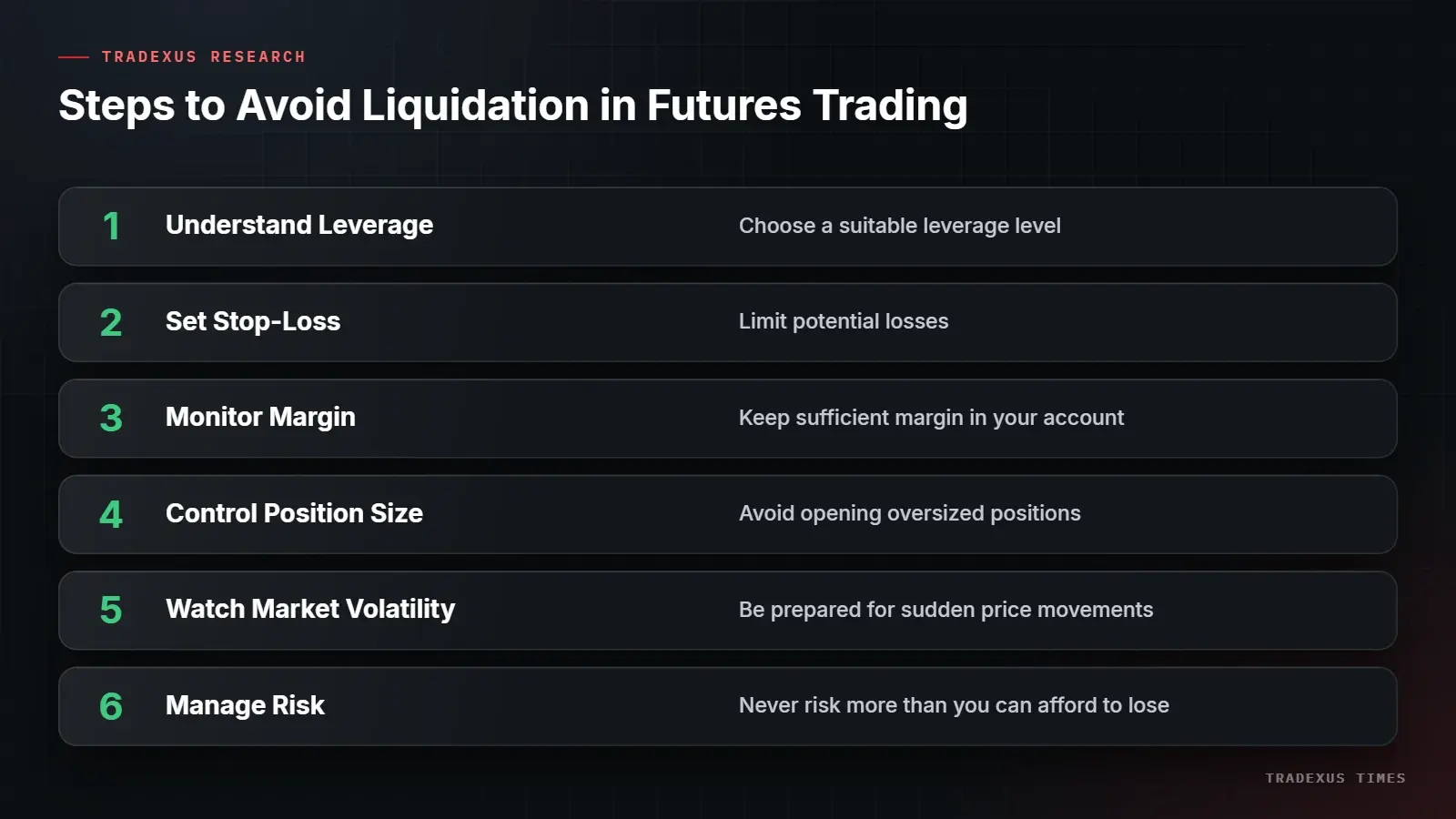
Liquidation occurs when a leveraged trading position loses enough value that its remaining margin no longer satisfies the exchange's maintenance margin requirements. The exchange may automatically close the position to prevent further losses from accumulating. Consider a trader who opens a highly leveraged Bitcoin position. Even a relatively small price movement against that position can significantly reduce the available collateral. If the margin falls below the required threshold, liquidation may follow. This is one of the biggest dangers of futures trading. Traders should understand liquidation prices, margin requirements, and stop-loss orders before opening leveraged positions. A stop-loss can help manage exposure, although execution is not guaranteed at the exact requested price during volatile conditions.
Advantages and Disadvantages of Spot Trading
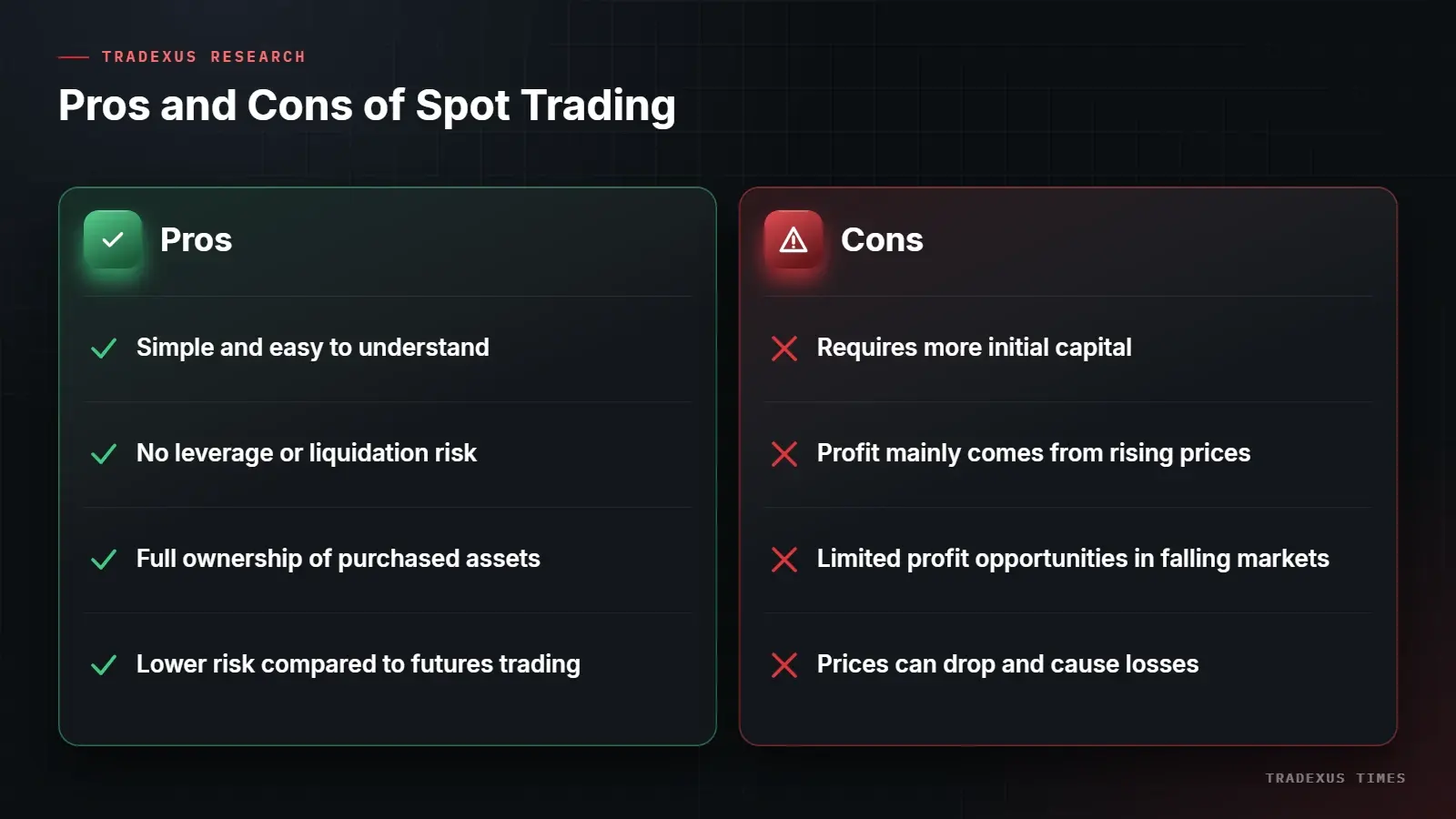
Spot trading offers several advantages, particularly for individuals who want direct exposure to cryptocurrencies without using leverage. Traders own the assets they purchase and can potentially hold them for extended periods. They can also transfer supported cryptocurrencies to external wallets, giving them greater control over custody. Another advantage is simplicity: spot trading generally involves fewer complicated mechanisms than derivatives trading. However, spot trading has limitations. Traders usually need the full purchase amount, and ordinary spot positions offer fewer straightforward ways to profit from falling prices. Additionally, holding cryptocurrency does not eliminate market risk. A substantial decline in an asset's price can reduce an investment's value significantly.
Advantages and Disadvantages of Futures Trading
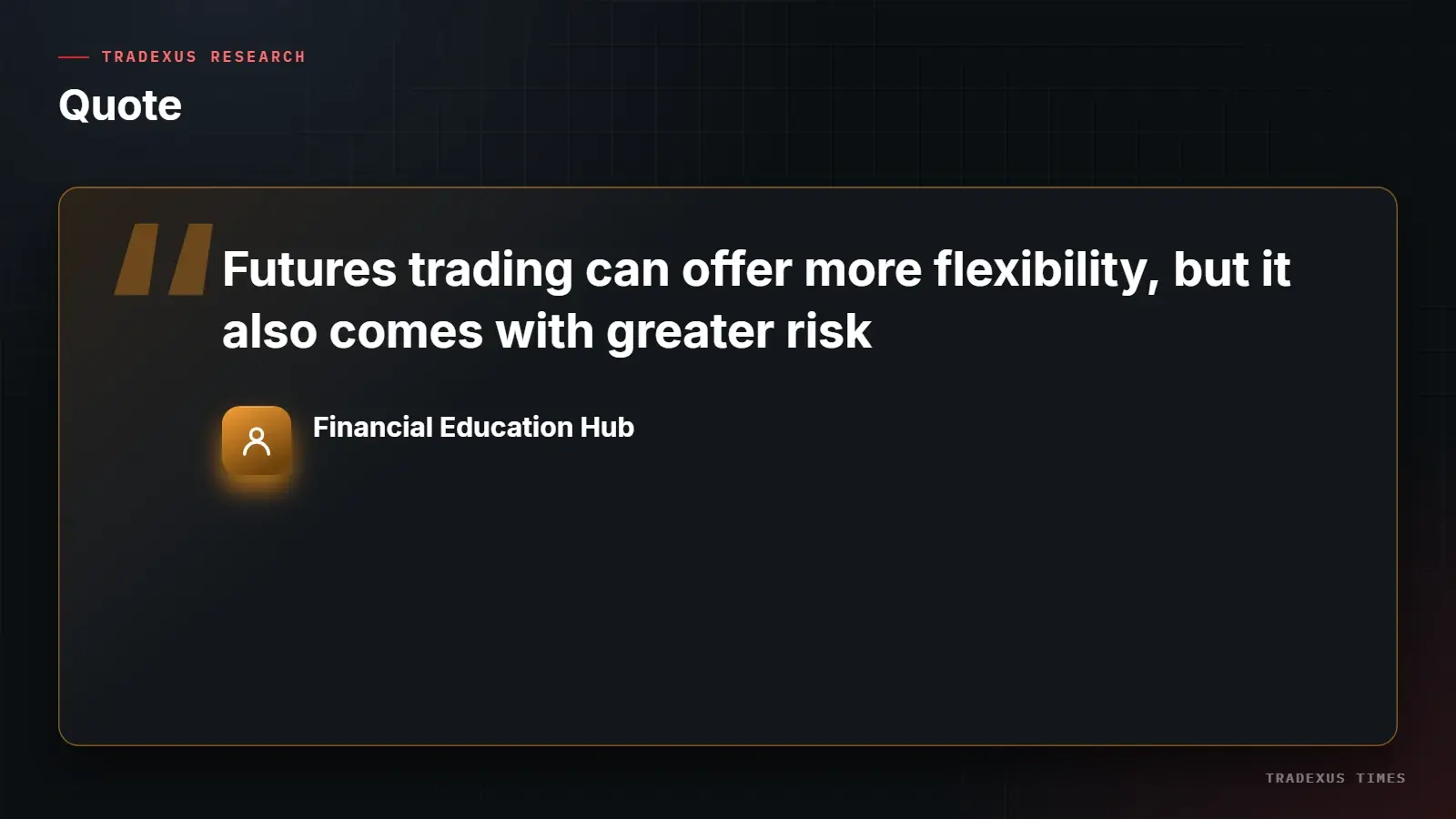
Futures trading provides flexibility because traders can take long or short positions depending on their market expectations. Leverage also allows them to access larger positions without committing the full position value as initial collateral. Futures can additionally be used for hedging. For example, someone holding Bitcoin may open a short futures position to help offset potential losses during a temporary market decline. Nevertheless, futures trading involves considerable complexity. Traders must understand margin, funding rates, liquidation, and contract specifications. Trading fees and periodic funding payments can also affect profitability. Most importantly, leverage can cause rapid losses, making futures less forgiving than ordinary unleveraged spot trading.
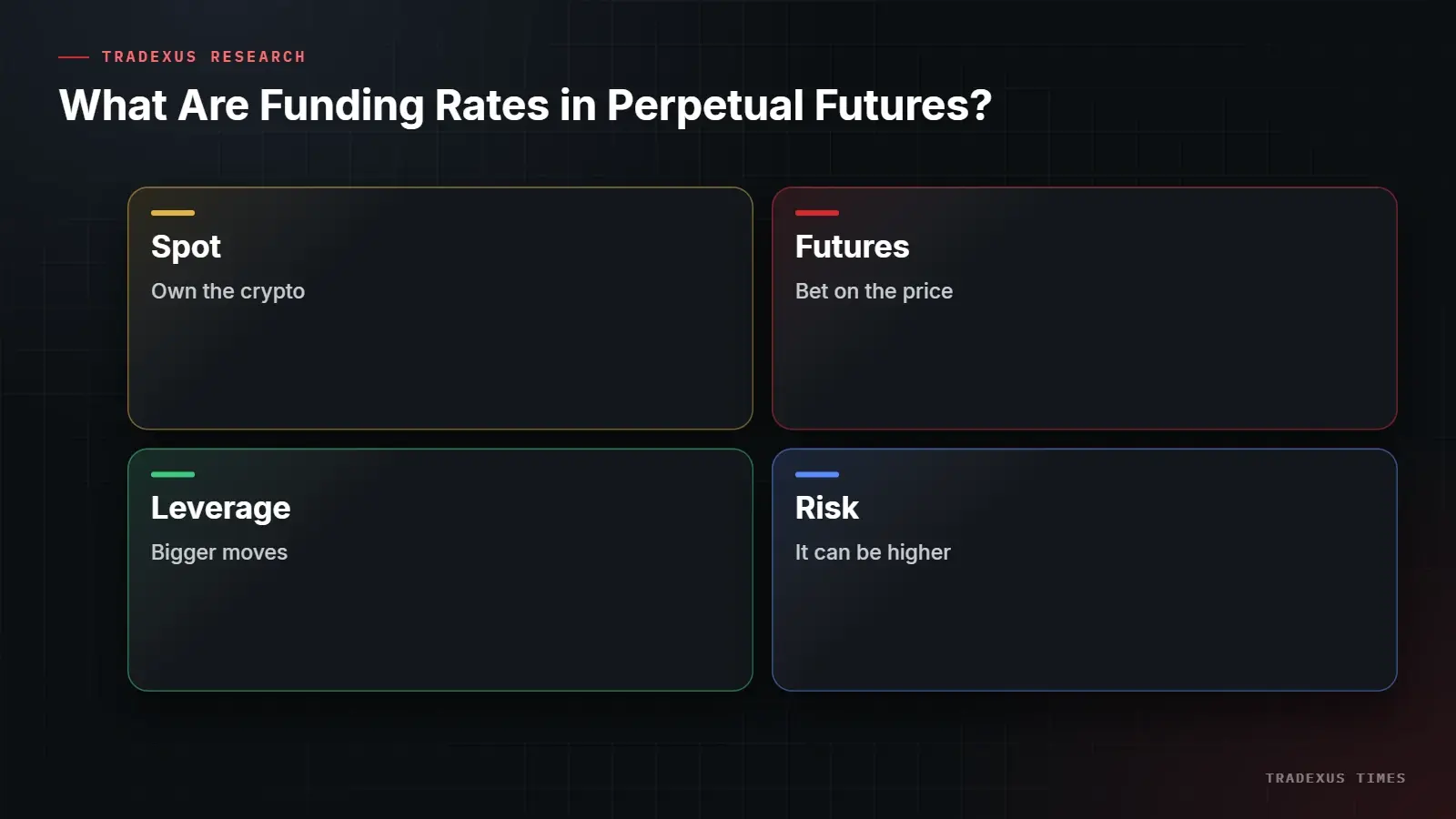
What Are Funding Rates in Perpetual Futures?
Funding rates are periodic payments exchanged between traders holding long and short positions in perpetual futures markets. Their primary purpose is to help keep the perpetual contract price aligned with the underlying spot market price. When the funding rate is positive, traders holding long positions generally pay those holding short positions. When it is negative, the direction of payment is generally reversed. Funding rates can change according to market conditions and exchange-specific calculations. These payments are important because holding a futures position for an extended period may become expensive, even if the market moves in the expected direction. Therefore, traders should consider funding costs alongside potential price movements and trading fees.
How Should Beginners Choose Between Spot and Futures?
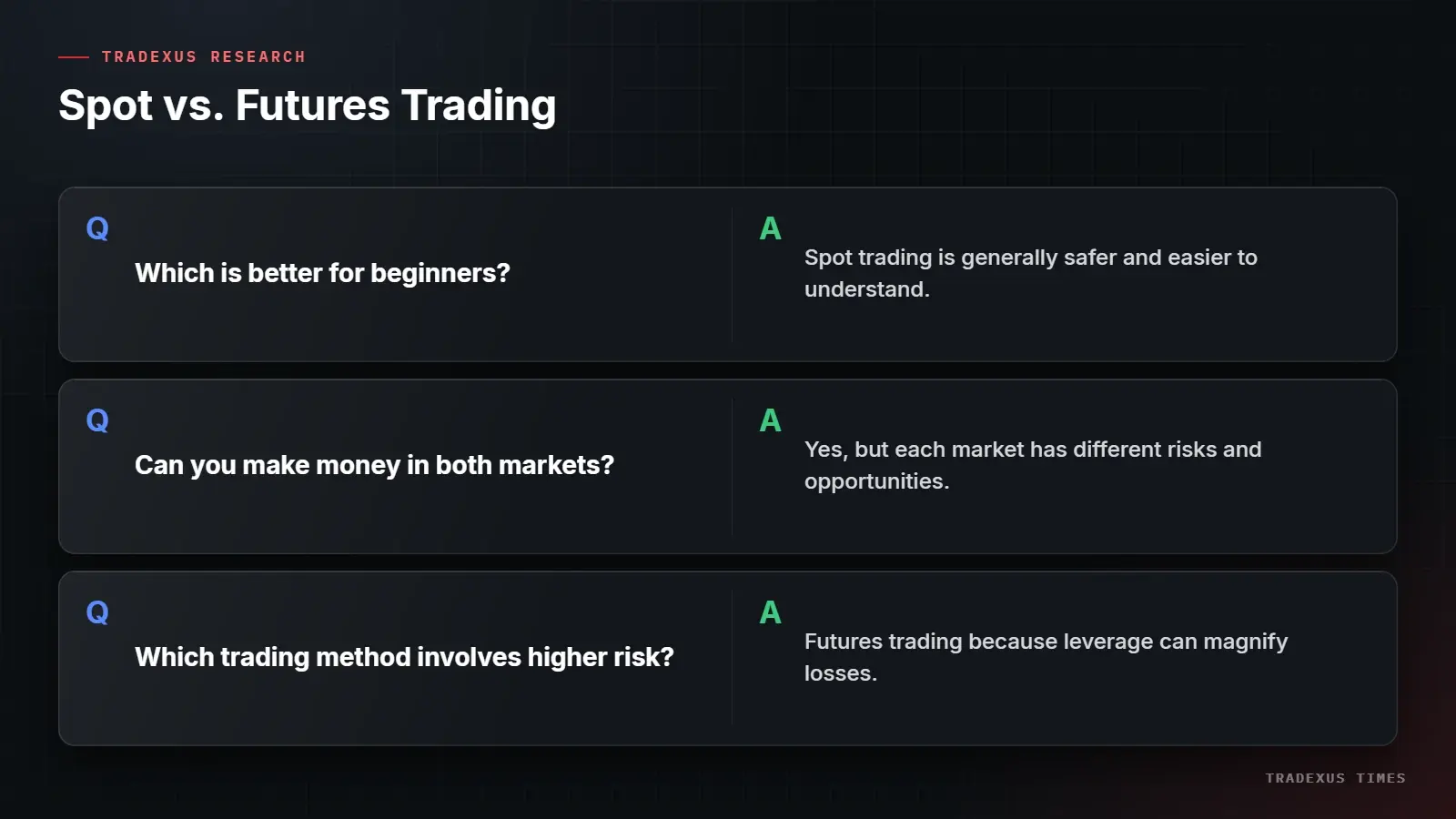
For individuals new to cryptocurrency markets, understanding spot trading is generally a useful starting point. It provides an opportunity to learn about market orders, limit orders, price volatility, exchange interfaces, and portfolio management without introducing the additional risks of leveraged derivatives. Futures trading may be more appropriate for experienced participants who understand technical market mechanics and can manage margin requirements. Before choosing either method, traders should consider their financial objectives, available capital, investment horizon, and ability to tolerate losses. They should also research exchange security, fees, regulatory status, and withdrawal policies. There is no trading method that guarantees profits, and a strategy that works in one market condition may fail in another
Risk Management Strategies for Crypto Traders
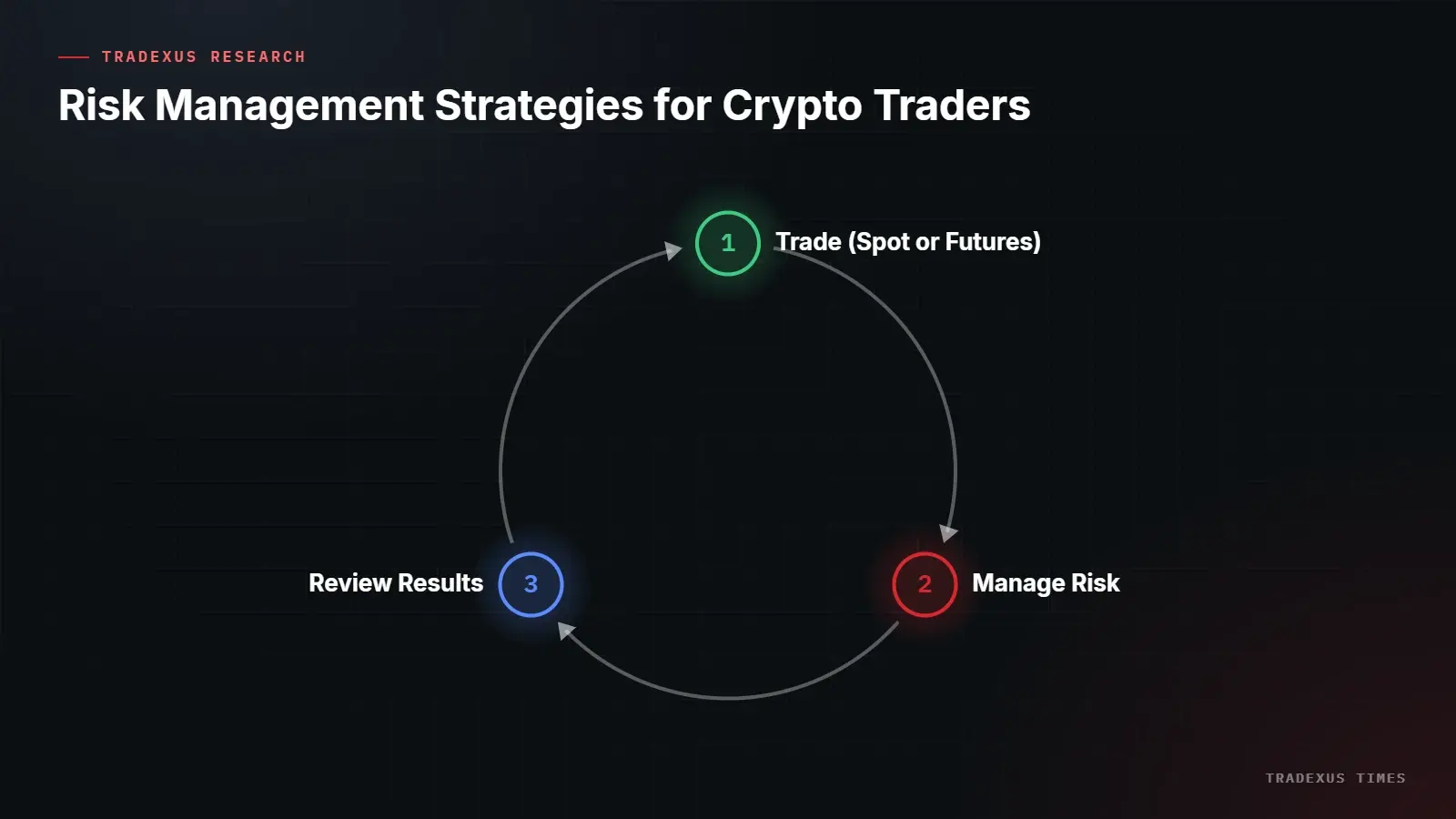
Risk management is essential in both spot and futures trading because cryptocurrency markets can experience sudden and unpredictable price movements. Traders should establish clear entry and exit points before opening positions. In spot trading, diversification can help reduce exposure to a single cryptocurrency. In futures trading, controlling leverage and choosing appropriate margin settings are particularly important. Traders should avoid investing money they cannot afford to lose and should not make decisions based solely on emotions or short-term market excitement. Maintaining a trading journal, reviewing previous transactions, and evaluating mistakes can also improve decision-making. Consistent risk management is often more valuable over time than attempting to maximize profits from individual trades.
Common Myths About Spot and Futures Trading
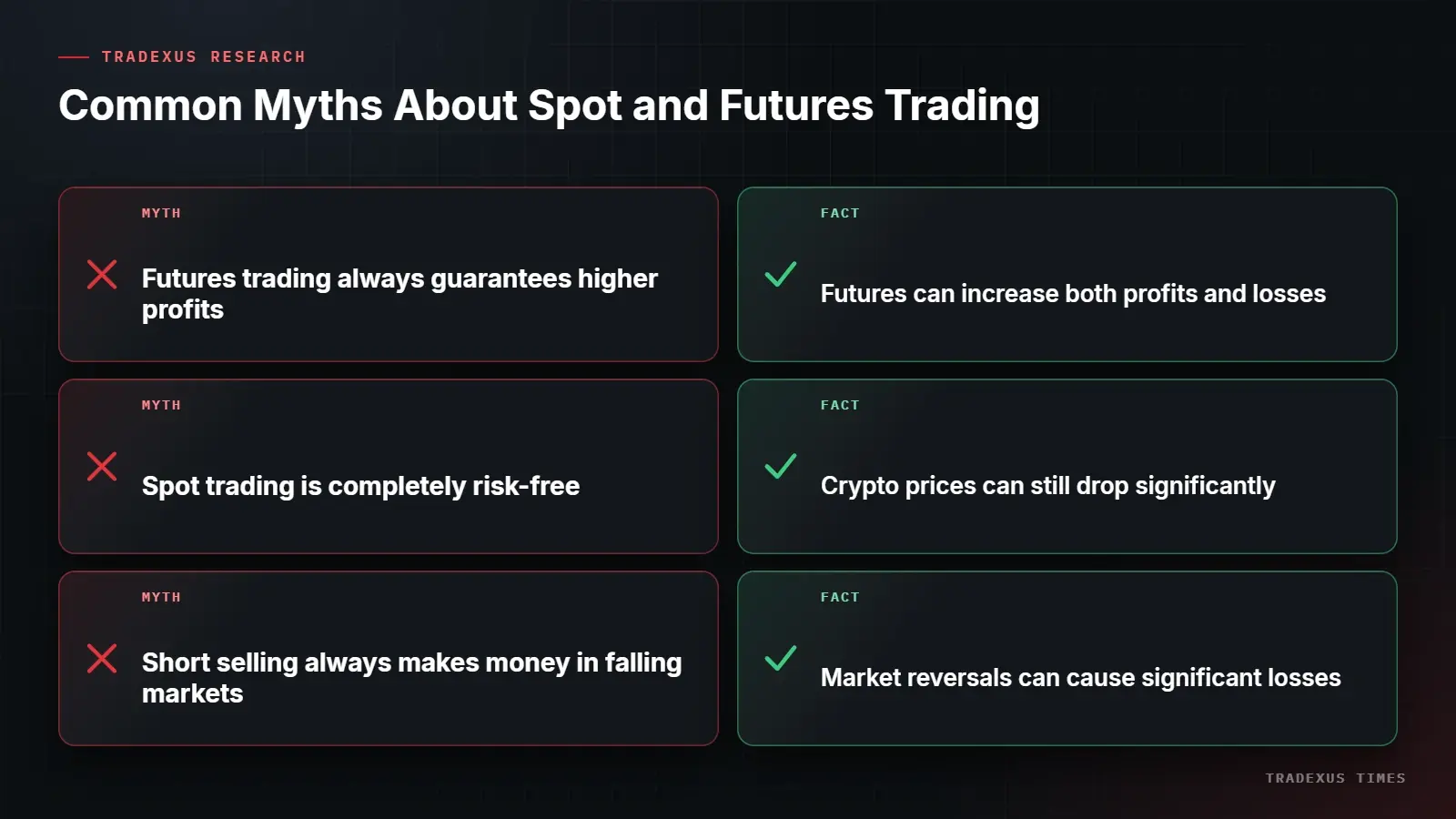
Several misconceptions surround cryptocurrency trading. One common myth is that futures trading always generates higher profits than spot trading. In reality, futures offer leveraged exposure, which can increase both gains and losses. Another misconception is that spot trading is completely safe because traders own their cryptocurrencies. Although unleveraged spot trading generally avoids liquidation, cryptocurrency prices can still decline dramatically, and exchange or wallet security problems can cause additional losses. Some traders also believe that short positions guarantee profits during falling markets. However, incorrect timing, sudden price reversals, fees, and liquidation can make short selling risky. Understanding the actual mechanics of each market is more useful than relying on popular trading assumptions.
Developing Your Crypto Trading Knowledge
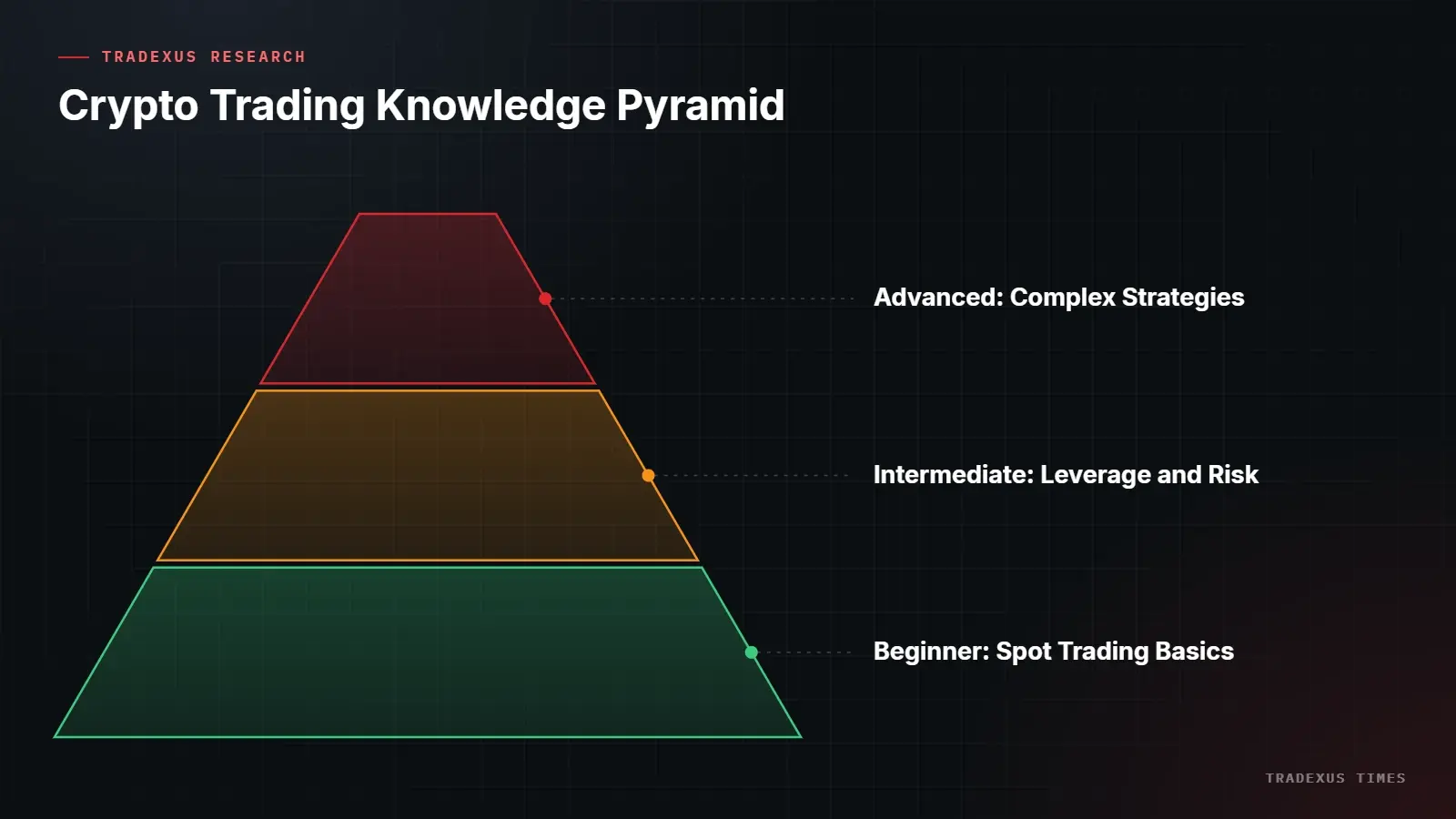
Becoming a knowledgeable cryptocurrency trader requires continuous learning. Beginners should first understand basic concepts such as blockchain technology, cryptocurrency exchanges, market orders, and price movements. Once these foundations are established, they can explore intermediate topics such as technical analysis, support and resistance, trading volume, and portfolio diversification. Advanced topics include derivatives, leverage management, funding rates, hedging, and complex trading strategies. Learning should progress gradually rather than relying on complicated strategies without understanding their underlying mechanics. Demo accounts and paper trading can provide opportunities to practise without immediately risking real capital. Keeping up with market developments and evaluating different strategies can also strengthen long-term trading knowledge.
Conclusion: Spot or Futures Trading?
Spot and futures trading serve different purposes in the cryptocurrency market. Spot trading offers direct ownership of digital assets and a relatively straightforward way to participate in cryptocurrency markets. Futures trading provides greater flexibility through long and short positions, leverage, and hedging opportunities, but introduces additional complexity and financial risks. Neither method is universally better. The appropriate choice depends on a trader's knowledge, objectives, financial circumstances, and risk tolerance. Understanding how both markets work is the first step toward making informed decisions. Rather than focusing exclusively on potential profits, traders should prioritize education, disciplined decision-making, and effective risk management.
Sources
- binance.com/en-AE/support/faq/detail/360033162052
- coinbureau.com/education/what-is-spot-trading-in-crypto
- coinbureau.com/education/crypto-futures-trading-what-is-it
Education only — not financial advice. Figures are as of the dates given in the text and its sources. Our editorial policy · Report an error