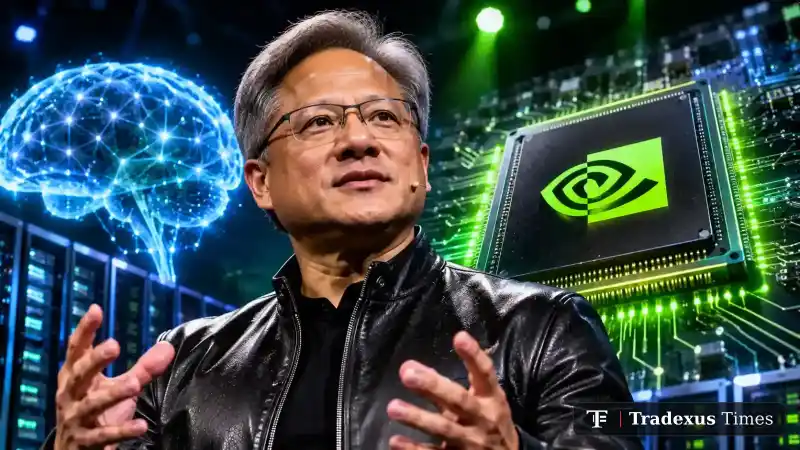
Nvidia CEO Jensen Huang has emerged as one of the most influential figures in the artificial intelligence industry, with his leadership extending well beyond the company’s role as a leading supplier of AI processors. His position has become increasingly significant as major technology companies depend on Nvidia’s hardware to develop and operate advanced AI systems.
Nvidia’s influence also reaches into the broader AI investment ecosystem. The company invests in businesses operating across the artificial intelligence sector, giving it a role not only in supplying essential computing infrastructure but also in supporting companies that may shape the industry’s future direction. This combination strengthens Huang’s influence across multiple parts of the AI value chain.
The concentration of responsibility within Nvidia adds another dimension to the issue. More than 60 senior executives reportedly report directly to Huang, while the company has not publicly identified a clear successor. This structure raises questions about leadership continuity at a company whose decisions carry implications for a much wider technology ecosystem.
The concerns have gained additional attention amid allegations involving a connection to a Chinese spy. According to the supplied report, analysts view Nvidia’s reliance on Huang as a matter that could extend beyond an internal management issue. Given the company’s importance to AI infrastructure and investment, any disruption to its leadership could create uncertainty across the industry.
The broader issue is one of leadership concentration and succession planning. As artificial intelligence becomes increasingly dependent on advanced computing infrastructure, the stability of companies supplying that infrastructure may become as important as their technological capabilities. Nvidia’s position makes the question of its leadership continuity particularly consequential for the sector.