 Polygon

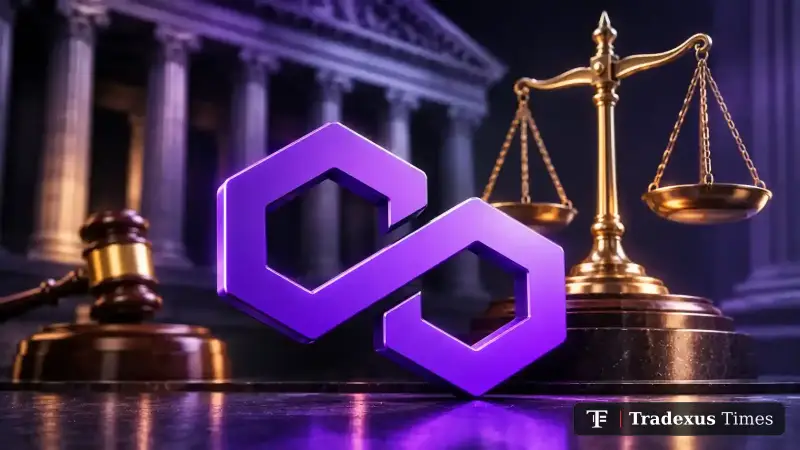
Polygon Labs has contributed as a peer reviewer to a new whitepaper published by the DIFC Courts, outlining a proposed framework for executing court decisions involving tokenized assets. The initiative represents a step toward integrating blockchain-based financial infrastructure into established legal systems, addressing one of the key challenges facing the broader adoption of tokenized assets: legal enforceability.
The whitepaper explores how judicial decisions could be implemented when the assets involved exist in tokenized form on blockchain networks. As financial assets increasingly move toward digital representations, legal institutions face the challenge of ensuring that existing enforcement mechanisms can operate effectively within blockchain-based environments.
Polygon Labs' participation highlights the company's growing engagement with institutional and legal infrastructure beyond its traditional role in blockchain scaling. Rather than focusing exclusively on transaction efficiency, the contribution places Polygon within a broader discussion about how distributed ledger technology can interact with judicial processes and established legal frameworks.
The DIFC Courts' involvement is particularly relevant given Dubai's efforts to develop an environment that accommodates financial innovation and emerging technologies. A framework addressing the execution of court decisions on tokenized assets could help clarify how digital ownership and judicial authority interact, potentially reducing legal uncertainty for businesses operating in tokenized markets.
The collaboration also involves Deca4, further highlighting the potential for cooperation between blockchain-focused organizations and institutions developing practical applications for digital assets. However, participation in the whitepaper review process does not, by itself, establish that the proposed framework has been formally adopted or implemented.
For the broader digital-asset industry, the initiative addresses an important structural issue. Tokenization can make financial assets easier to represent, transfer and manage through blockchain infrastructure, but institutional adoption also depends on whether ownership rights and legal claims can be recognized and enforced when disputes arise. Clearer procedures for handling court decisions involving tokenized assets could help address this gap.
For Polygon, involvement in this process could strengthen its position in discussions surrounding institutional blockchain adoption. Its participation also illustrates how competition among blockchain infrastructure providers may increasingly extend beyond transaction speed and network costs toward regulatory compatibility, legal integration and institutional credibility.
The next important development will be whether the proposed framework progresses toward practical implementation and whether similar legal mechanisms emerge in other jurisdictions. Greater clarity around the enforcement of judicial decisions involving tokenized assets could support institutional confidence in blockchain-based financial infrastructure, although the whitepaper alone does not establish a measurable increase in adoption or demand for Polygon's native token, POL.



 AAVE

 WLFI