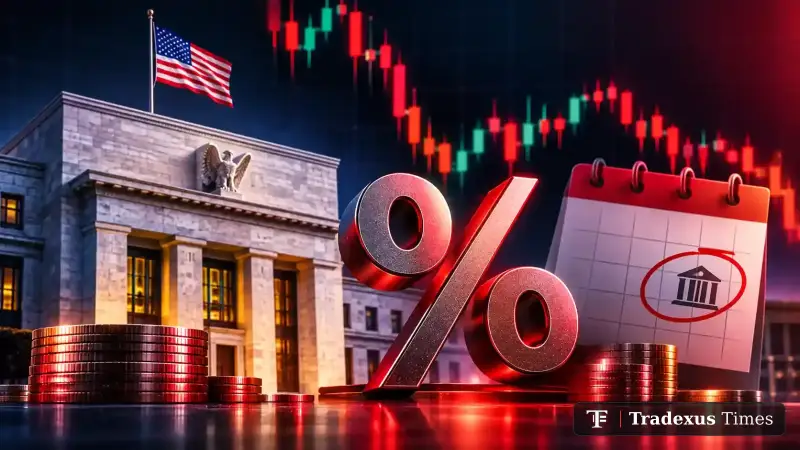
Financial markets are increasingly anticipating another interest rate increase by the U.S. Federal Reserve at its December 9, 2026, policy meeting, with the probability of a hike reportedly reaching 100%.
Current market expectations indicate a 90.8% probability of a 0.25-percentage-point increase and a 9.2% probability of a larger 0.50-percentage-point hike. The figures suggest that traders overwhelmingly expect a quarter-point adjustment, while a more aggressive move remains a less likely possibility.

The shift in expectations follows stronger-than-anticipated U.S. inflation data and recent comments from Federal Reserve officials emphasizing the importance of keeping price pressures under control. Persistent inflation could make it more difficult for policymakers to consider easing monetary conditions, increasing the possibility of further tightening.
A rate increase could have implications across global financial markets, including equities, bonds, the U.S. dollar and cryptocurrencies. Higher borrowing costs generally reduce liquidity and can make traditional yield-bearing assets more attractive compared with riskier investments. This environment may create additional pressure on digital assets, particularly if investors anticipate further monetary tightening.
However, the expected policy move does not guarantee that the Federal Reserve will raise rates. Market probabilities reflect traders’ current expectations and can change in response to new economic indicators, inflation reports and employment data before the December meeting.
The distinction between a 0.25-point and a 0.50-point increase also remains important. A larger hike could signal greater concern about persistent inflation, while a smaller adjustment would represent a more measured tightening approach.
For now, market positioning points toward another rate increase in December, with a quarter-percentage-point move remaining the dominant expectation. The Federal Reserve's final decision will depend on incoming economic data and its assessment of inflation and broader financial conditions.