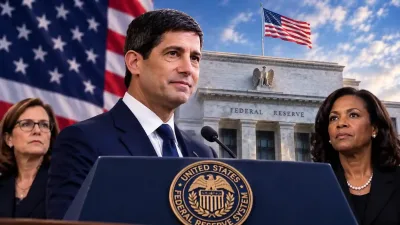
Federal Reserve Governor Lisa Cook has warned that the 0.25-percentage-point interest rate increase implemented in September may not have been sufficient to bring inflation under control, raising the possibility that additional monetary tightening could be necessary. Her position highlights persistent concerns about inflationary pressures and the risk that delaying further action could eventually force the central bank to deliver more aggressive rate increases.
Cook, who opposed the Federal Reserve's October decision to leave interest rates unchanged, argues that financial conditions remain excessively accommodative relative to what may be required to restore price stability. Her assessment suggests that the current level of monetary restraint may not be strong enough to prevent inflation from remaining elevated.

A central concern in Cook's position is the potential cost of waiting too long. If inflation fails to moderate as expected, postponing additional tightening could make the eventual policy response more disruptive. A delayed adjustment might require larger or more frequent rate increases, potentially creating additional pressure on borrowing costs, economic activity and financial markets.
Cook's inflation projections reinforce the significance of the debate. Her estimates put annual Personal Consumption Expenditures (PCE) inflation at 3.8% in October, with core PCE inflation at 3.2%. These figures point to continued price pressures, particularly in the underlying inflation measure that excludes food and energy components.
The distinction between headline and core inflation is important for monetary policy. While changes in energy and food prices can influence the headline figure, persistent core inflation may indicate that price pressures remain embedded across the broader economy. If incoming data continue to reflect this pattern, arguments for maintaining a restrictive monetary stance could gain further weight.
The immediate focus now shifts to the October PCE inflation report, scheduled for November 25. The release could provide an important indication of whether inflation is moving toward the Federal Reserve's objectives or remaining sufficiently elevated to support further tightening. A stronger-than-expected reading could reinforce expectations of additional rate increases, while meaningful moderation could strengthen the case for keeping borrowing costs unchanged.
The December 8–9 Federal Reserve meeting will therefore take place against a backdrop of competing policy considerations. Cook's position illustrates the more hawkish side of the debate, but her assessment should not be interpreted as confirmation that the entire Federal Open Market Committee supports another increase.
For financial markets, the upcoming inflation figures could influence expectations for the path of US monetary policy, with potential implications for Treasury yields, the dollar, equities and digital assets. Higher interest rates generally increase financing costs and can reduce the relative attractiveness of risk-sensitive investments, while a softer inflation reading could ease pressure on financial conditions.
Ultimately, the November PCE report represents an important information point ahead of the December policy meeting. The extent to which inflation remains elevated, particularly in the core measure, could shape the debate over whether the Federal Reserve has delivered sufficient tightening or needs to consider further action.