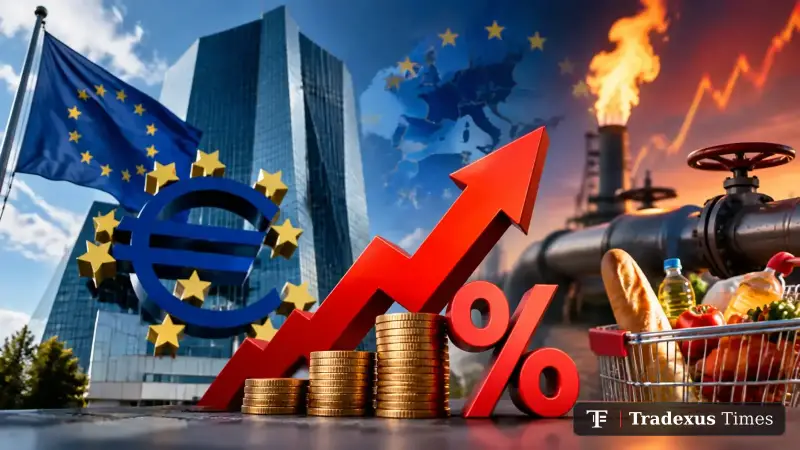
The European Central Bank (ECB) is expected to raise interest rates by 25 basis points at its upcoming meeting, bringing the policy rate to 2.5% as policymakers respond to renewed inflation pressures across the eurozone.
The expected rate increase comes as higher oil and gas prices linked to the conflict in the Middle East have pushed inflation concerns higher. Eurozone inflation has moved above 3%, increasing pressure on the ECB to prevent energy-driven price increases from becoming more persistent.

Markets have largely priced in the quarter-point rate hike, viewing it as a precautionary move to contain inflation risks. However, most economists expect the ECB to avoid signaling an aggressive tightening cycle afterward, as additional rate increases could create further pressure on economic growth.
The central bank faces a difficult balance between controlling inflation and supporting economic activity. While energy costs remain elevated, underlying inflation pressures such as wage growth and service inflation have shown fewer signs of accelerating, limiting the case for a prolonged series of rate increases.
Energy markets remain a key factor for the ECB’s future decisions. Continued increases in oil and gas prices could keep inflation above target for longer and increase expectations for another rate hike before the end of the year. However, a decline in energy costs or weaker economic momentum could reduce the need for further tightening.
For financial markets, the ECB’s decision could influence the euro, European bond yields, and risk assets. Higher interest rates generally create tighter financial conditions, which may affect investor appetite across equities and cryptocurrencies.
The key question now is whether the expected September rate hike will be a one-time response to the energy shock or the beginning of another tightening phase. Markets will closely monitor inflation trends, energy prices, and economic data to determine the ECB’s next move.