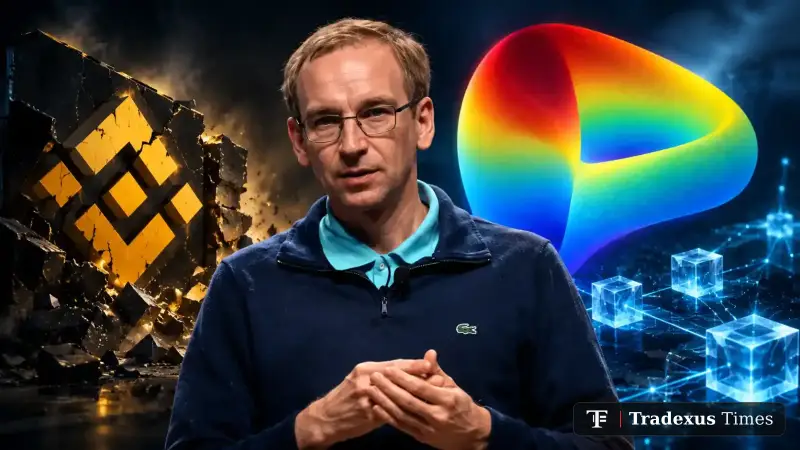
The $6.36 billion security breach involving Binance has reignited debate over the risks of centralized cryptocurrency exchanges and the importance of decentralized finance (DeFi). Michael Egorov, founder of Curve Finance and Yield Basis, argues that the incident demonstrates how privileged access to customer funds can create major security vulnerabilities in centralized platforms, while decentralized protocols can eliminate some of these risks when they operate without centralized control over user assets.
According to blockchain intelligence firm TRM Labs, approximately $6.36 billion was stolen from Binance wallets across ten blockchains, making the incident the largest cryptocurrency theft on record. Binance stated that its preliminary investigation found no evidence of a private key leak, while TRM Labs identified a likely compromise of the exchange's hot wallet signing infrastructure. Binance has pledged to cover all customer losses and said approximately $3 billion in affected assets had been frozen with assistance from industry partners.

Egorov explained that centralized exchanges rely on privileged signing systems and personnel with access to sensitive infrastructure. If attackers compromise these systems or the individuals controlling them, they may gain the ability to redirect customer assets. He argued that decentralized protocols such as Curve, Yield Basis, Uniswap and Aave can avoid this particular custody risk when they operate without privileged controls that allow a central operator to move users' funds.
However, decentralized finance is not immune to security threats. Smart contract vulnerabilities, software dependencies and technical failures can still expose users to significant losses. The distinction, according to Egorov, is that protocols without centralized custody do not require users to trust a single operator with the authority to redirect their assets.
He also warned that increasingly complex software systems are creating additional security challenges for the cryptocurrency industry. Artificial intelligence could accelerate the discovery of software vulnerabilities, potentially giving attackers new ways to identify weaknesses in platforms and infrastructure. This development increases the pressure on centralized exchanges and other crypto services to strengthen their security architecture.
Egorov also highlighted the importance of self-custody for Bitcoin investors, pointing to the collapse of Mt. Gox as an example of the risks associated with leaving cryptocurrency on centralized exchanges. When users keep their Bitcoin on an exchange, they depend on the platform's ability to protect their assets and process withdrawals. Hardware wallets can provide an alternative by allowing investors to maintain direct control over their private keys.
Nevertheless, self-custody also carries risks. Egorov acknowledged that hardware wallets are not completely immune to security threats, including potential supply-chain compromises and data leaks. Users must therefore consider the security of both their devices and the procedures used to manage their private keys.
Beyond the direct financial losses, major security incidents can damage confidence across the broader cryptocurrency market. Even when an attack targets a specific exchange, uncertainty surrounding the safety of digital assets can contribute to market volatility and raise concerns among investors. Egorov expects centralized exchanges to strengthen their security systems while decentralized finance developers increasingly treat privileged access as a potential attack vector.
The Binance breach has therefore renewed an important debate about how cryptocurrency platforms should protect customer assets. While decentralized protocols offer an alternative to centralized custody, their security depends on the quality of their code and infrastructure. The long-term challenge for the industry will be to combine stronger security standards, transparent systems and greater user control. Despite the scale of the incident, Egorov believes the cryptocurrency industry will ultimately emerge stronger from the experience.