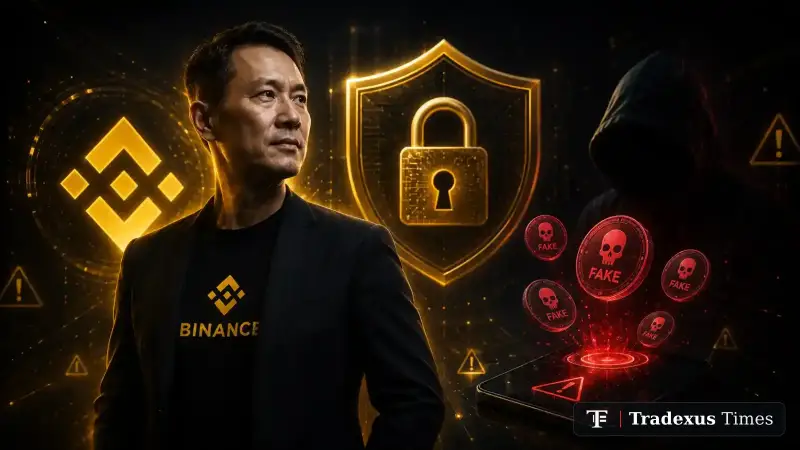
Binance CEO Richard Teng has warned cryptocurrency users about scams involving counterfeit tokens used to make fraudulent payments. His central message is that token names and logos can be easily copied, but their appearance does not establish authenticity. Users should verify a token’s legitimacy before accepting it as payment.
The warning highlights a security risk that can arise when users rely on familiar branding rather than the underlying blockchain data. A counterfeit token may imitate the name and visual identity of a legitimate asset, potentially misleading recipients into believing they have received the expected cryptocurrency.

Teng emphasized the importance of checking the token’s network and contract address before accepting a payment. These details help distinguish a legitimate asset from an imitation, particularly when multiple tokens use similar names or symbols. Verification is therefore an essential step in reducing exposure to fake-token payment schemes.
The warning also underscores the distinction between a token’s appearance and its on-chain identity. As cryptocurrency transactions become more common, users need to confirm that the asset received is the exact token agreed upon, rather than relying solely on information displayed in a wallet or provided by a sender.
For Binance users and the wider crypto market, the issue reinforces the importance of transaction-level security. Binance operates a digital-asset trading platform with a token review process, but users should still independently verify assets involved in direct transfers and payments. Platform-level screening does not eliminate every risk associated with counterfeit tokens or transactions conducted outside an exchange.
The immediate focus is on user vigilance rather than a reported market-price event. The supplied information does not identify a specific counterfeit token, quantify losses from these scams, or establish a measurable effect on trading activity.
Going forward, users should pay attention to security alerts, verify contract addresses through reliable sources, and confirm the blockchain network before completing transactions. These checks can help reduce the risk of accepting an imitation token in place of the intended asset.