The countdown to the Federal Reserve’s next interest-rate decision has entered a critical phase, with stubborn inflation, an escalating war involving Iran and approaching U.S. congressional elections creating a challenging backdrop for financial markets. As of October 16, investors have just 12 days until the Fed’s scheduled October 28 decision, with policymakers meeting over October 27–28. The question is no longer simply whether inflation is cooling, but whether rising energy costs and geopolitical uncertainty could force the central bank to maintain restrictive monetary policy for longer than markets had anticipated.
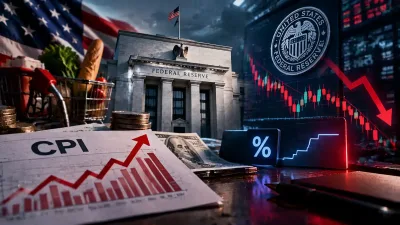
The latest inflation reports have added fresh pressure to that debate. U.S. consumer prices rose 0.6% in September, pushing annual CPI inflation to 3.7%, up from 3.4% in August. Core CPI, which excludes food and energy, increased 0.3% during the month and 2.6% over the year. The acceleration is particularly concerning because gasoline prices jumped 9.1% in September, accounting for more than half of the monthly increase in the overall index. The figures suggest that energy costs are once again playing a major role in the inflation outlook. Source: U.S. Bureau of Labor Statistics.

Producer inflation has delivered an even stronger warning. The Producer Price Index for final demand surged 1.3% in September, following increases of 0.5% in August and 0.2% in July. Annual producer-price inflation reached 6.3%, while energy prices for final-demand goods climbed 10.8% in a single month. The underlying details also showed continued pressure beyond energy, with prices for final demand excluding food, energy and trade services rising 0.5% in September. Because producer prices can feed into the costs faced by businesses and consumers, the latest PPI figures add to concerns that inflationary pressure may remain difficult to contain. Source: U.S. Bureau of Labor Statistics.
Together, these reports complicate the Federal Reserve’s next decision. The central bank must weigh persistent price pressures against the risk that higher borrowing costs could weaken economic activity. Following September’s CPI release, Reuters reported that market-implied expectations for a rate increase at the October meeting rose from approximately 22% to 37%. That was a change in market pricing, not a confirmed forecast or a decision by policymakers. Economists remained divided, with many still expecting rates to remain unchanged in October. The Fed’s preferred inflation measure, the Personal Consumption Expenditures index, also remains important to the policy outlook.
Geopolitical developments are adding another layer of uncertainty. The conflict involving the United States, Israel and Iran continues to threaten energy markets and international shipping routes. On October 16, Reuters reported that President Donald Trump said the United States might need to target Iran’s heavily fortified Pickaxe Mountain site, which is associated with the country’s nuclear program. His remarks did not confirm that a new strike had been authorized, but they underscored the continuing risk of further military escalation. Source: Reuters.
For financial markets, the concern extends beyond the immediate consequences of military action. A prolonged conflict could keep energy prices elevated, increase shipping and insurance costs, disrupt supply chains and push additional expenses through the wider economy. If those pressures persist, the Fed could face a more difficult choice between fighting inflation and supporting growth. An easing in tensions, by contrast, could reduce some of the pressure on energy markets and give policymakers more room to assess the broader economic picture.
The implications for cryptocurrencies are significant, although the direction is not straightforward. Bitcoin and other digital assets can come under pressure if persistent inflation leads investors to expect higher interest rates, a stronger dollar and tighter financial conditions. Higher yields can make riskier assets less attractive, while sudden geopolitical shocks can prompt investors to reduce exposure and raise cash. Yet crypto markets can also experience short-lived rallies during periods of uncertainty, meaning the reaction will depend on liquidity, positioning and how investors interpret the latest developments.
The same uncertainty is spreading across traditional markets. Treasury yields, the dollar, equities, oil and gold may all respond to changing expectations for monetary policy and the conflict. For crypto traders, the Fed decision is therefore only one part of the picture. Energy prices and inflation expectations could shape market sentiment even before policymakers announce their decision.
Politics adds another deadline. The U.S. midterm elections are scheduled for November 3, just 18 days after October 16 and six days after the Fed’s October 28 decision. All 435 seats in the House of Representatives and approximately one-third of Senate seats are up for election. The elections do not determine the Fed’s interest-rate decision, but they raise the political stakes surrounding inflation, household purchasing power, energy prices and the broader economic outlook. The Federal Reserve is institutionally independent, and its policy decisions are formally based on its economic mandate rather than electoral objectives. Source: Federal Election Commission.
The proximity of these events creates a concentrated period of uncertainty for investors. First comes the Fed’s assessment of inflation and economic risks. Then comes the election, which could reshape the legislative environment for fiscal, trade and energy policies. Meanwhile, the conflict involving Iran continues to introduce the possibility of sudden developments that could alter energy prices and market expectations at short notice.
The critical issue is whether September’s inflation surge proves temporary or signals a more persistent increase in price pressures. If energy prices stabilize and underlying inflation moderates, the Fed may have more flexibility to hold rates steady while monitoring incoming data. If producer and consumer prices remain elevated and geopolitical tensions intensify, expectations for a more restrictive policy could strengthen, potentially putting pressure on equities and cryptocurrencies.
With 12 days remaining until the Fed’s scheduled decision, markets are entering a period in which economic data, military developments and political uncertainty may interact in unpredictable ways. The meeting itself will not resolve all three risks, but the Fed’s statement and subsequent guidance could help determine how investors price the balance between inflation and economic growth heading into November.
For now, neither a rate increase nor a market sell-off should be treated as inevitable. The most important signals will be whether energy-driven inflation spreads further through the economy, whether tensions involving Iran escalate or ease, and how the Federal Reserve explains its assessment of those risks. In a market environment shaped by several competing forces, the next two weeks could prove decisive for expectations across traditional finance and digital assets.