What Is DeFi? Decentralized Finance Explained
A Complete Beginner’s Guide to Decentralized Finance

Key takeaways
- Decentralization: DeFi provides financial services without relying on traditional banks or intermediaries.
- Blockchain Technology: Smart contracts automate transactions and make financial operations more transparent.
- Global Accessibility: Anyone with an internet connection and a compatible crypto wallet can access DeFi services.
- Risks and Challenges: Security vulnerabilities, market volatility, and regulatory uncertainty remain major concerns.
- Future Potential: AI integration, asset tokenization, and improved blockchain technology could shape the future of DeFi.
Introduction: Understanding Decentralized Finance
Imagine a financial system where you can send money, borrow funds, lend cryptocurrency, earn interest, and trade digital assets without needing permission from a bank or another traditional financial institution. This is the idea behind Decentralized Finance (DeFi). DeFi is one of the most important developments in the cryptocurrency and blockchain industry. It aims to make financial services more accessible, transparent, and independent by using blockchain technology and smart contracts. Instead of relying entirely on banks, brokers, and other intermediaries, DeFi allows users to interact with financial applications directly through the internet. In simple terms, DeFi is an attempt to rebuild traditional financial services using decentralized digital technology.
 Watch on our channelA Complete Beginner’s Guide to Decentralized Finance
What Exactly Is DeFi?
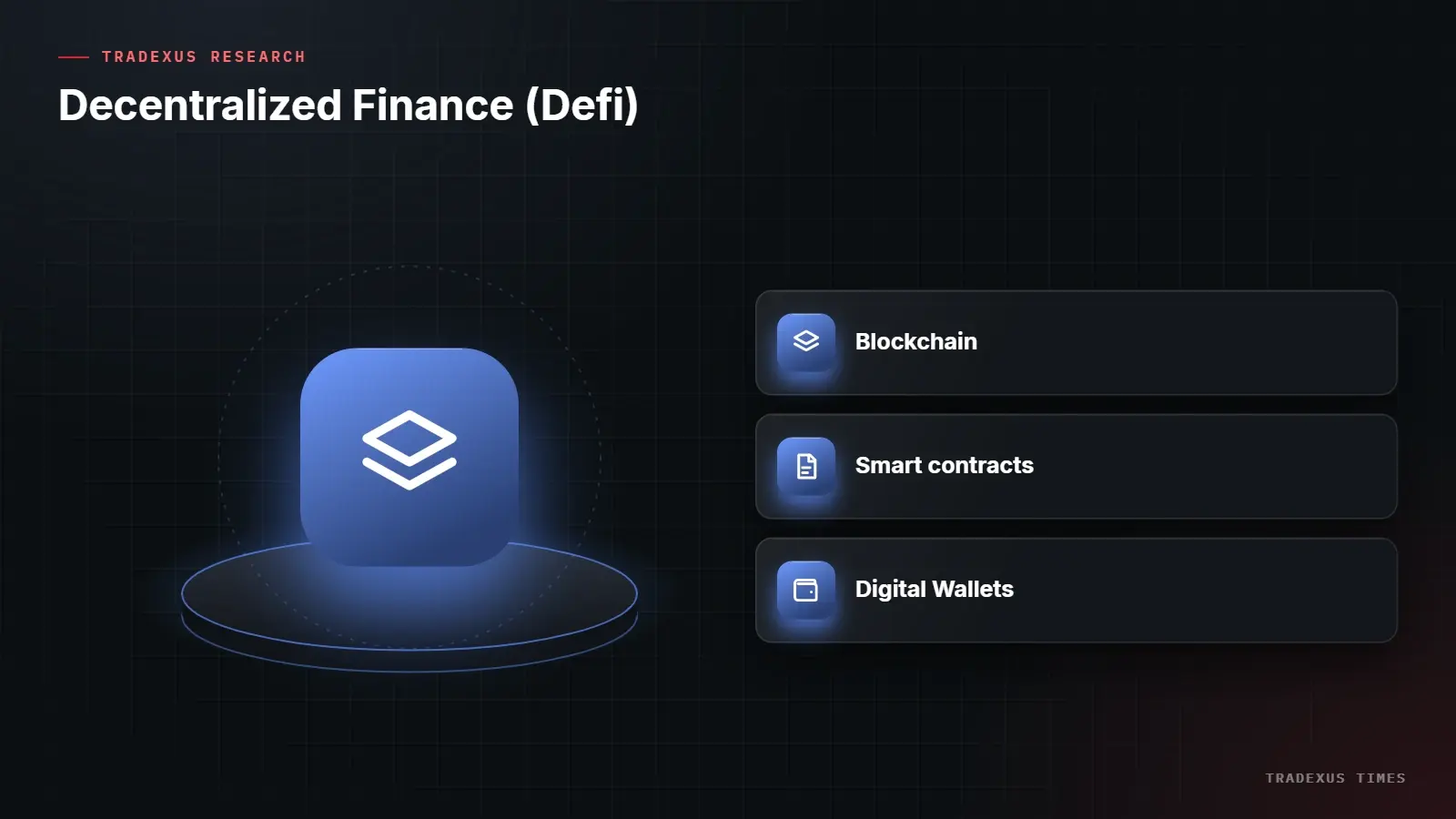
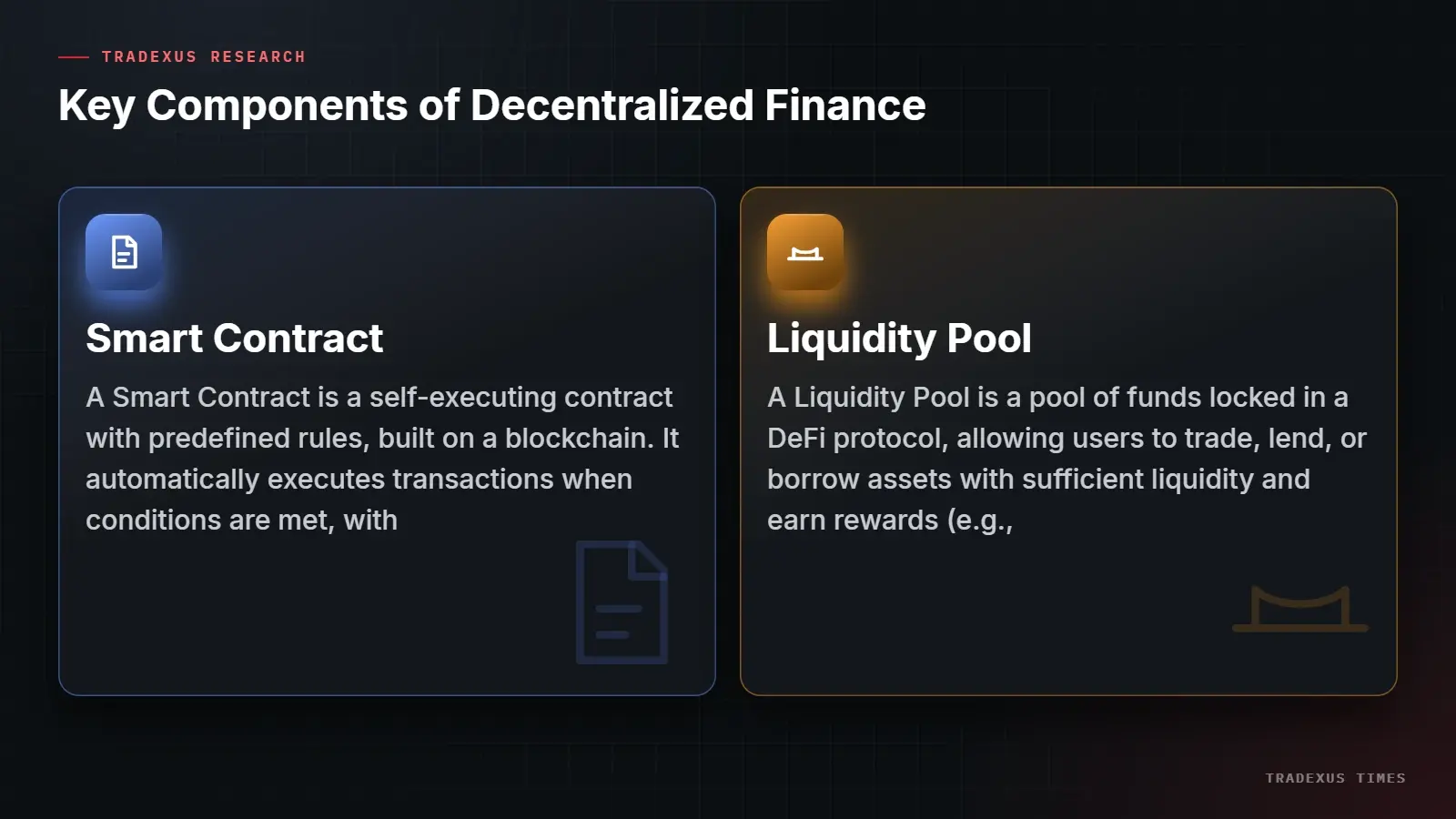
DeFi stands for Decentralized Finance. It refers to a collection of financial applications and services built primarily on public blockchain networks. Unlike traditional finance, where banks and financial institutions manage accounts, process payments, and control access to financial products, DeFi uses software programs called smart contracts to perform many of these activities automatically. These applications allow people to exchange cryptocurrencies, borrow and lend digital assets, and participate in financial markets without depending on a central organization to approve every transaction. Most DeFi applications operate through decentralized applications, commonly known as DApps. Users connect to these applications using cryptocurrency wallets, which allow them to manage and transfer their digital assets. Although DeFi is closely associated with cryptocurrencies, its purpose is broader: creating an alternative financial infrastructure that operates through open blockchain networks.
How Does DeFi Work?
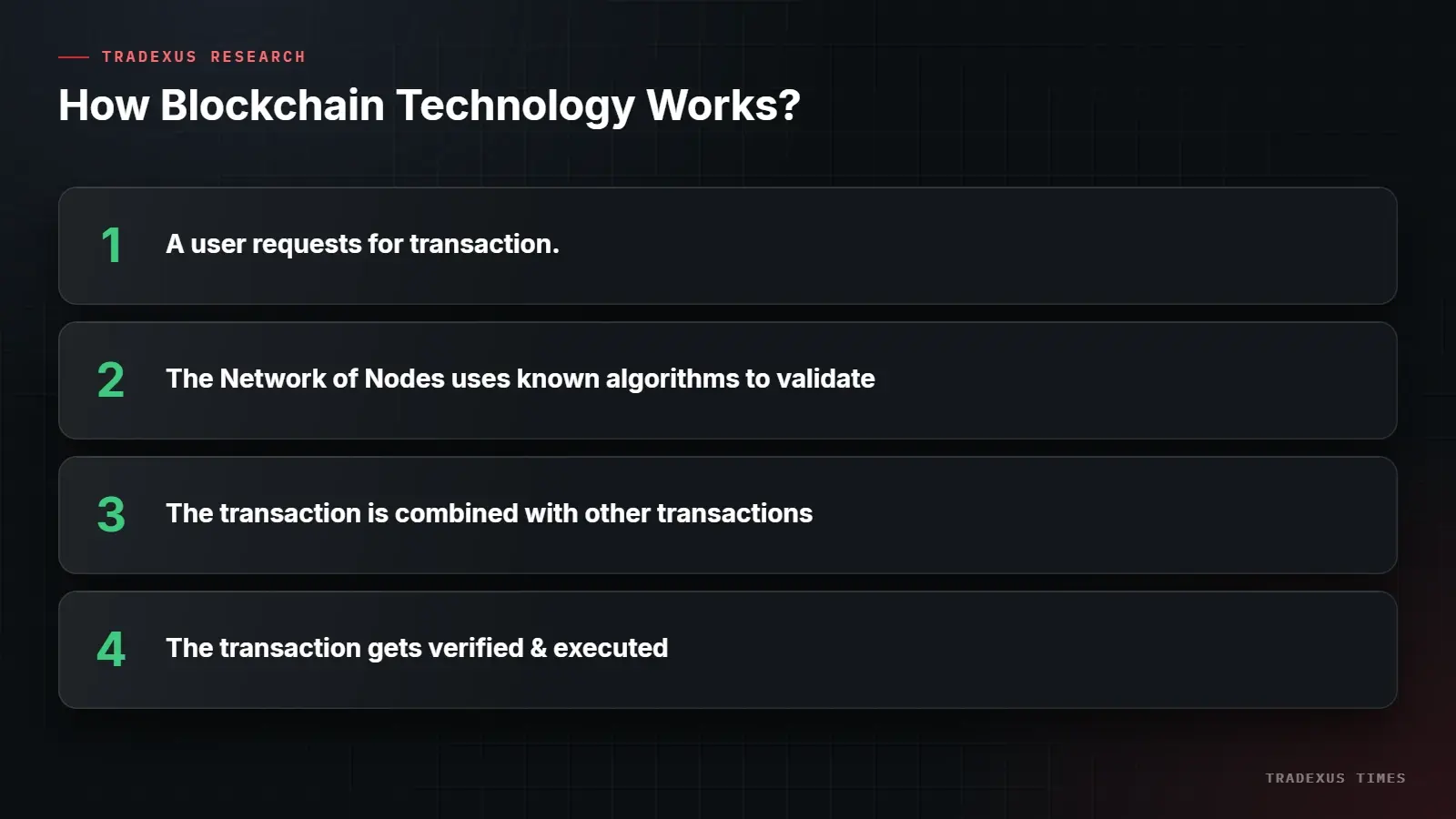
To understand how DeFi works, it is important to understand three fundamental technologies: blockchain, cryptocurrencies, and smart contracts. A blockchain is a digital ledger that records transactions across a distributed network of computers. Instead of storing all financial information in one central database controlled by a bank, blockchain technology allows multiple network participants to maintain and verify transaction records. Cryptocurrencies and other digital tokens represent the assets that users exchange or manage through these networks. Smart contracts are computer programs stored on a blockchain that automatically execute predefined instructions when specific conditions are met. For example, a smart contract could automatically transfer cryptocurrency to a borrower once the required collateral has been deposited. These processes reduce the need for traditional intermediaries and make many financial operations programmable. However, the system still depends on the security of its blockchain, software, and supporting services.
The Main Services Offered by DeFi
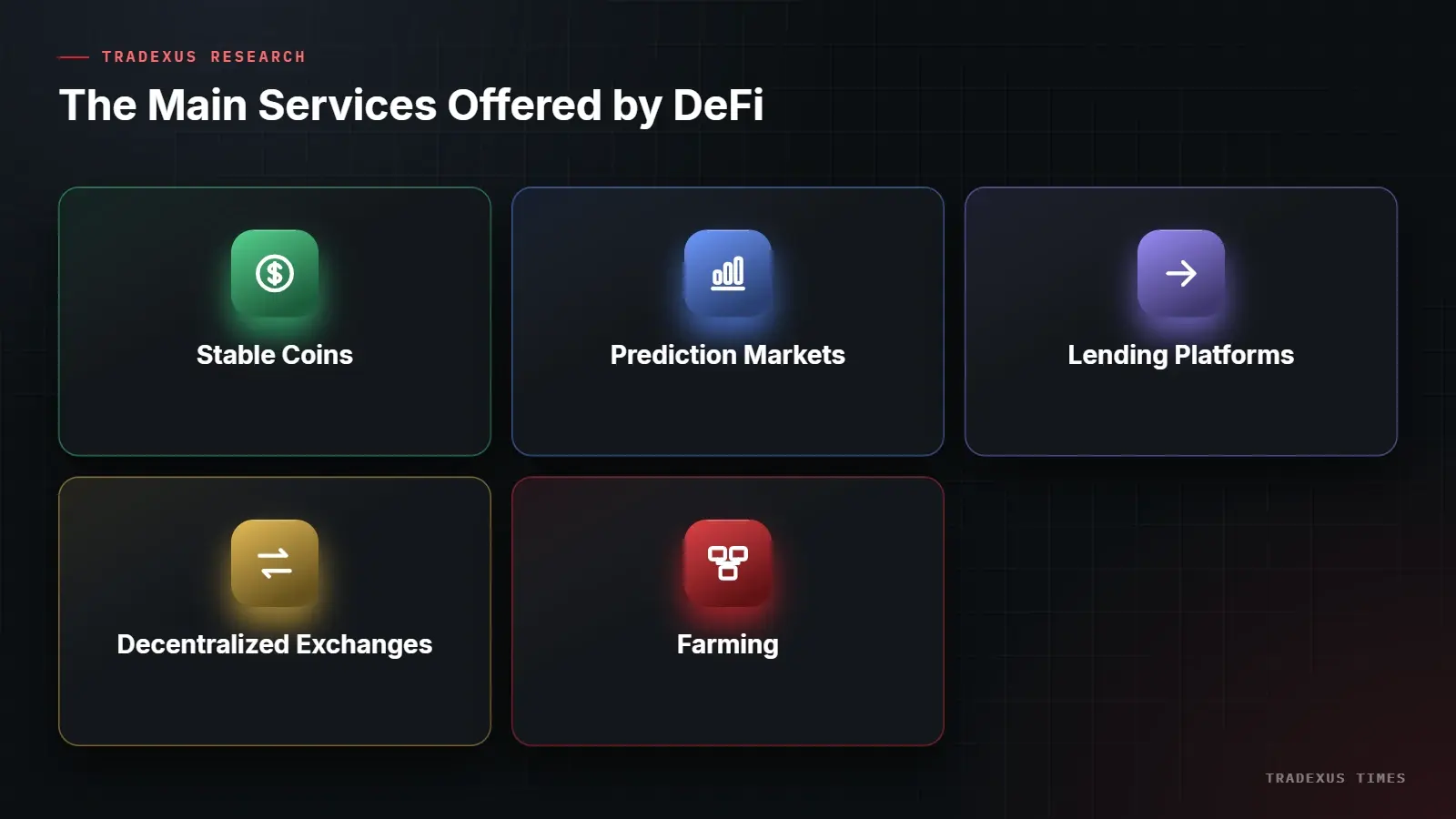
DeFi offers many services that are similar to those available in traditional financial institutions. One of the most popular is decentralized lending and borrowing. Users can deposit their cryptocurrency into lending protocols and potentially earn interest, while borrowers can access funds by providing digital assets as collateral. Another important service is decentralized exchanges, known as DEXs, which allow users to trade cryptocurrencies directly through smart contracts rather than relying on a centralized exchange to hold and manage their assets. DeFi also supports stablecoins, which are digital tokens designed to maintain a relatively stable value, often by being linked to currencies such as the US dollar. Other services include yield farming, liquidity provision, decentralized insurance, and derivatives trading. These financial tools create opportunities for users to participate in different markets, although each service comes with its own costs and risks.
What Is the Difference Between DeFi and Traditional Finance?
The biggest difference between decentralized finance and traditional finance is how financial services are managed and controlled. In the traditional financial system, banks and other institutions act as intermediaries. They manage customer accounts, verify identities, approve loans, and process payments. In DeFi, many of these activities are performed by blockchain-based applications and smart contracts. For example, opening a traditional bank account usually requires identity verification and approval from the bank, while accessing many DeFi applications requires only a compatible cryptocurrency wallet and an internet connection. DeFi transactions are also generally recorded on public blockchains, allowing users to inspect transaction activity. However, this does not mean that every DeFi application is completely anonymous or fully decentralized. Some projects still depend on centralized development teams, administrators, or service providers.
What Are the Main Advantages of DeFi?
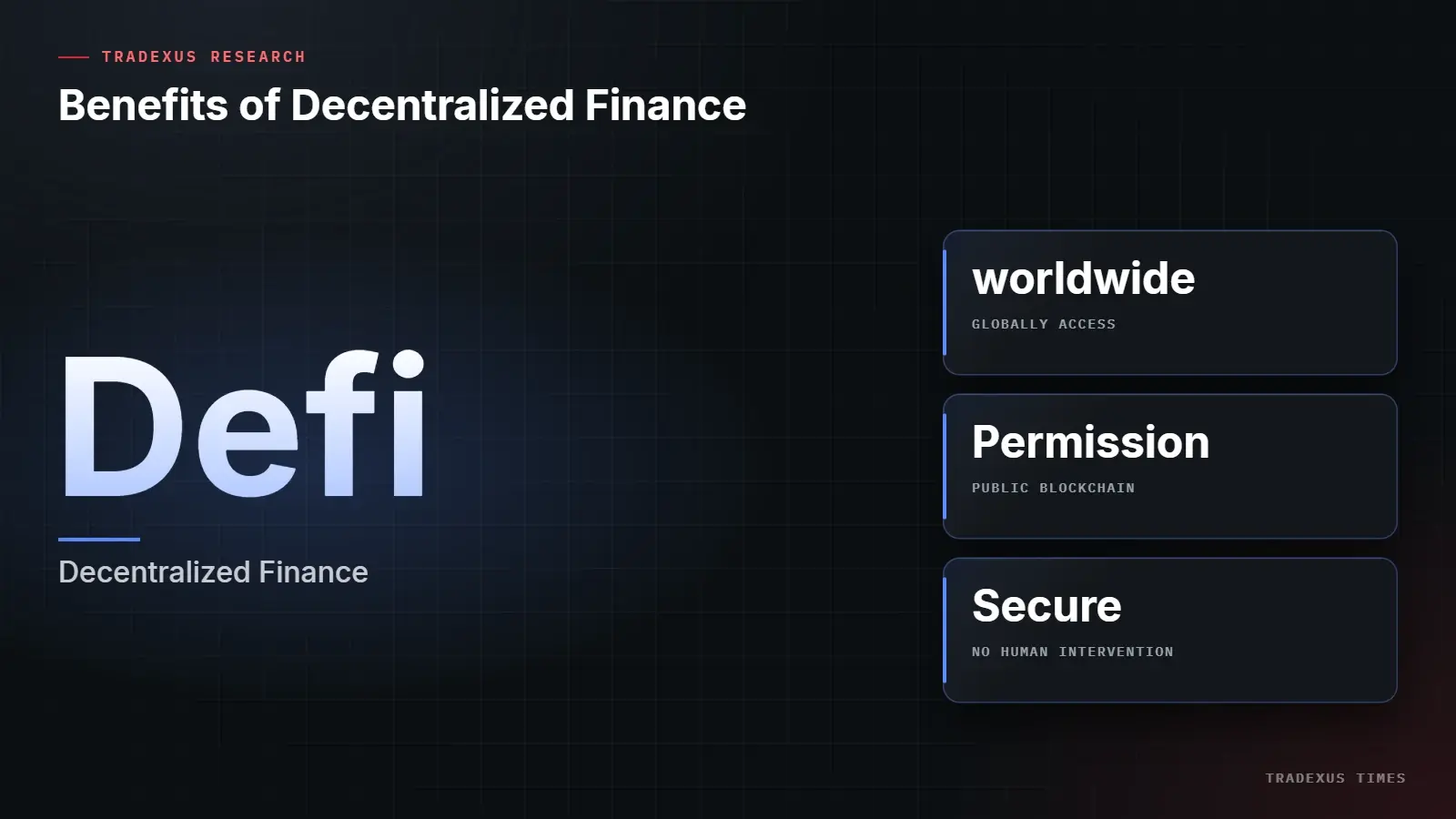
One of the most significant advantages of DeFi is accessibility. People with an internet connection and a compatible wallet can potentially access financial applications without going through the same account-opening procedures required by traditional institutions. Another advantage is transparency. Because many DeFi transactions are recorded on public blockchains, users and researchers can examine transaction histories and, in some cases, inspect the underlying smart contract code. DeFi can also operate continuously, allowing users to trade or transfer digital assets at any time rather than being restricted to conventional banking hours. In addition, smart contracts can automate financial activities, potentially reducing processing times and the need for certain intermediaries. The open-source nature of many DeFi projects also encourages developers to create new applications and combine existing services. Nevertheless, these advantages depend on the quality, security, and design of each individual platform.
What Are the Risks and Challenges of DeFi?
Despite its potential, DeFi is not free from risks. One of the most important challenges is smart contract security. If a smart contract contains a programming error or security vulnerability, attackers may exploit it and cause users to lose their funds. Another major risk is cryptocurrency volatility. Digital assets can experience significant price changes, and this can be particularly dangerous for users who borrow funds using cryptocurrency as collateral. For example, a sudden decline in the value of collateral may trigger automatic liquidation, resulting in financial losses. DeFi users must also be careful about fraudulent projects, phishing attacks, fake websites, and malicious wallet permissions. In addition, regulatory uncertainty and the complexity of decentralized systems can make it difficult for users to understand who is responsible when something goes wrong. Therefore, anyone considering DeFi should research platforms carefully and never assume that high advertised returns are guaranteed or risk-free.
| Risk | Description |
|---|---|
| Smart Contract Vulnerabilities | Coding errors can allow hackers to steal funds. |
| Market Volatility | Cryptocurrency prices can change dramatically |
| Liquidation Risk | Falling collateral values can trigger automatic liquidation |
| Scams & Fraud | Fake projects and phishing attacks can cause financial losses |
| Regulatory Uncertainty | Changing regulations may affect DeFi platforms |
| Lack of Consumer Protection | Users may have limited options to recover lost funds |
| Technical Complexity | DeFi platforms can be difficult for beginners to understand |
The Future of Decentralized Finance
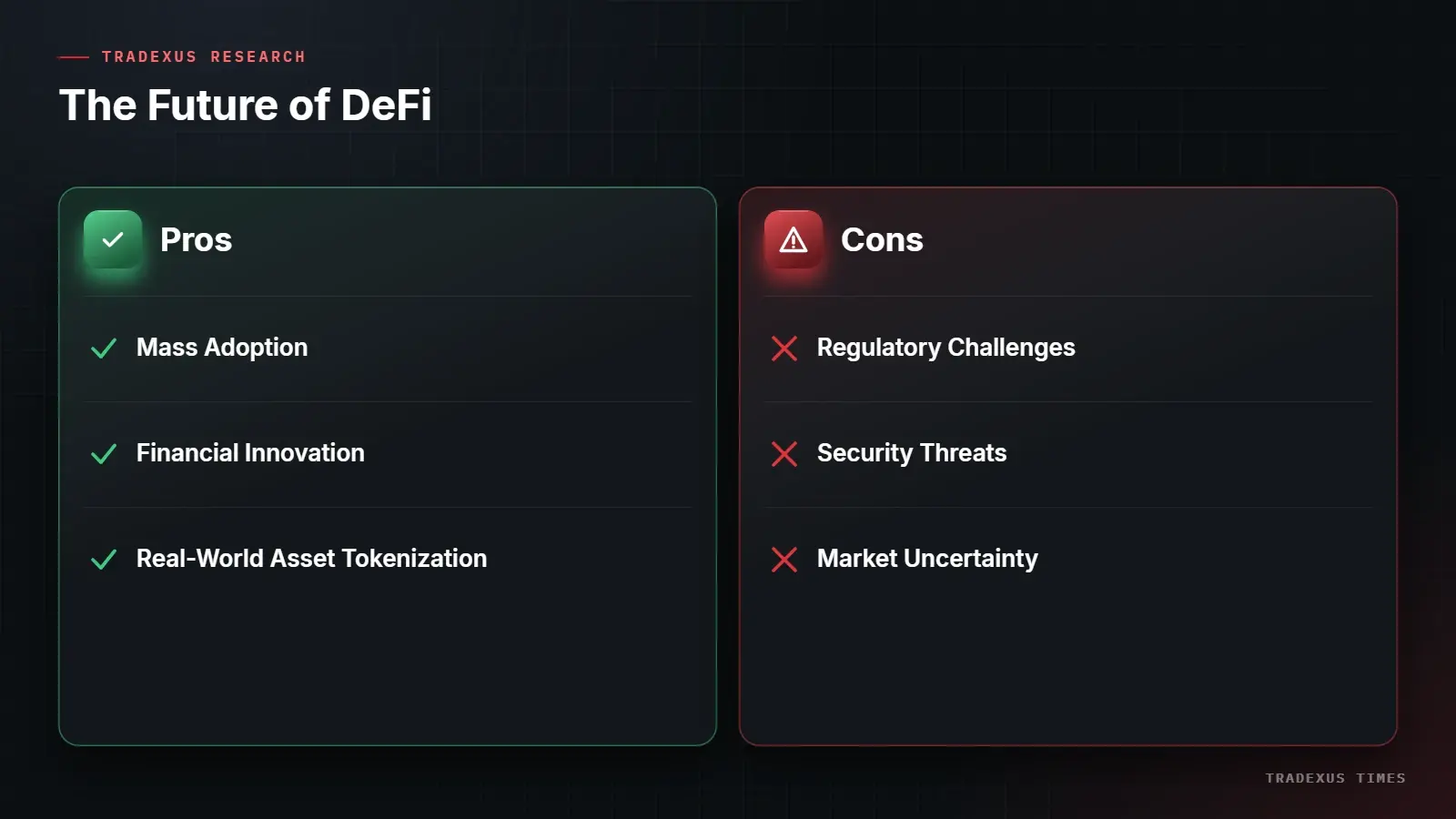
The future of DeFi will likely depend on how successfully the industry addresses its current technical, financial, and regulatory challenges. Developers are working to improve blockchain scalability, reduce transaction costs, strengthen smart contract security, and make decentralized applications easier to use. Another important development is the growing interest in connecting blockchain-based financial services with real-world assets, such as government bonds, commodities, and real estate. This approach, often called real-world asset tokenization, could create new ways to represent and transfer ownership of financial and physical assets. Stablecoins and blockchain-based payment systems may also contribute to faster international transactions and new financial services. At the same time, regulators and financial institutions are paying greater attention to consumer protection, transparency, and financial stability. Although it is too early to know exactly how the industry will develop, DeFi has introduced new possibilities for building and accessing financial services.
Conclusion: Is DeFi the Future of Finance?
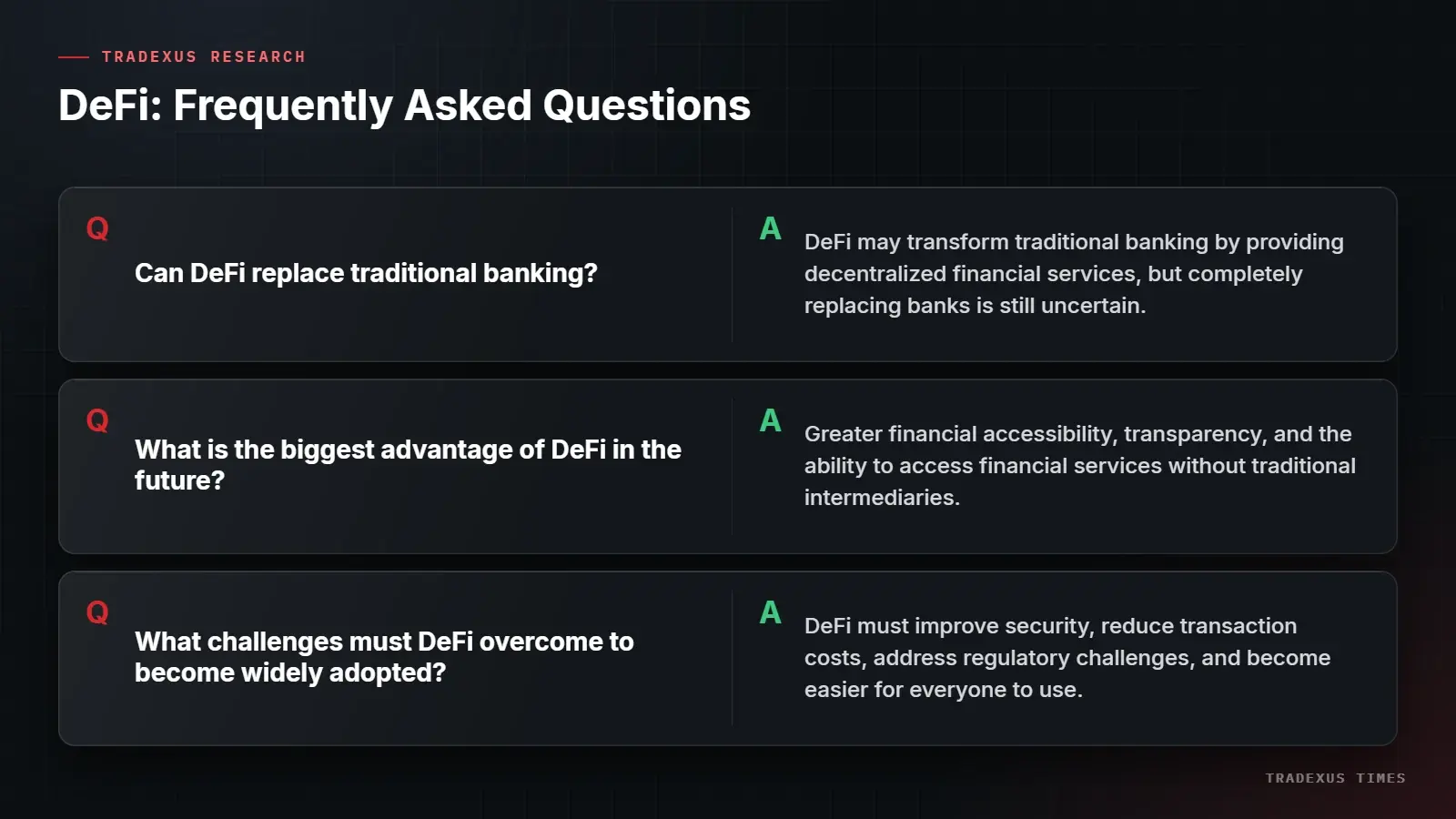
Decentralized Finance represents a major shift in the way people think about money, banking, and financial services. By combining blockchain technology, cryptocurrencies, and smart contracts, DeFi creates opportunities to build financial applications that are more open, programmable, and accessible. It can reduce dependence on traditional intermediaries and introduce innovative ways to borrow, lend, trade, and transfer digital assets. However, security vulnerabilities, market volatility, scams, and regulatory challenges remain important concerns. DeFi should therefore be viewed as an evolving financial technology rather than a guaranteed replacement for traditional banking. As the technology develops and becomes more secure and user-friendly, it may play an increasingly important role in the global financial system.[1]
Sources
- ethereum.org/defi
- bis.org/publications/working-paper-1066-technology-decentralized-finance-defi
- bis.org/publications/fsi-summary-financial-stability-risks-decentralised-finance-executive-summary
- federalreserve.gov/econres/feds/decentralized-finance-defi-transformative-potential-and-associated-risks.htm
Education only — not financial advice. Figures are as of the dates given in the text and its sources. Our editorial policy · Report an error