Crypto Network Explained: ERC-20, BEP-20, and TRC-20
ERC-20, BEP-20, and TRC-20 are three major token standards powering different blockchain networks. Discover how they differ in transaction fees, compatibility, functionality, and security—and how to choose the right network for transferring digital assets safely.

Key takeaways
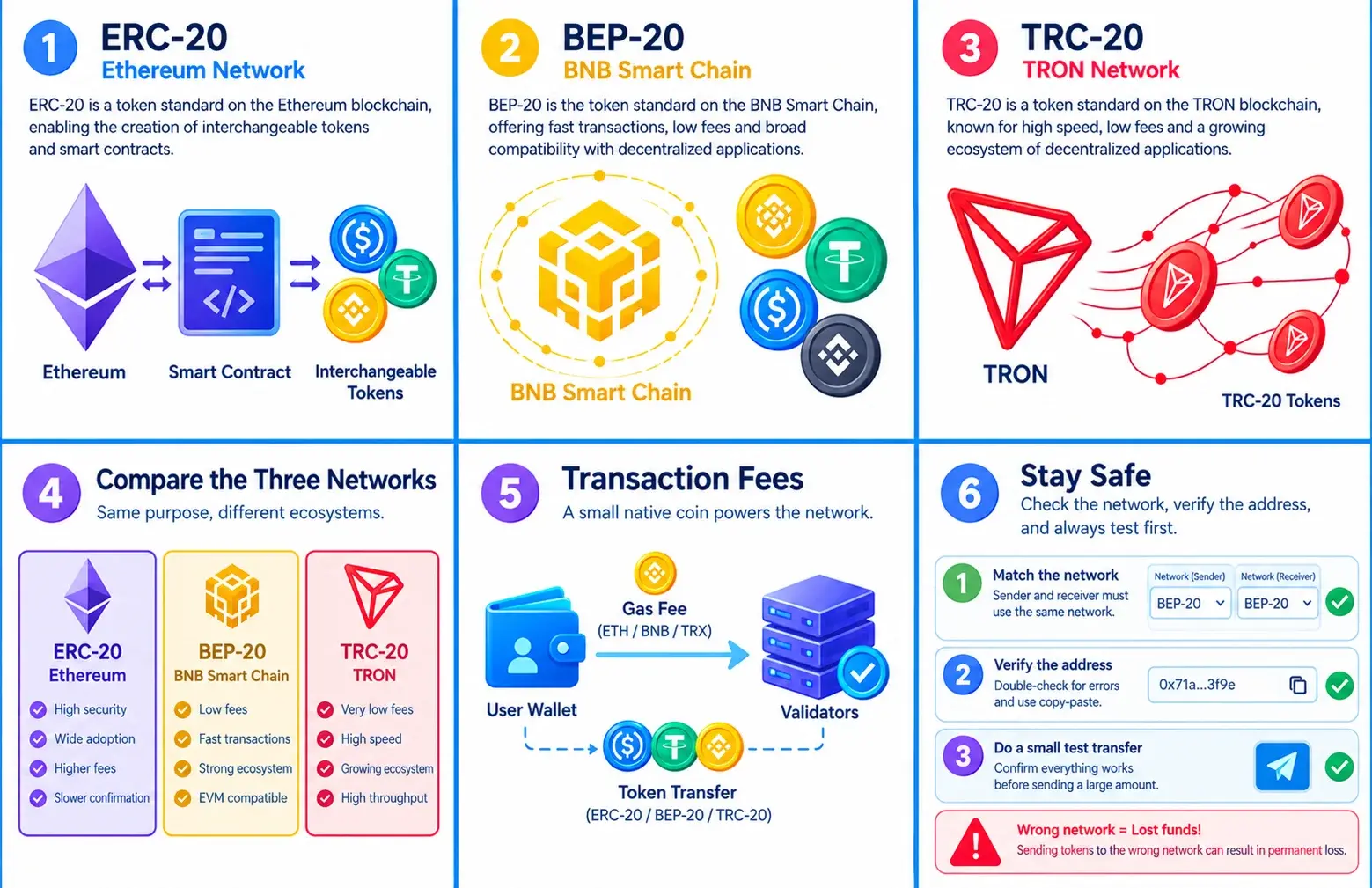
- 1. Different Networks, Different Standards: ERC-20 operates on Ethereum, BEP-20 on BNB Smart Chain, and TRC-20 on TRON.
- 2. Transaction Fees Vary: ERC-20 transactions use ETH for gas fees, BEP-20 uses BNB, and TRC-20 relies on TRON resources, with TRX potentially needed to cover costs.
- 3. Similar Functionality, Different Ecosystems: All three standards support fungible tokens, but they operate on different blockchain networks and are not automatically interchangeable.
- 4. Network Compatibility Is Essential: Always ensure that the sending and receiving platforms support the same network and token before transferring funds.
- 5. Security Should Come First: Verify the recipient address, check network requirements, and consider a small test transfer before sending a large amount.
Blockchain technology enables digital assets to be transferred and managed without relying exclusively on traditional financial intermediaries. However, cryptocurrencies and tokens can operate on different blockchain networks, each with its own technical standards and transaction mechanisms. Three widely encountered standards are ERC-20 on Ethereum, BEP-20 on BNB Smart Chain, and TRC-20 on TRON. Although all three support fungible tokens, they differ in their underlying blockchain environments, transaction fees, infrastructure, and ecosystem integrations. This article explains their technical foundations, compares their practical characteristics, and examines the security considerations users should understand when transferring digital assets. The analysis is based on official blockchain documentation and published technical specifications
A blockchain is a distributed digital ledger maintained by a network of computers that follow a shared set of rules. Transactions are recorded and verified according to the protocol, creating a history that participants can independently inspect. Within these systems, tokens are digital assets managed through blockchain-specific mechanisms, often using smart contracts. A token standard defines a common set of functions and behaviors that wallets, exchanges, and decentralized applications can use to interact with tokens consistently. ERC-20, BEP-20, and TRC-20 are examples of such standards. They help developers create interoperable digital assets within their respective blockchain ecosystems, although they do not make those assets automatically interchangeable across different networks.
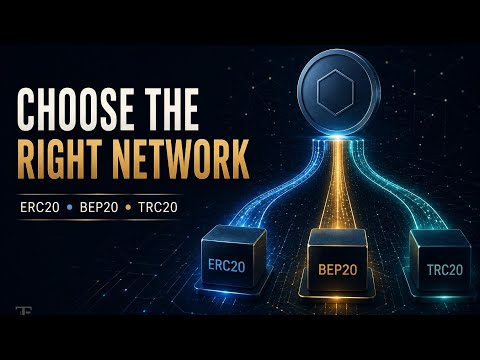 Watch on our channelERC-20 vs. BEP-20 vs. TRC-20: Key Differences Explained
ERC-20 stands for Ethereum Request for Comments 20. Proposed by Fabian Vogelsteller in November 2015, it established a standard interface for fungible tokens implemented through Ethereum smart contracts. Fungible assets are interchangeable units: one unit of a particular token is designed to have the same token-level properties as another unit of that token. ERC-20 specifies common functions for transferring tokens, checking account balances, querying total supply, and authorizing another address to spend a specified amount. These shared interfaces make it easier for wallets, exchanges, and decentralized finance (DeFi) applications to support compatible tokens without creating an entirely different integration for each asset.[1]
Ethereum's ecosystem supports a wide range of decentralized exchanges, lending platforms, stablecoins, and other blockchain applications. This extensive integration is one reason ERC-20 remains an important standard for token issuance and management. However, Ethereum transactions require network resources, and users generally pay transaction fees in ETH. Fees vary with network demand and the computational resources required by a transaction; therefore, an ERC-20 transfer is not guaranteed to be inexpensive. Users must also distinguish ETH, Ethereum's native asset, from ERC-20 tokens deployed on the network. Although both can be held in compatible wallets, they serve different technical roles.[1]
BEP-20 is the fungible token standard associated with BNB Smart Chain (BSC). Its specification derives substantially from ERC-20, providing familiar functions for transferring tokens, checking balances, and granting spending permissions. This similarity helps developers adapt Ethereum-oriented smart contracts and applications to BNB Smart Chain. The network is EVM-compatible, meaning it supports the Ethereum Virtual Machine environment and many familiar Ethereum development tools. Nevertheless, BEP-20 and ERC-20 tokens belong to different blockchain environments when deployed on their respective networks. A token using BEP-20 is not automatically the same on-chain asset as a token with the same name or ticker using ERC-20.
BNB Smart Chain is commonly used for decentralized applications, token exchanges, and other blockchain-based financial services. Its native asset, BNB, is used to pay transaction fees on the network. Costs depend on the transaction and prevailing network conditions, so the general perception of lower fees compared with Ethereum should not be interpreted as a guarantee that every transaction will be cheaper. BEP-20's compatibility with Ethereum-oriented development tools can reduce technical barriers for developers, but it does not eliminate differences in network security assumptions, infrastructure, or application support. Users should always confirm that the receiving wallet or exchange supports the exact asset on BNB Smart Chain before initiating a transfer.
TRC-20 is the fungible token standard used on TRON. It defines how compatible smart contracts issue and manage interchangeable tokens, including functions for transfers, balance queries, and token-spending authorization. According to the official TRON documentation, TRC-20 is compatible with ERC-20 at the interface level, allowing many familiar token-contract patterns to be implemented within TRON's own execution environment. TRON uses the TRON Virtual Machine (TVM), and TRX is its native cryptocurrency. TRC-20 tokens therefore operate within the TRON ecosystem rather than directly on Ethereum, even when their interfaces resemble ERC-20 contracts
TRON is widely used for token transfers and blockchain applications, including stablecoin activity. Its resource model differs from Ethereum's conventional gas model: transactions can consume resources such as bandwidth and energy, while TRX may be required to cover costs when available resources are insufficient. Consequently, a TRC-20 transfer's cost depends on factors such as the operation being performed, the resources available to the account, and current network parameters. Claims that TRC-20 transfers are always free or always cheaper than transfers on other networks are therefore misleading. Users should check the actual fee or resource requirements displayed by their wallet or service before confirming a transaction.
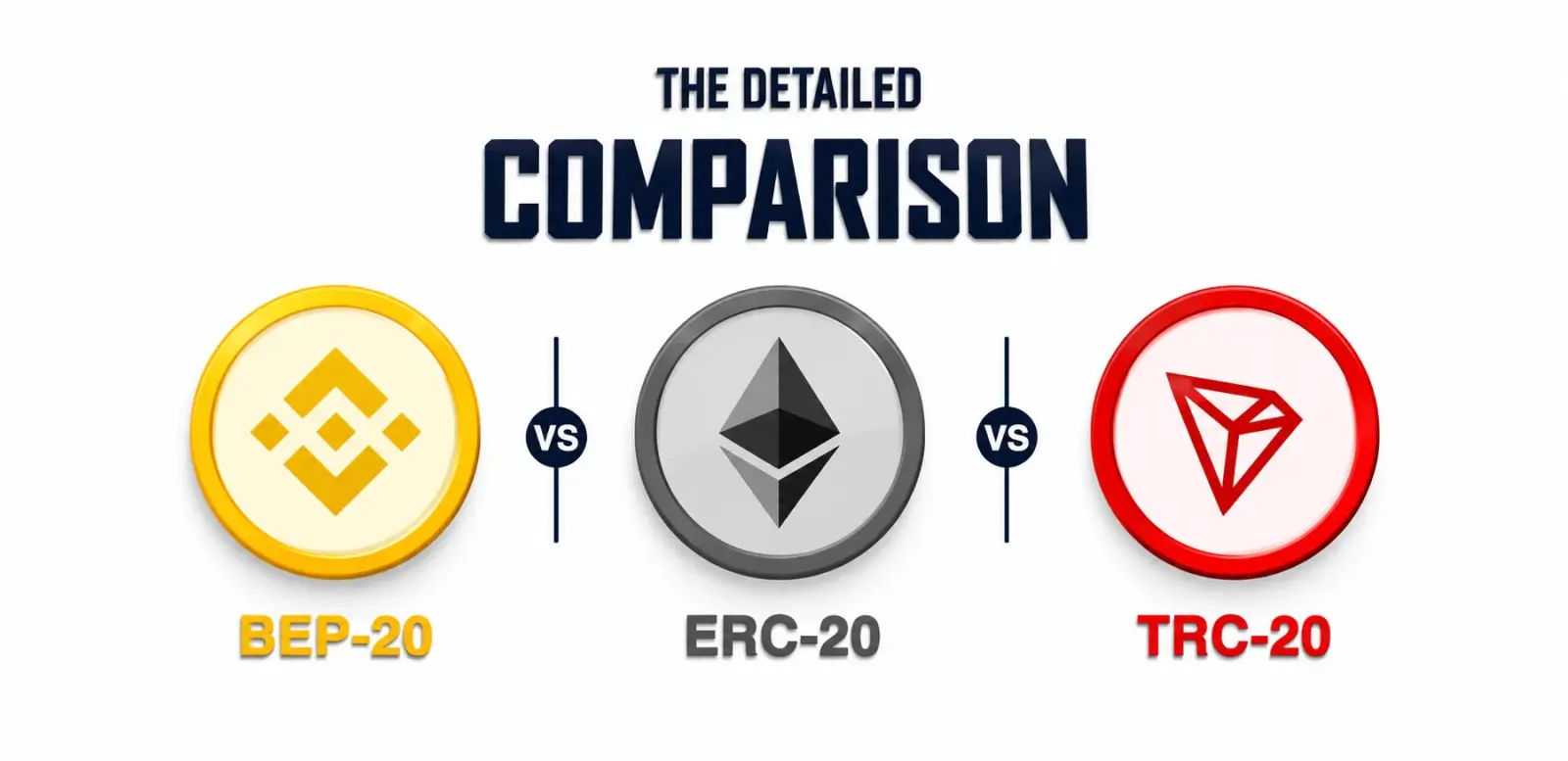
The principal distinction among these standards is the blockchain environment in which the token contract operates. ERC-20 is associated with Ethereum, BEP-20 with BNB Smart Chain, and TRC-20 with TRON. All three support fungible tokens and provide standardized interfaces for common token operations, but they differ in execution environments, transaction-fee mechanisms, ecosystem integrations, and the services that support them. These differences affect practical decisions such as which wallet to use, how much a transfer might cost, and whether a particular exchange deposit is supported. No standard is universally best: suitability depends on the asset, the destination, the transaction requirements, and the user's priorities.
| Feature | ERC-20 | BEP-20 | TRC-20 |
|---|---|---|---|
| Blockchain | Ethereum | BNB Smart Chain | TRON |
| Token interface | ERC-20 | Derived from ERC-20 | Interface-compatible with ERC-20 |
| Native fee asset | ETH | BNB | TRX |
| Execution environment | Ethereum Virtual Machine | EVM-compatible environment | TRON Virtual Machine |
| Typical fee mechanism | Gas fees | Gas fees | Bandwidth and energy resources; TRX may cover shortfalls |
| Key consideration | Broad Ethereum ecosystem | BNB Chain application compatibility | TRON-specific compatibility and resources |
Interoperability describes the ability of different systems to exchange information or assets. Although ERC-20, BEP-20, and TRC-20 share similar token functions, this does not mean that a token can be sent directly between their networks as if they were a single blockchain. Cross-network movement may involve an exchange that supports deposits and withdrawals on multiple networks, a bridge protocol, or another explicitly supported mechanism. Depending on the method, the resulting asset may be a bridged representation of the original token rather than the original token contract itself. Bridges also introduce additional technical and security considerations. Therefore, users should verify the precise network and asset supported by both the sending and receiving services.
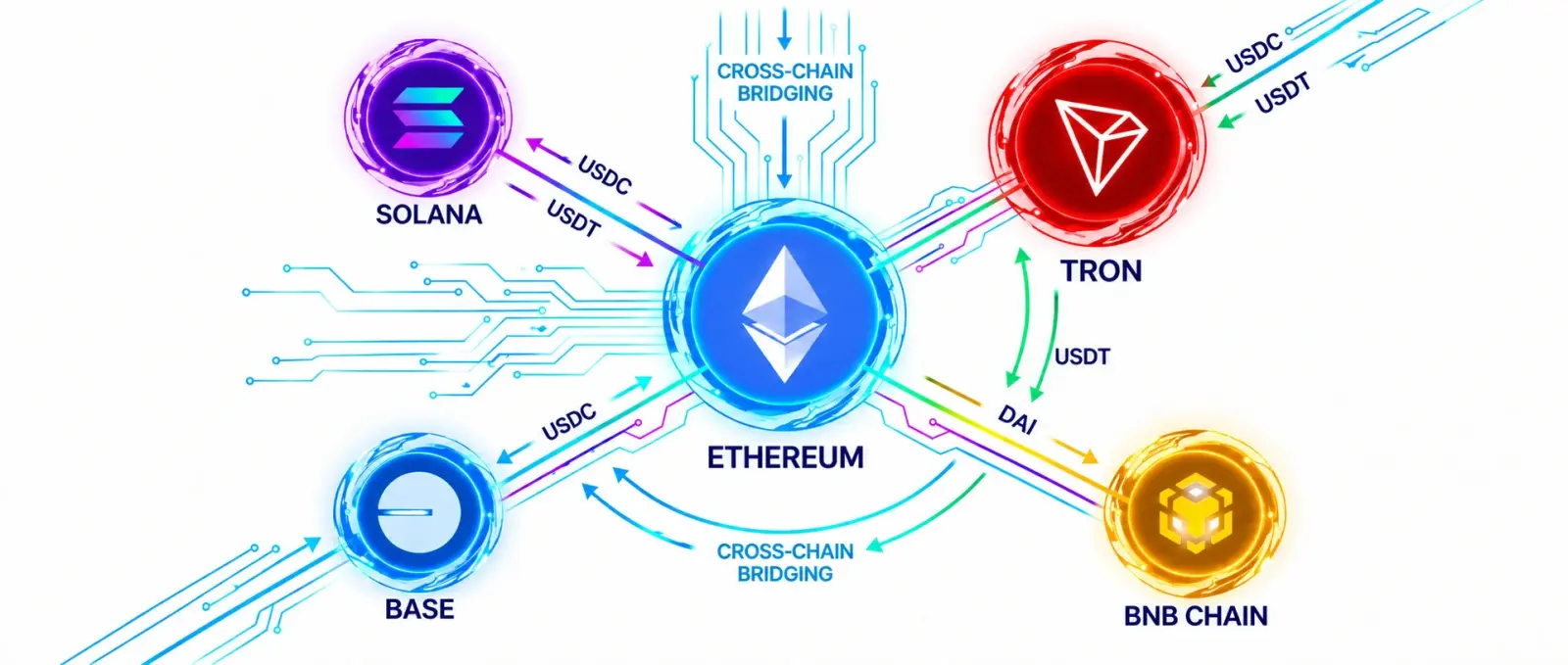
The most important practical risk for many users is choosing the wrong network when sending a token to an exchange or wallet. For example, selecting a TRC-20 withdrawal when the receiving deposit instructions require ERC-20 may cause the funds to fail to arrive as expected. Recovery is not always possible and depends on the receiving service, address ownership, and technical circumstances. Before sending funds, users should confirm the asset, select a network explicitly supported by the destination, verify the deposit address and any additional instructions, and consider a small test transfer when appropriate. They should also account for fees and minimum deposit requirements. Similar-looking token symbols or matching wallet-address formats are not sufficient proof that a transfer is compatible.
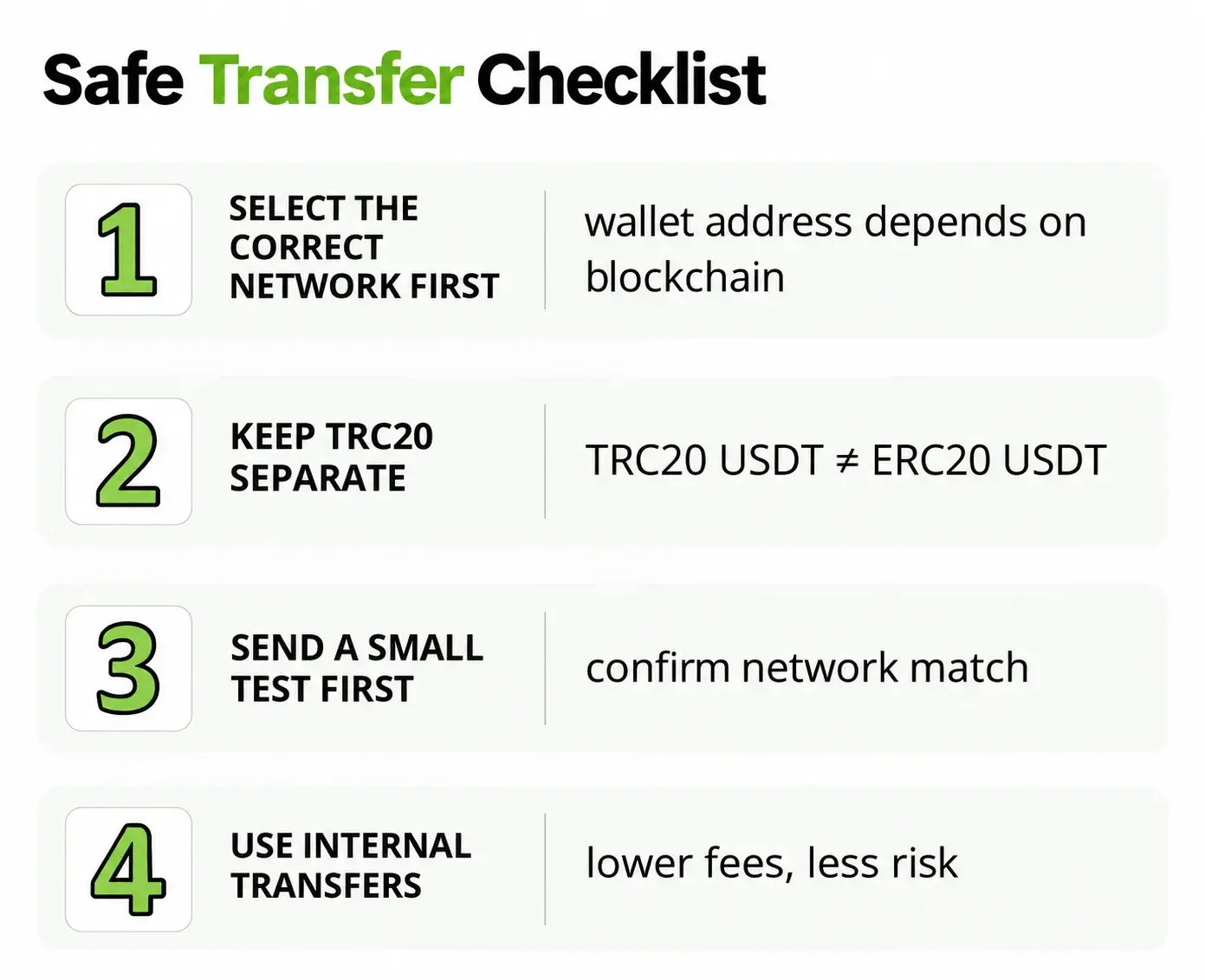
ERC-20, BEP-20, and TRC-20 provide standardized ways to create and manage fungible tokens on three distinct blockchain ecosystems. ERC-20 is central to Ethereum's token infrastructure; BEP-20 enables comparable token functionality on BNB Smart Chain; and TRC-20 supports fungible tokens within TRON. Their similarities make token development and application integration more consistent,but their differences remain important for transactions, fees, compatibility, and security. A sound understanding of these standards helps users make better-informed decisions when transferring digital assets. Ultimately, the safest network is not simply the one advertised as fastest or cheapest, but the one correctly supported by both the sender and the recipient for the specific asset being transferred.
Sources
- eips.ethereum.org/EIPS/eip-20
- github.com/bnb-chain/BEPs/blob/master/BEPs/BEP20
- docs.bnbchain.org/bnb-smart-chain/developers/quick-guide
- developers.tron.network/docs/token-standards-overview
Education only — not financial advice. Figures are as of the dates given in the text and its sources. Our editorial policy · Report an error