Coins vs. Tokens: Understanding the Fundamental Differences in Blockchain Technology
From Bitcoin and Ether to stablecoins and NFTs, digital assets power the modern blockchain economy. Understanding the key differences between coins and tokens is essential for navigating decentralized finance, digital ownership, and emerging crypto innovations.

Key takeaways
- Coins are native assets of blockchain networks, while tokens are created on top of existing blockchain infrastructures through smart contracts.
- The primary difference between coins and tokens lies in their technical architecture, issuance mechanism, and role within blockchain ecosystems.
- Tokens power major blockchain innovations such as DeFi, stablecoins, governance systems, and NFTs without requiring separate blockchains.
- Token security depends not only on the underlying blockchain but also on the quality of smart contract code, governance structures, and administrative controls.
- Understanding the distinction between coins and tokens is essential for evaluating digital assets, blockchain applications, and the future of decentralized finance.
The rapid development of blockchain technology has introduced various forms of digital assets, among which coins and tokens are two fundamental categories. Although these terms are frequently used interchangeably in cryptocurrency markets, they represent different technical structures, economic functions, and operational mechanisms. Coins generally operate as native assets of independent blockchain networks, whereas tokens are typically issued through smart contracts or asset protocols built on existing blockchain infrastructure. This article examines the technological foundations, practical applications, economic characteristics, and associated risks of coins and tokens. It also explores their significance in decentralized finance (DeFi), digital ownership, and the broader development of blockchain-based financial systems. Understanding these distinctions is essential for developers, researchers, investors, and individuals interested in the digital economy.[1]
Blockchain technology has significantly transformed the concept of digital ownership and financial transactions. Traditionally, financial systems have depended on centralized institutions, including banks, payment processors, and government authorities, to verify and record transactions. Blockchain networks introduce an alternative model in which distributed participants maintain and validate shared transaction records according to predefined rules. Bitcoin, introduced in 2008 [2] through a white paper published under the name Satoshi Nakamoto, demonstrated how digital value could be transferred through a peer-to-peer network without relying on a conventional financial intermediary.[2]
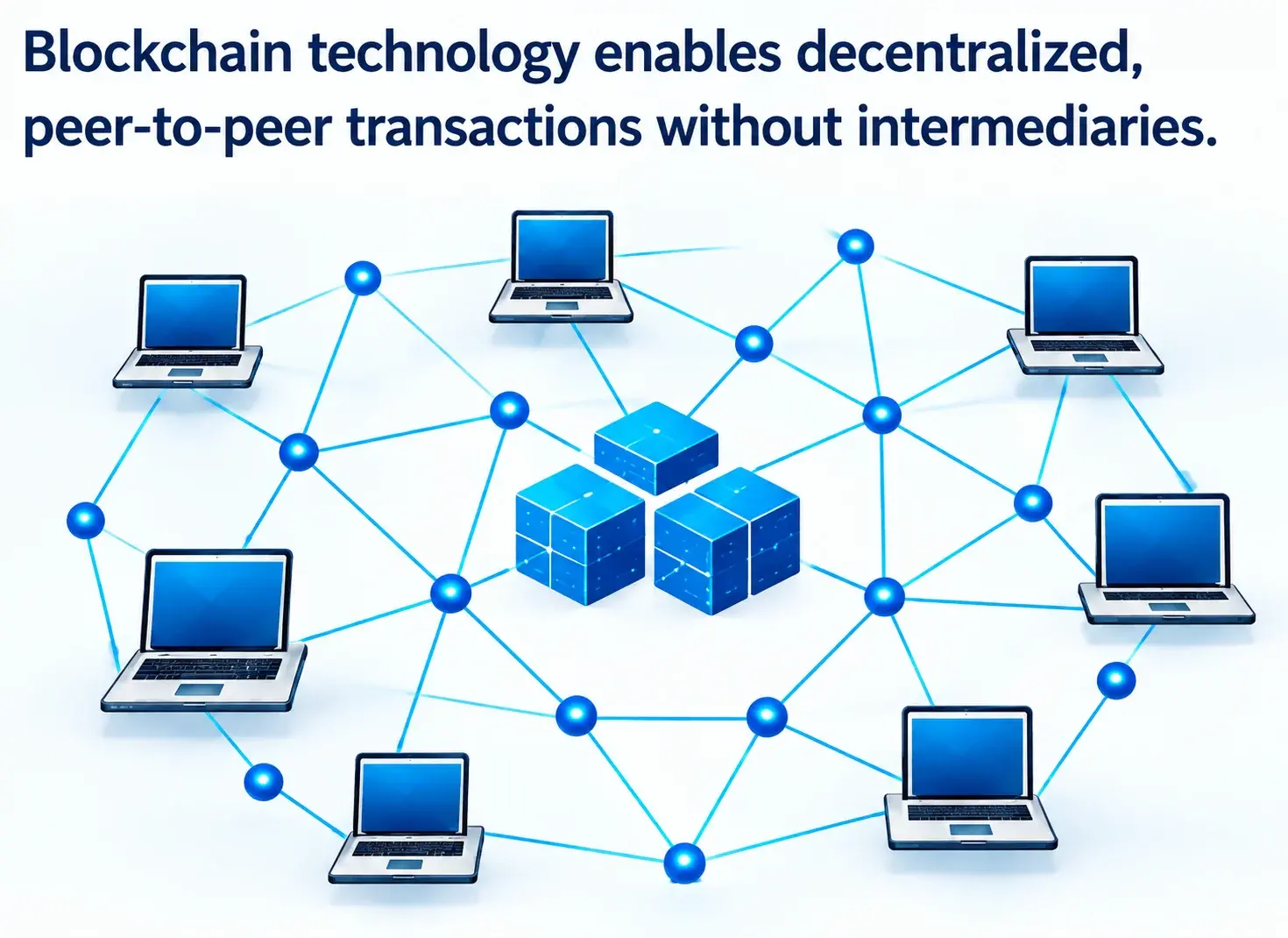
As the cryptocurrency ecosystem expanded beyond Bitcoin, developers began creating digital assets with different functions and technical characteristics. Two major categories emerged: coins and tokens. Although both can be transferred and held through blockchain-compatible wallets, their creation and operation differ. A coin is generally integrated into the underlying blockchain protocol, while a token is commonly issued through an application or smart contract operating on an existing network. This distinction affects how assets are created, transferred, secured, and used within decentralized applications.[3]
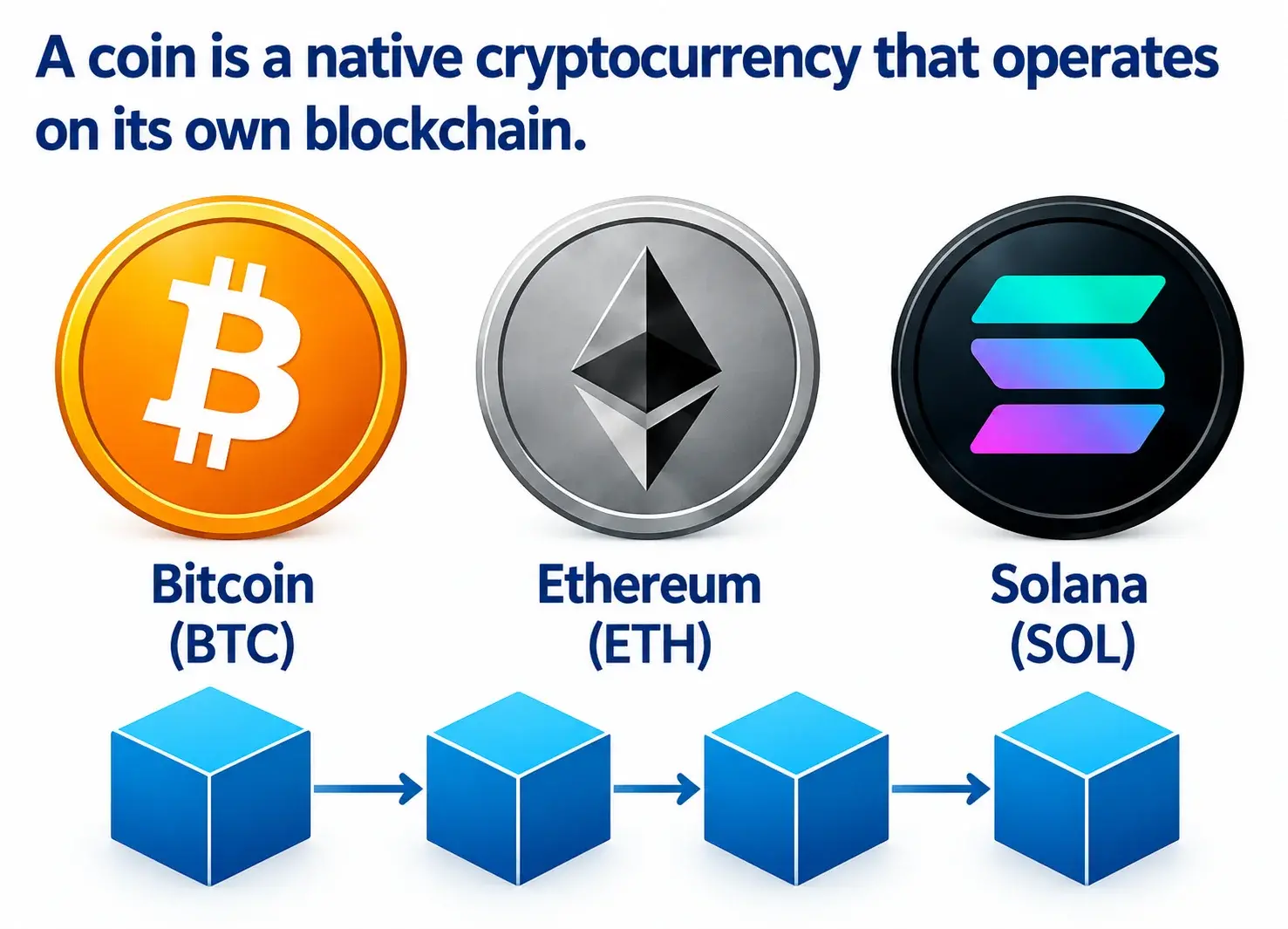
A cryptocurrency coin is a digital asset that functions as the native currency of a blockchain network. Native coins are generally incorporated into the network's protocol and are used for transactions, transaction fees, and, depending on the consensus mechanism, economic incentives for network participants. Bitcoin (BTC), Ether (ETH), and Solana's SOL are examples of native blockchain assets. These coins do not require an external token contract to establish their existence because their balances and transfers are recognized by the underlying blockchain system.[4]
Bitcoin serves as a representative example of a native blockchain asset. The Bitcoin network uses a proof-of-work consensus mechanism in which miners compete to produce valid blocks. Transactions are recorded through an accounting model based on unspent transaction outputs (UTXOs). Bitcoin is issued according to predetermined protocol rules, with a maximum supply approaching 21 million BTC[2]. Its primary functions include transferring value, compensating miners, and providing an economic incentive structure for securing the network.[2]
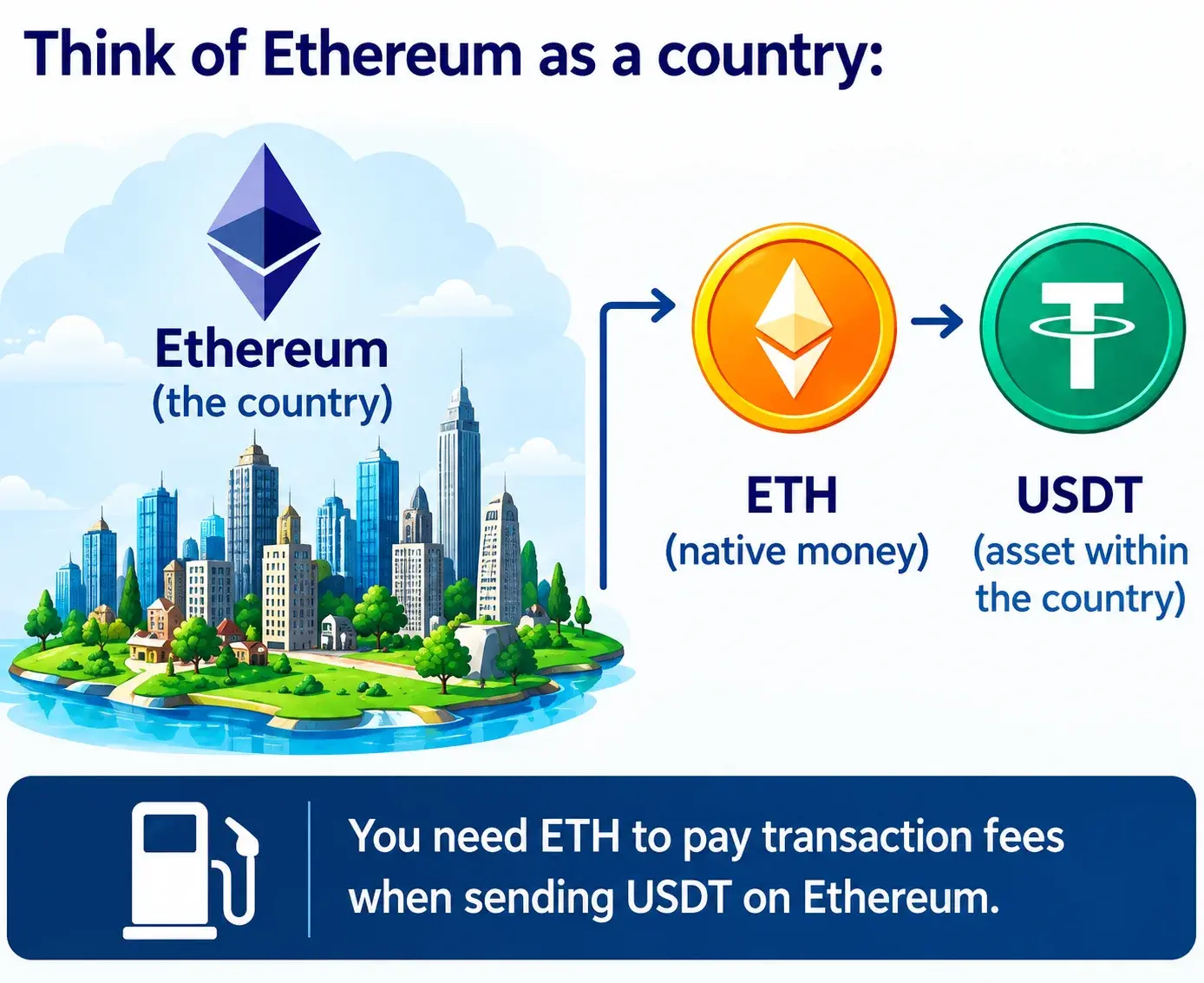
Ethereum provides a broader illustration of native asset functionality within programmable blockchain environments, but with a broader computational purpose. Ether (ETH) is the native asset of the Ethereum blockchain, where it is used to pay transaction fees and support network security through proof-of-stake. Ethereum also allows developers to deploy smart contracts, which are programs that execute according to predefined conditions. As a result, ETH serves not only as a transferable digital asset but also as an essential resource for operating decentralized applications on the network.[4]
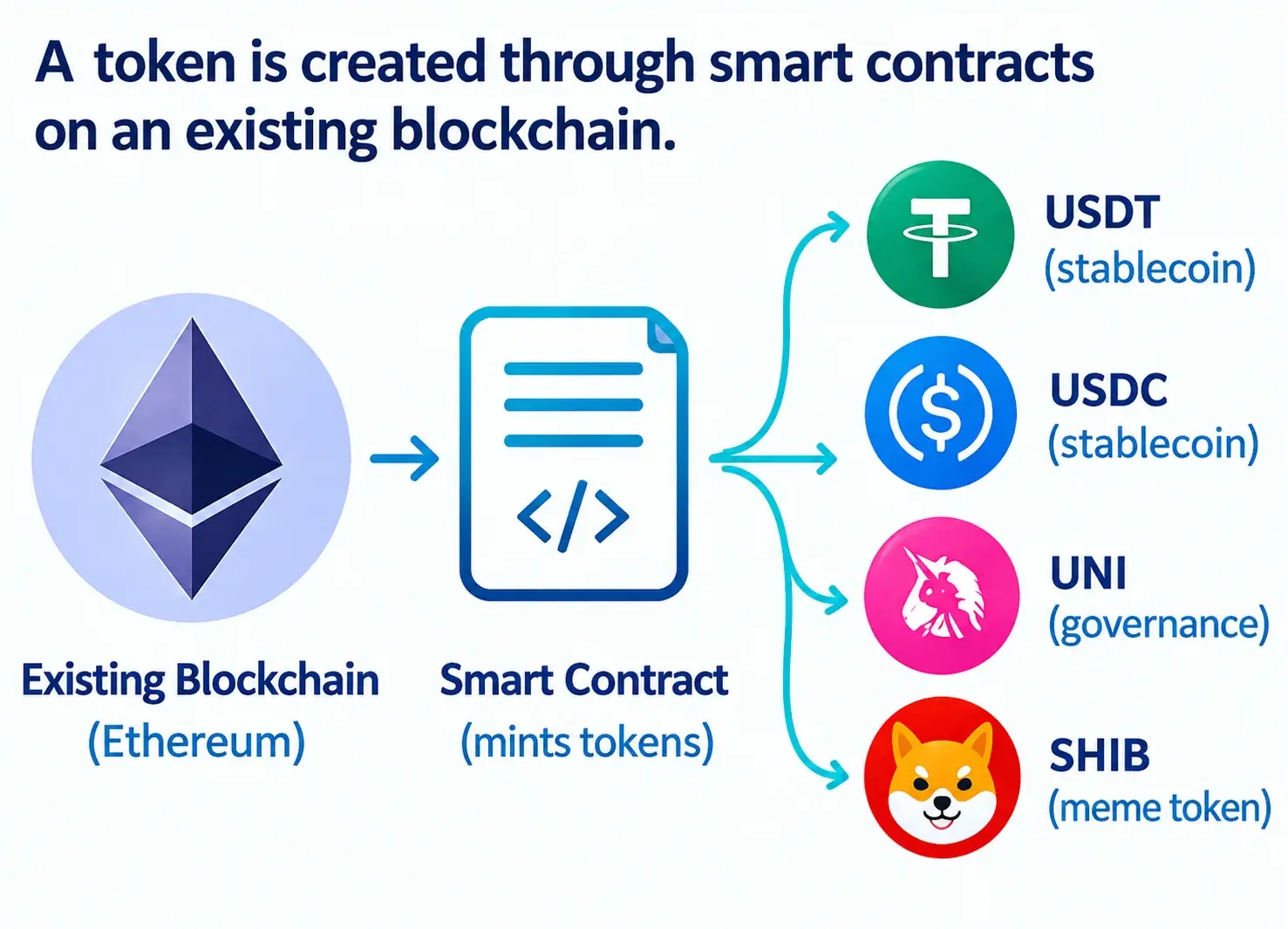
A cryptocurrency token is a digital asset created and managed through an existing blockchain infrastructure rather than through the native monetary rules of a separate blockchain. On Ethereum, for example, developers can create tokens by deploying smart contracts that define ownership balances, transfer permissions, supply mechanisms, and other functions. These contracts operate within Ethereum's execution environment and depend on the underlying network to process transactions and maintain consensus. Consequently, a token can have its own economic identity without requiring its own independent blockchain.[1]
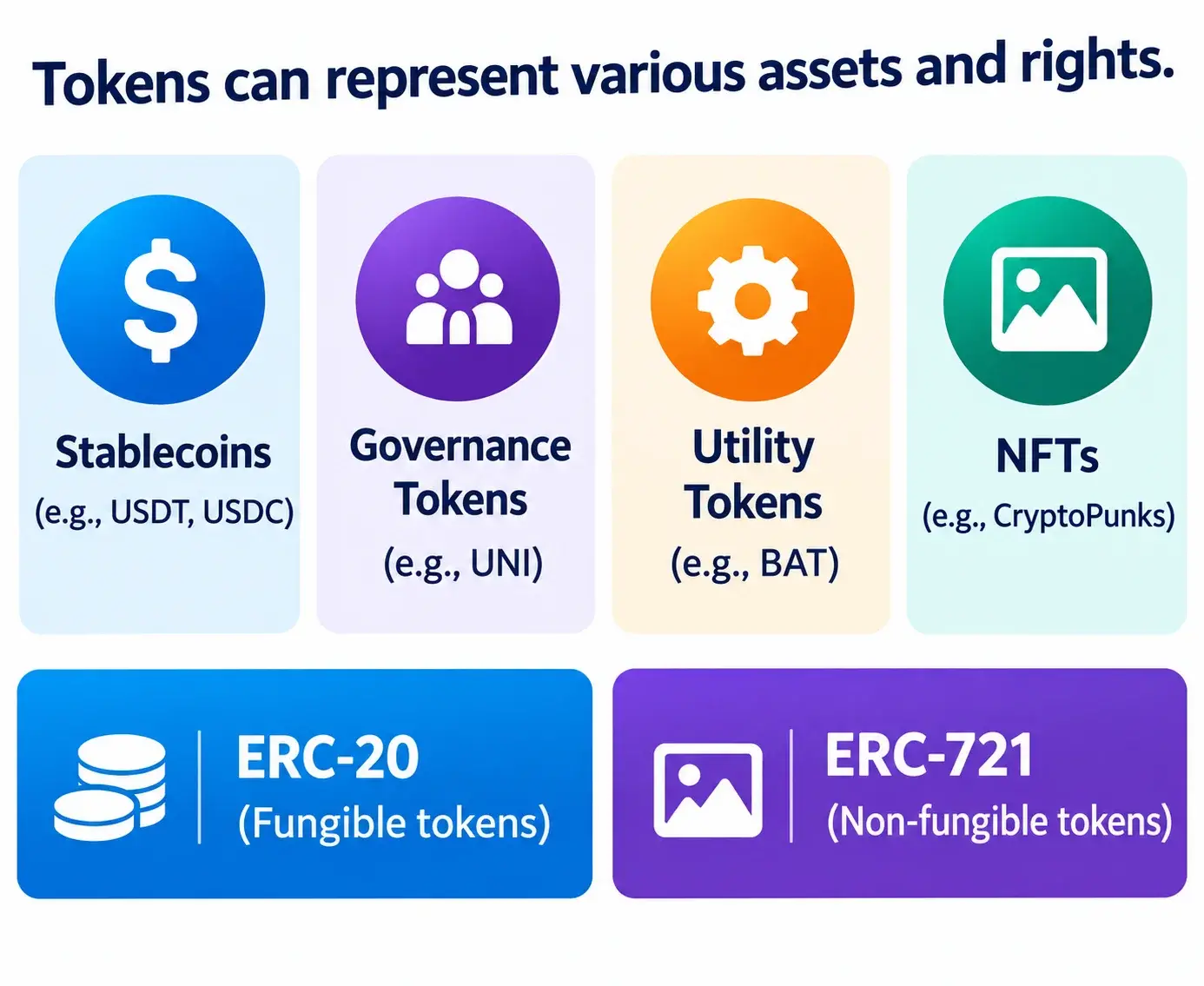
One of the most widely adopted token standards is ERC-20, which establishes a common programming interface for fungible tokens on Ethereum. Fungibility means that units of the same asset are interchangeable: one unit has the same fundamental properties as another unit of that asset. ERC-20 specifies functions for checking balances, transferring tokens, viewing total supply, and authorizing third parties to transfer tokens. This standardization allows wallets, decentralized exchanges, and financial applications to interact with many different tokens through a consistent technical interface.[5]
Tokens can represent a wide range of assets and rights. Stablecoins may seek to maintain a value linked to a fiat currency, governance tokens may enable participation in protocol decisions, and utility tokens may provide access to particular services. Other tokens can represent digital collectibles, game assets, or claims associated with real-world assets. However, the existence of a token on a blockchain does not automatically establish legal ownership of an external asset; the enforceability of such rights depends on the relevant legal and contractual arrangements.[6]
 Watch on our channelwhy this video helps here
The most fundamental technical difference concerns the layer at which the asset is implemented. A native coin belongs to the blockchain's core protocol, whereas a typical token is implemented through smart contracts or another asset-issuance mechanism supported by the host network. This means that native coins and tokens may use different accounting systems, transaction structures, and authorization procedures even when they operate on the same blockchain. For example, transferring ETH directly is technically different from transferring an ERC-20 token through a smart contract.[3]
Another important distinction involves transaction fees. On Ethereum's main network, computational operations consume gas, and gas fees are paid in ETH. Therefore, transferring an ERC-20 token ordinarily requires the transaction sender to have sufficient ETH to cover network fees, even if the sender holds a substantial amount of the token being transferred. Some wallet and application systems can sponsor or abstract these fees, but the underlying Ethereum transaction still requires gas payment. This illustrates the infrastructure relationship between native coins and the tokens operating on their networks.[7]
Security also differs at the implementation level. Native coins rely on the blockchain's consensus and protocol rules, while smart-contract tokens additionally depend on the correctness of their contract code and any administrative permissions embedded within it. A token can benefit from the security of its host blockchain while remaining vulnerable to programming errors, compromised administrative keys, or poorly designed permissions. Accordingly, a secure blockchain does not guarantee that every token deployed on it is secure.[6]
| Feature | Coin | Token |
|---|---|---|
| Own blockchain | Yes | No |
| Creation | Protocol-level | Smart contract |
| Main use | Fees,Payments,Security | Payments,DeFi,Governance,Utility |
| Example | BTC,ETH | USDT on Ethereum |
| Gas fees | Often paid on the coin | Paid in native coin (e.g,ETH) |
| Consensus | May support mining/staking | Usually does not secure the base chain |
| Development | Higher complexity | Lower complexity |
The following table summarizes the principal characteristics of native coins and blockchain-based tokens.
| Characteristic | Coin | Token |
|---|---|---|
| Blockchain infrastructure | Native to its blockchain | Uses an existing blockchain |
| Creation | Protocol-level issuance | Commonly smart-contract issuance |
| Examples | BTC, ETH, SOL | USDC, UNI, ERC-20 assets |
| Transaction fees | Often paid in the native coin | Usually paid using the host network's fee mechanism |
| Consensus participation | May support mining or staking | Usually does not directly |
| Primary functions | Payments, fees, security incentives | Utility, governance, stable value, asset representation |
| Technical risks | Protocol and network risks | Host-network and token-specific risks |
| Development complexity | Typically greater for a new blockchain | Often lower when using established standards |
The economic characteristics of coins and tokens are frequently discussed under the term tokenomics, which refers to the rules and incentives governing a digital asset's supply, distribution, demand, and utility. These characteristics can include issuance schedules, maximum supply, circulating supply, inflation, token burning, staking rewards, and governance rights. Bitcoin, for example, follows a protocol-defined issuance schedule, while an ERC-20 token may implement supply rules directly through its smart contract. Such design decisions can influence scarcity, market expectations, and incentives for participants.[4]
Importantly, neither coins nor tokens have an inherent guarantee of investment value. The price of a digital asset may depend on demand, market liquidity, perceived utility, investor expectations, and the credibility of its underlying project. A native coin may experience significant volatility despite having an established blockchain, while a token may become economically important if it provides a useful service or represents a credible financial claim. Therefore, classification as a coin or token is insufficient for determining investment quality, profitability, or long-term sustainability.[8]
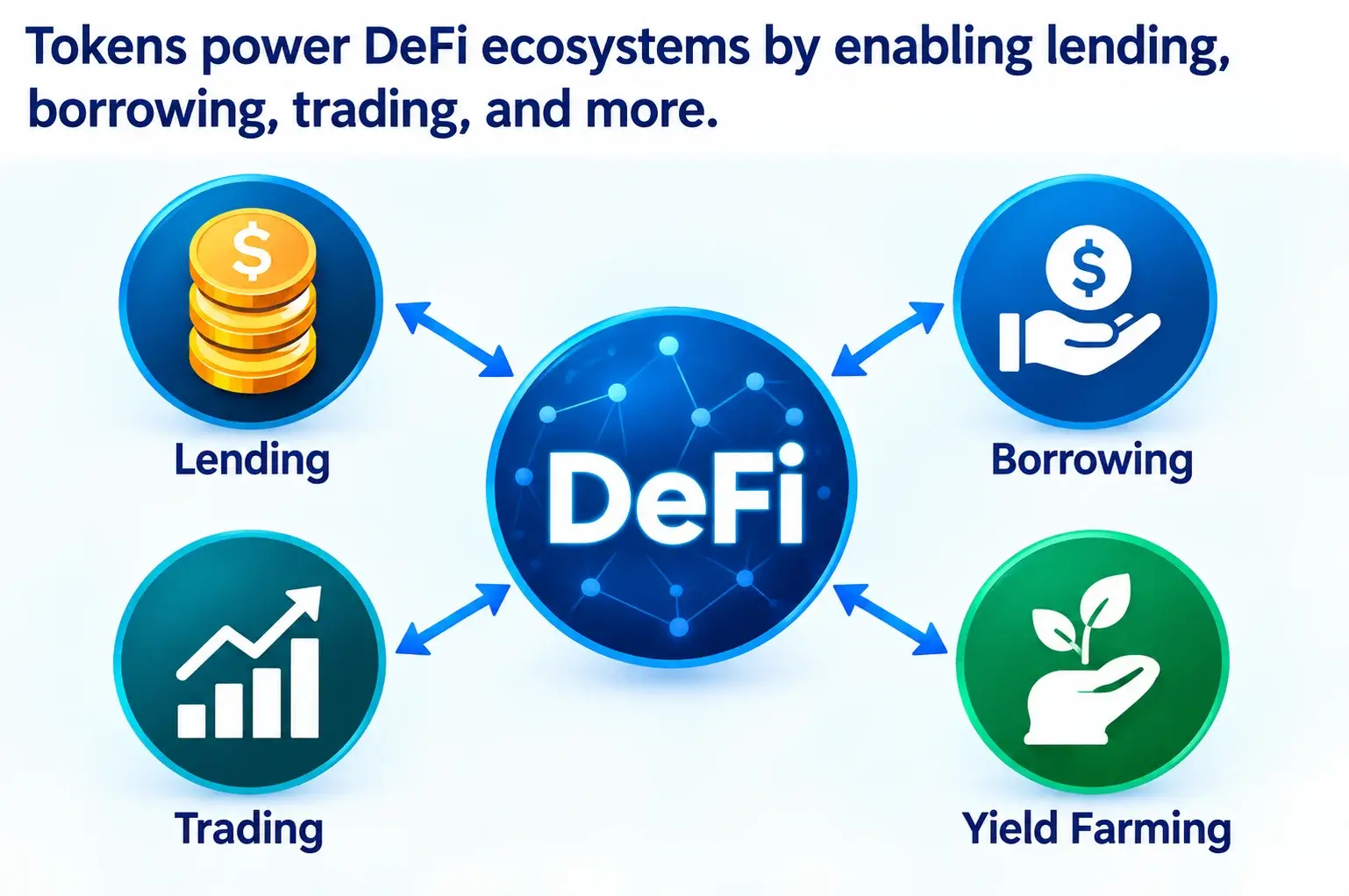
Decentralized finance, commonly known as DeFi, is one of the most significant areas of token application. DeFi systems use blockchain-based programs to provide services such as asset exchange, lending, borrowing, and collateral management. Tokens play an essential role because they can represent transferable assets, liquidity positions, governance rights, and financial claims within these applications. Standardized token interfaces also enable interoperability, allowing different applications to recognize and interact with compatible assets without developing an entirely new blockchain for each financial service.[1]
Stablecoins provide an especially important example of token-based financial infrastructure. These assets generally attempt to maintain a relatively stable value in relation to another asset, often the US dollar. They can facilitate payments, trading, and settlement within blockchain ecosystems. Nevertheless, a stablecoin's stability depends on its design, reserves, redemption arrangements, and operational reliability. A token described as stable is not necessarily risk-free, and reserve disclosures should not automatically be treated as equivalent to comprehensive financial statement audits.[9]
Not all tokens function as interchangeable currencies. Non-fungible tokens, or NFTs, represent individually distinguishable digital assets. Ethereum's ERC-721 standard, for instance, provides a framework in which each token is identified by a unique identifier within its smart contract. Unlike fungible tokens, which are designed to be interchangeable within the same asset class, NFTs can represent distinct digital collectibles, membership credentials, gaming items, or records associated with particular assets.[10]
NFTs demonstrate that the concept of a blockchain token extends beyond digital money. Through smart contracts, tokens can be associated with metadata and programmed transfer rules, enabling new forms of digital identification and ownership tracking. However, holding an NFT does not necessarily grant copyright, intellectual property rights, or legal ownership of a physical object. Such rights depend on the agreements and legal frameworks surrounding the token. The distinction between recording ownership on a blockchain and enforcing rights outside the blockchain remains an important research and regulatory issue.[11]
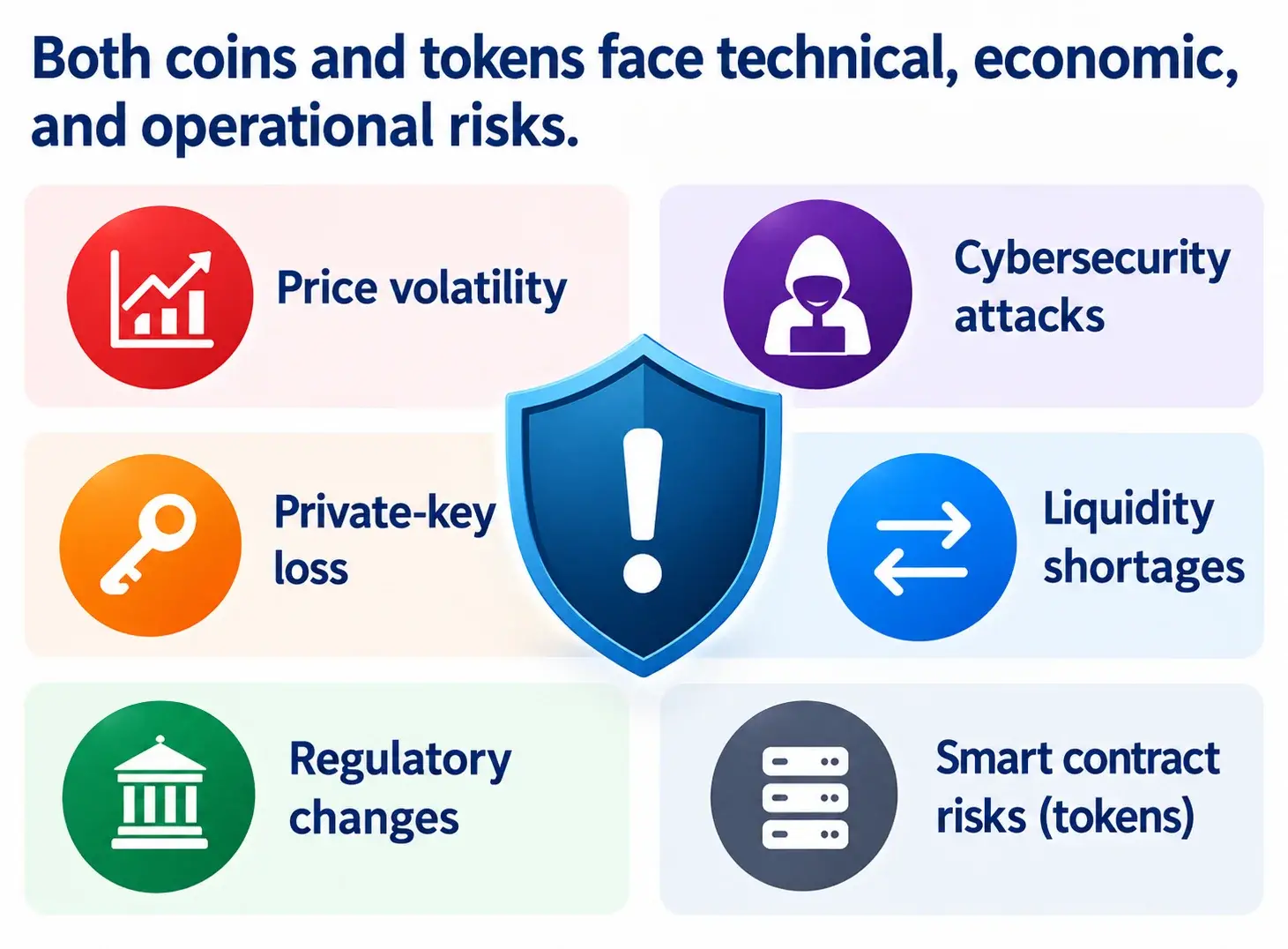
Both coins and tokens face technological, economic, and operational risks. These include price volatility, cybersecurity attacks, private-key loss, liquidity shortages, and changing regulatory requirements. Cryptocurrency transactions may also be difficult or impossible to reverse after confirmation. Investors who rely on centralized service providers face additional risks involving custody arrangements, insolvency, and unauthorized access. The security of an asset therefore depends not only on the underlying blockchain but also on wallets, applications, intermediaries, and user practices.[9]
Tokens may introduce additional risks related to their specific smart contracts. Some contracts contain privileged functions that allow authorized administrators to pause transfers, change certain parameters, or create additional units if the implementation permits it. These features may serve legitimate operational purposes but can also create concentration of control or opportunities for misuse. Evaluating a token therefore requires examining its contract architecture, administrative authority, supply mechanisms, and the transparency of its governing organization[5]
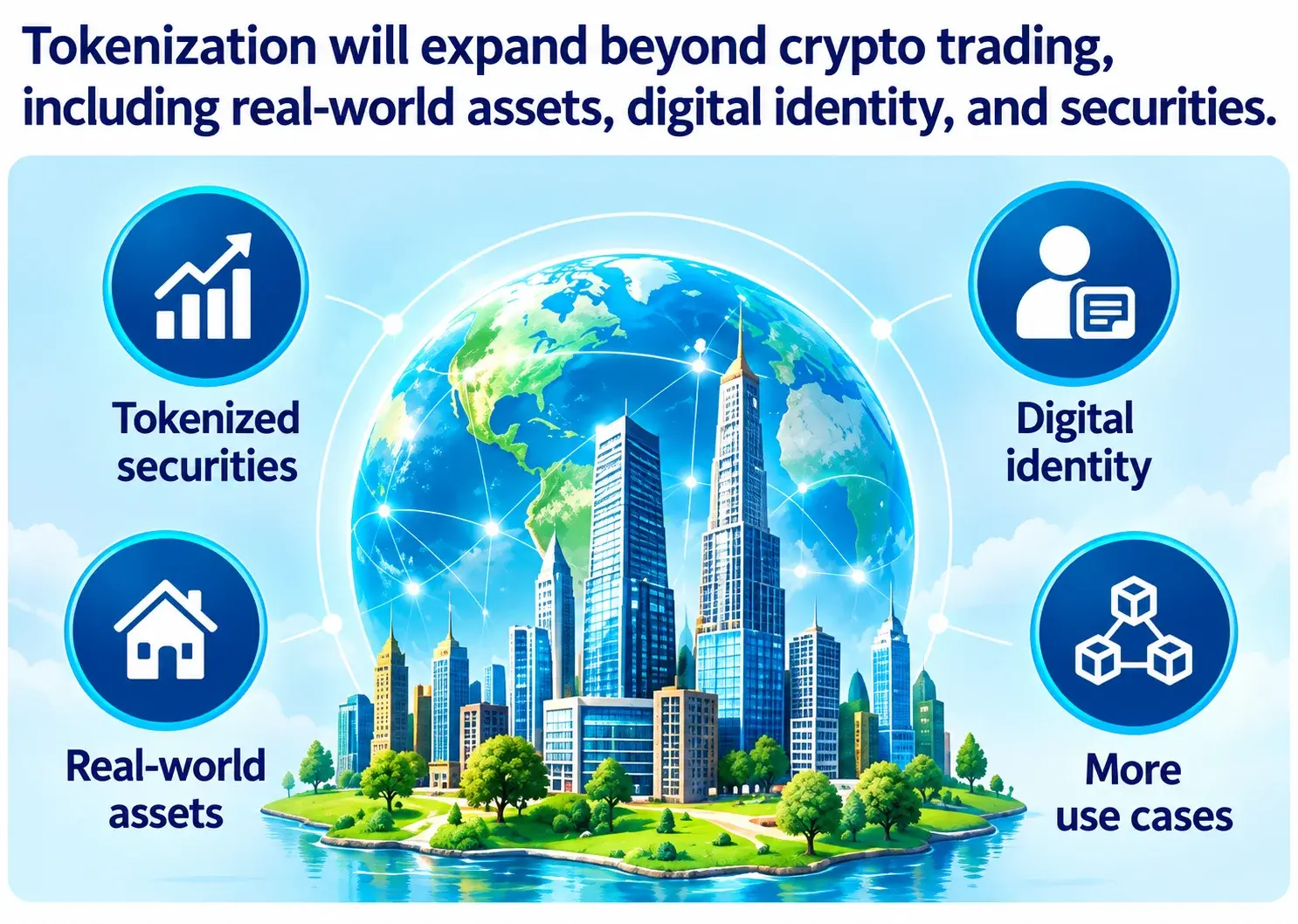
The distinction between coins and tokens is likely to remain important as blockchain applications continue to evolve. Native coins provide essential infrastructure for blockchain operation, while tokens offer flexible methods of representing value, access rights, and financial instruments. Emerging applications involving tokenized securities, digital identity, and real-world assets demonstrate how token-based systems may extend beyond
In summary, coins and tokens represent two distinct categories of blockchain-based digital assets. While coins serve as native components of blockchain protocols and contribute to network security and transaction processing, tokens enable flexible representation of value, rights, and services within existing blockchain ecosystems. Understanding the technological, economic, and regulatory distinctions between these assets is increasingly important as decentralized finance, tokenized assets, and digital ownership models continue to evolve. Future research should further examine interoperability, governance mechanisms, and legal frameworks that influence the long-term sustainability of blockchain-based systems.
Sources
- ethereum.org/developers/docs/standards/tokens/erc-20
- bitcoin.org/bitcoin.pdf
- ethereum.org/developers/docs/intro-to-ether
- developer.bitcoin.org/devguide
- eips.ethereum.org/EIPS/eip-20
- ethereum.org/developers/docs/standards/tokens
- ethereum.org/developers/docs/gas
- investor.gov/introduction-investing/general-resources/news-alerts/alerts-bulletins/investor-bulletins/ETPBulletinSeptember2024
- investor.gov/introduction-investing/general-resources/news-alerts/alerts-bulletins/investors
- eips.ethereum.org/EIPS/eip-721
- ethereum.org/nft
Education only — not financial advice. Figures are as of the dates given in the text and its sources. Our editorial policy · Report an error