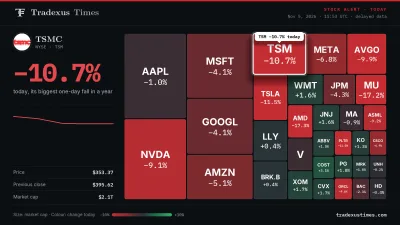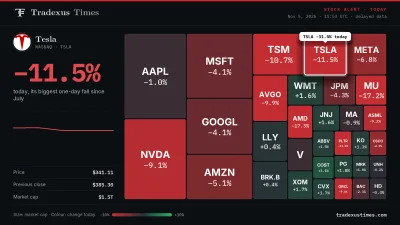

Wall Street suffered a sharp sell-off on November 5, as concerns over the future of artificial intelligence infrastructure, semiconductor valuations and interest rates converged to trigger heavy selling across technology stocks. The Nasdaq fell approximately 5%, while the S&P 500 dropped around 3.2%. Nvidia and AMD were among the major contributors to the market's decline, as investors reassessed the outlook for AI-related growth.
The political backdrop added another layer of uncertainty. Democratic victories in Congress and several states raised concerns that new regulations could make it harder to approve and build AI data centers. Texas became a particular focus after Democratic governor-elect Gina Hinojosa pledged to pause approvals for new data centers until additional protective legislation is introduced. Investors are now weighing whether political and regulatory changes could slow the expansion of the infrastructure supporting the AI industry.
In this story
3 assets
The potential impact could extend well beyond Texas. Goldman Sachs estimates that approximately 45% of planned U.S. data center capacity is located in states that could face restrictions. UBS has separately warned that around 30% of the expected increase in U.S. data center capacity in 2028 could be delayed. Importantly, these estimates point to potential delays, not necessarily the cancellation of projects.
Any slowdown in data center construction could have consequences for semiconductor companies. Nvidia and AMD depend partly on continued investment in computing infrastructure, and delays in new facilities could affect demand for their processors and related equipment. Concerns were reinforced by Qualcomm's weaker mobile-chip revenue and a less encouraging outlook from Arm, adding pressure to an industry whose valuations already reflect substantial expectations for future growth.
Monetary policy concerns also intensified the sell-off. Federal Reserve officials' comments about maintaining restrictive conditions to control inflation raised fears that interest rates could remain elevated or even move higher. Higher borrowing costs would make financing expensive data center projects more difficult while potentially putting additional pressure on technology stock valuations.
The contrast between Wednesday's market gains and Thursday's sharp decline highlights how quickly sentiment changed. Lower oil prices and initial optimism following the election helped support equities on Wednesday, even as some data center-related stocks were already under pressure. By Thursday, selling had spread across major technology companies as concerns about AI profitability, infrastructure spending and leveraged positions amplified market volatility.
The sell-off was therefore not simply a reaction to Democratic election victories. It reflected a broader reassessment of the risks surrounding AI investment, semiconductor earnings, regulatory uncertainty and the cost of capital. The key question now is whether data center expansion and AI spending can maintain their momentum despite growing political and financial obstacles.