 WLFI

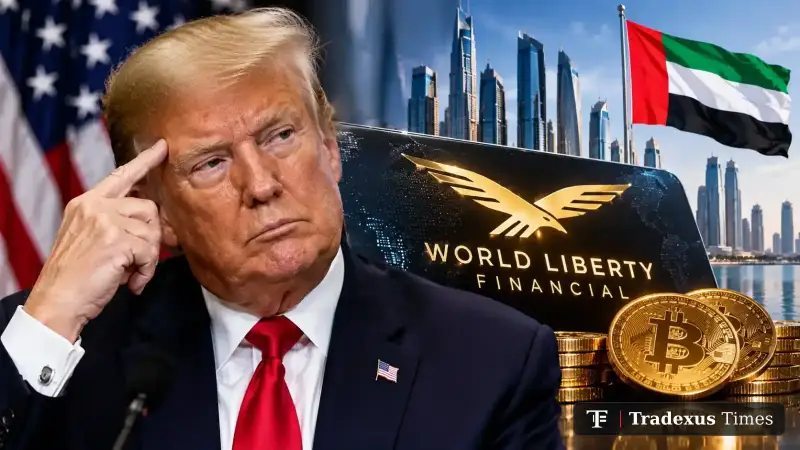
US President Donald Trump has said he was unaware of the details surrounding an investment linked to the United Arab Emirates in his family's cryptocurrency company, World Liberty Financial, while confirming that he remains one of the firm's owners.
In an interview, Trump said his sons oversee the business and handle its management, emphasizing that he is not involved in its day-to-day operations. His remarks bring renewed attention to the company's ownership structure and its financial connections with foreign investors.
The issue centers on a previously reported agreement involving an investment group linked to the UAE, which reportedly agreed to acquire a 49% stake in World Liberty Financial for approximately $500 million before Trump began his second presidential term.
The reported transaction has attracted attention because of the relationship between the company and the family of a sitting US president. Although Trump says he was unaware of the investment's details, his acknowledgment that he remains an owner makes the distinction between ownership and operational management particularly relevant.
The situation also raises questions about the intersection of private cryptocurrency businesses, foreign investment, and public office. Investments involving companies connected to political figures can attract additional scrutiny because of potential conflicts of interest, particularly when foreign-linked financial relationships are involved.
For the cryptocurrency industry, the case highlights the growing intersection between digital-asset businesses and international political and financial networks. World Liberty Financial's ownership arrangements and reported foreign investment have become relevant not only to its commercial activities but also to broader discussions about transparency and governance.
The next point of attention is likely to be the details of the reported investment agreement, the identity and financial structure of the investment group, and the extent of the Trump family's continuing ownership and involvement in the company. These issues will remain central to assessing the potential political and governance implications of the transaction.