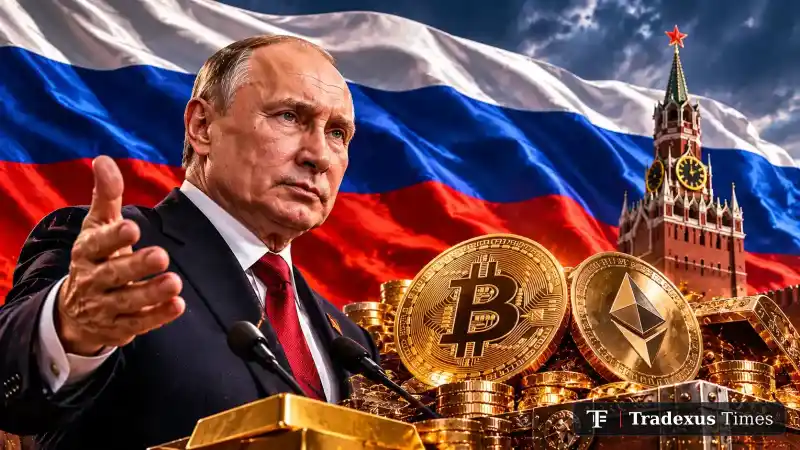
Russia’s Communist Party has proposed incorporating cryptocurrency seized from criminals into the country’s gold and foreign exchange reserves, opening a policy debate over whether legally confiscated digital assets should become part of the state’s reserve holdings.
On November 19, 2026, five deputies from the Communist Party of the Russian Federation (KPRF) sent a formal proposal to Bank of Russia Governor Elvira Nabiullina. The letter was signed by Yuri Afonin, Georgy Kamnev, Maria Drobot, Ksenia Aitakova and Alexander Ivachev.

The proposal sets specific conditions for eligible assets. Only cryptocurrency that has been formally transferred to state ownership through a court decision would qualify. Digital assets connected to ongoing investigations would remain excluded until the legal process establishes state ownership. The lawmakers also emphasized that the plan would not require new government spending to purchase cryptocurrency.
The deputies argue that leaving confiscated digital assets unused represents a missed opportunity to put existing state-owned resources to work. They acknowledge that cryptocurrency prices can be volatile, but maintain that this risk should not automatically prevent the government from considering their inclusion in national reserves.
The proposal comes amid changes to Russian legislation that have made it easier for bailiffs to seize digital assets connected to corruption cases. The lawmakers also cited the United States' establishment of a Strategic Bitcoin Reserve in 2025, which was built around digital assets obtained through forfeiture rather than new market purchases.
Russia's existing reserve structure provides important context. International reserves stood at approximately $718.9 billion to $720.9 billion in mid-November 2026, with gold accounting for a substantial share. Any cryptocurrency recovered through criminal proceedings would likely represent a relatively small component of the overall reserve portfolio. The proposal, however, does not disclose how much confiscated cryptocurrency the Russian state currently holds.
The main institutional question concerns the Bank of Russia's position. The central bank has previously characterized digital assets as high-risk investments, creating a potential policy conflict between the lawmakers' proposal and the regulator's approach to financial stability. As of the proposal's submission, the central bank had not issued a response.
The document is a policy letter rather than a bill formally introduced in parliament. Its submission therefore does not establish that Russia will adopt the proposed reserve framework.
If the idea advances, its practical significance will depend on how authorities address custody, valuation and the treatment of volatile assets within the country's reserve system. For now, the proposal outlines a limited approach: use cryptocurrency already transferred to state ownership, avoid fresh purchases and leave assets under unresolved legal proceedings outside the reserves.