What Is Staking? Guide to Cryptocurrency Staking and How It Works
Cryptocurrency staking allows users to earn rewards by locking or delegating their digital assets to support blockchain networks, but understanding its mechanisms, benefits, and risks is essential before investing.

Key takeaways
- Staking means committing cryptocurrency to help support a blockchain.
- Participants can receive rewards in cryptocurrency.
- Proof of Stake is the technology behind many staking systems.
- Ethereum, Solana, and Cardano support staking.
- Rewards are variable and never guaranteed.
- Market volatility and technical risks can cause losses.
Introduction: Understanding Staking
Staking is a process in cryptocurrency that allows people to earn rewards by holding and committing their digital assets to help support the operation and security of a blockchain network. In simple terms, it is similar to putting money into a savings account to earn interest, although the risks and mechanisms are very different.
Many popular cryptocurrencies use a system called Proof of Stake (PoS). Instead of relying on energy-intensive mining computers to validate transactions, these networks use participants who stake cryptocurrency to help verify transactions and maintain the blockchain.
 Watch on our channelGuide to Cryptocurrency Staking and How It Works
How Does Cryptocurrency Staking Work?
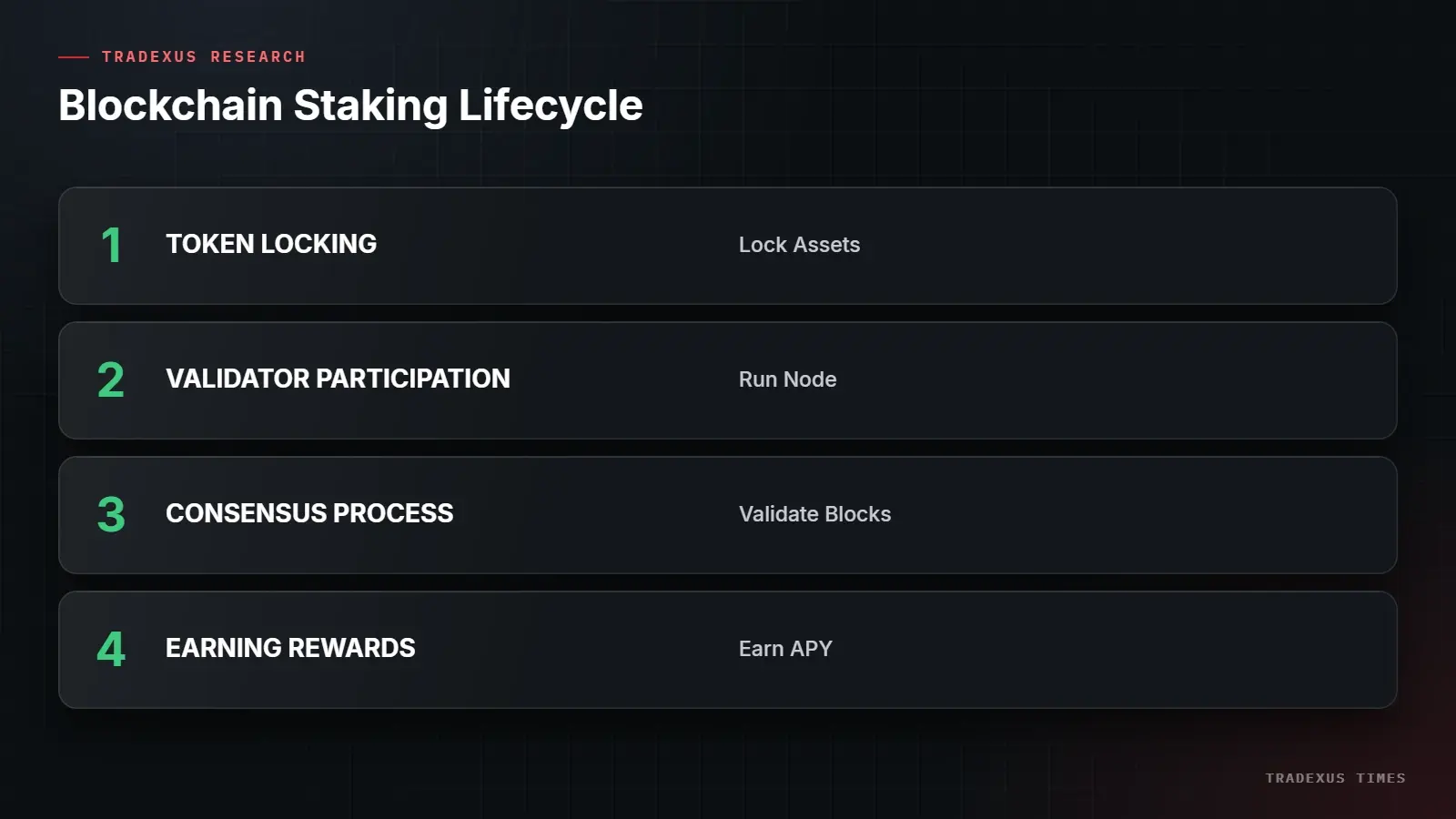
To understand staking, imagine that a blockchain is a digital network that needs people to check and approve transactions. These people are called validators. When you stake your cryptocurrency, you either participate as a validator yourself or delegate your coins to an existing validator. The validator helps confirm transactions and maintain the network. In return, the blockchain distributes rewards to eligible participants. The amount you earn generally depends on the cryptocurrency, the amount staked, network conditions, validator performance, and applicable fees.
How Do You Earn Money Through Staking?
Staking rewards are usually paid in the same cryptocurrency that you stake. For example, if you stake 100 units of a cryptocurrency and the network offers an illustrative annual reward rate of 5%[4], you could receive approximately 5 additional units over one year, assuming the rate remains constant and ignoring fees and other factors. Here is a simple example:
- Initial investment: 100 coins[4]
- Illustrative annual reward rate: 5%[4]
- Estimated annual reward: 5 coins[4]
- Total after one year: 105 coins[4]
However, remember that a 5% staking reward does not necessarily mean a 5% profit in real-world currency[4]. If the cryptocurrency's market price decreases by 20%[4], the value of your holdings could fall despite receiving additional coins. Staking rewards are not guaranteed and can change over time.[4]
Which Cryptocurrencies Can You Stake?
Not every cryptocurrency supports staking. Staking is primarily available on networks that use Proof of Stake or related consensus mechanisms. Some well-known examples include:
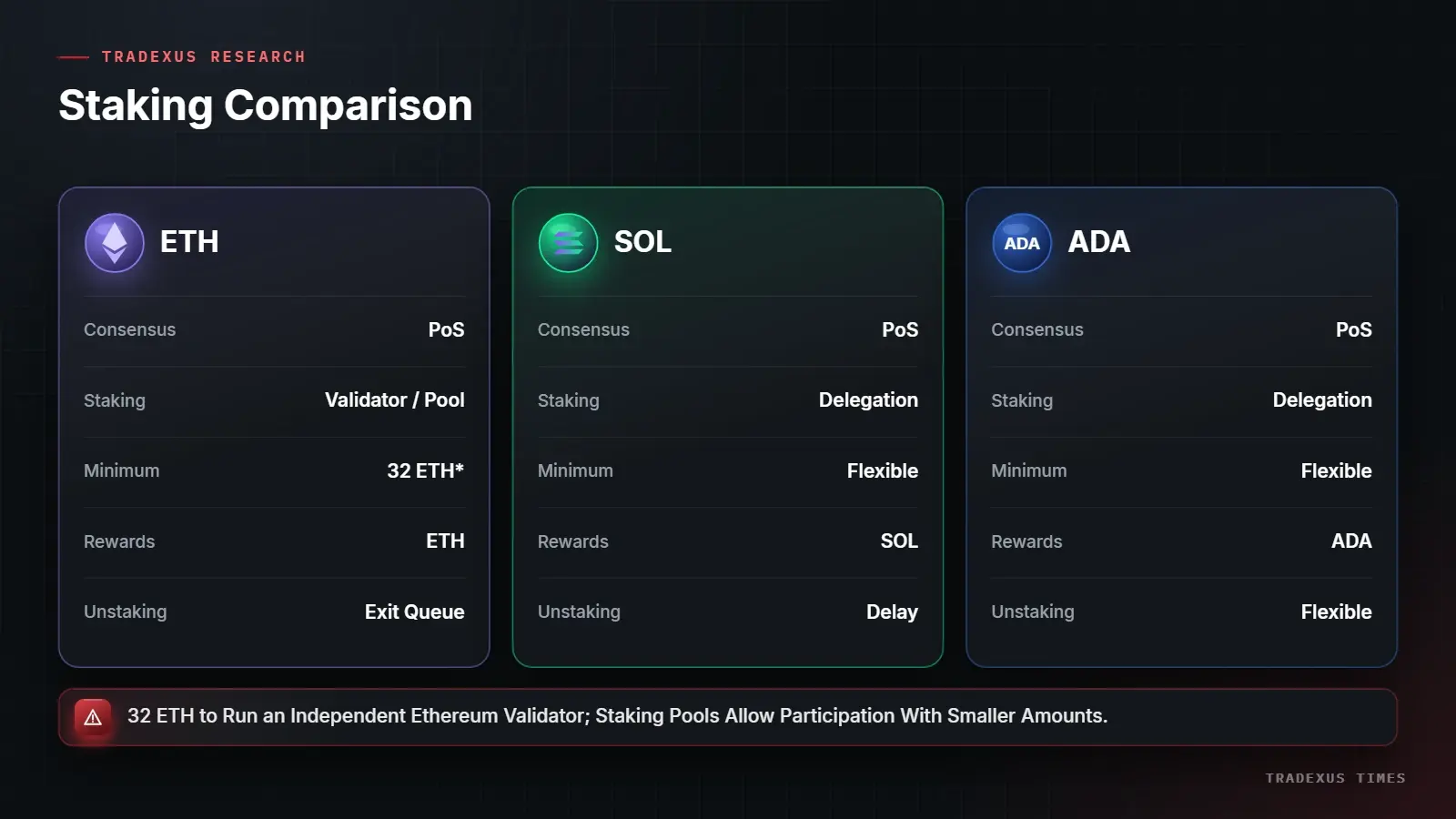
Each cryptocurrency has different staking requirements, reward structures, withdrawal rules, and risks. Therefore, it is important to understand the specific blockchain before committing your assets.
What Are the Different Types of Staking?
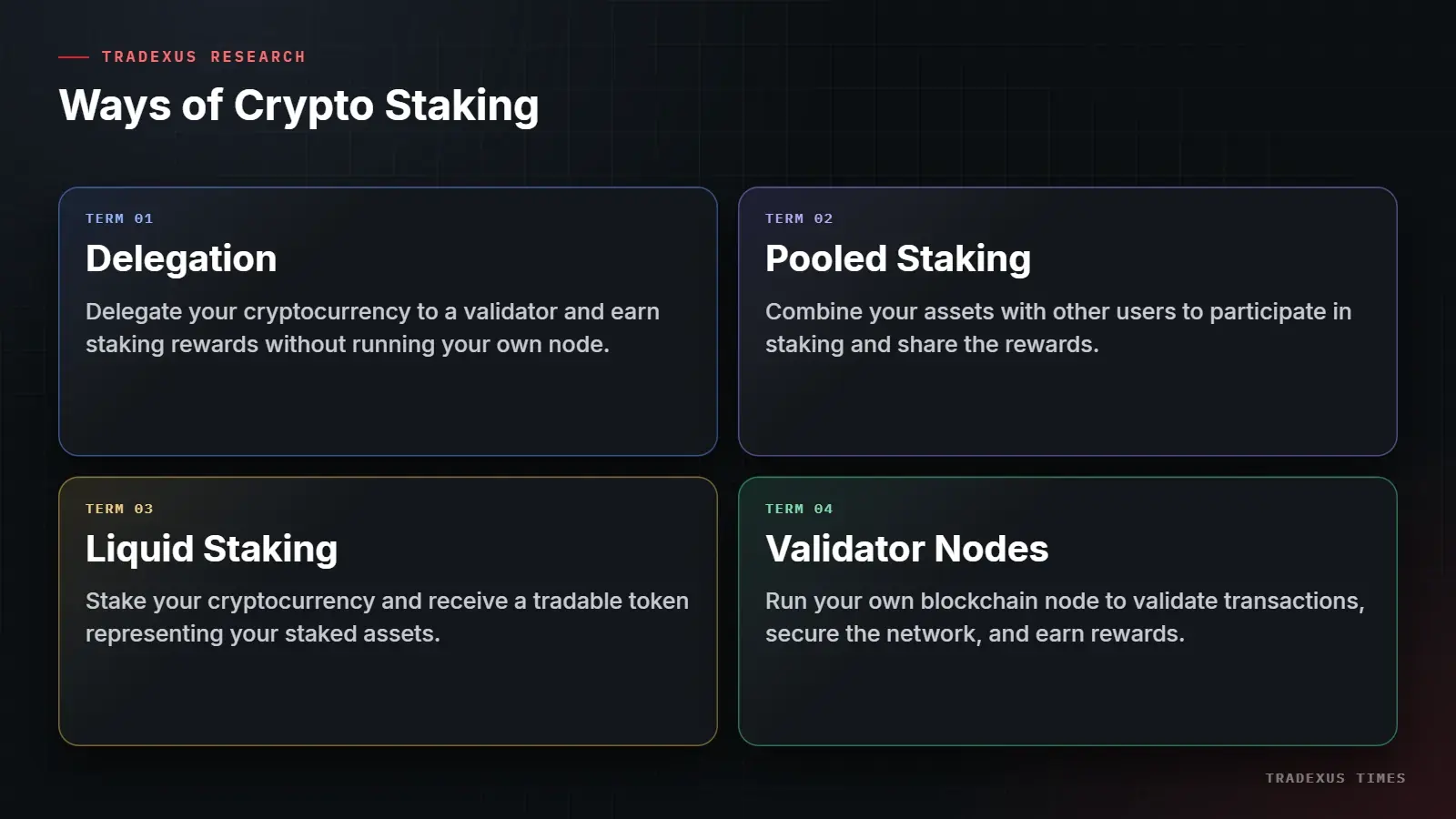
There are several ways to stake cryptocurrency, and the best option depends on your experience, investment amount, and willingness to manage technical responsibilities. Understanding these methods can help you choose an approach that matches your needs.[1]
What Are the Advantages of Staking?
Staking has become popular because it offers several potential benefits to cryptocurrency holders. One major advantage is the opportunity to earn additional cryptocurrency without having to actively trade every day. It also allows participants to contribute to blockchain security and decentralization. For long-term cryptocurrency holders who already believe in a particular blockchain project, staking can be an additional way to put their assets to use rather than simply leaving them idle in a wallet.[1]
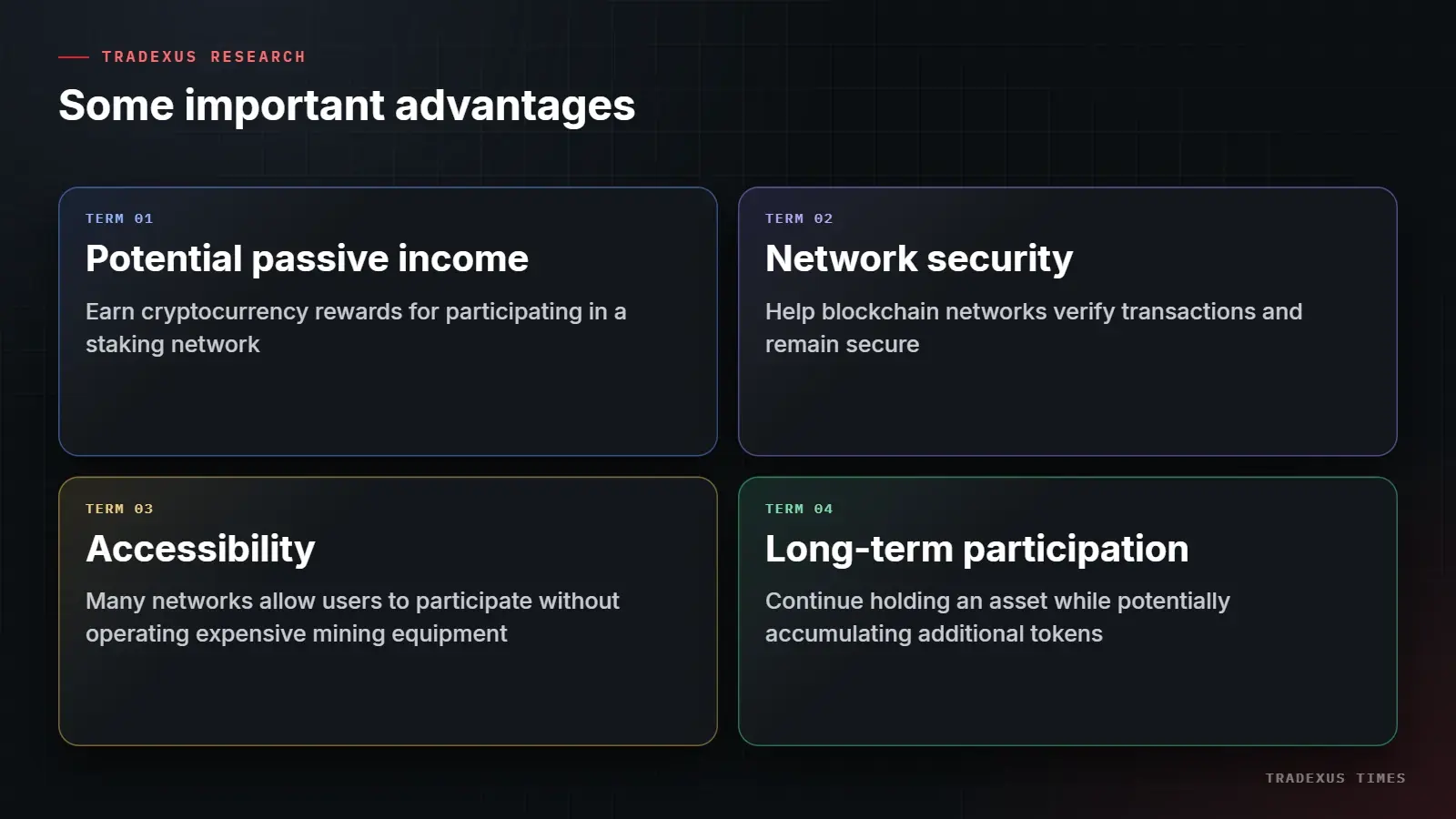
However, these advantages do not mean staking is risk-free or that rewards are guaranteed[1]
What Are the Risks of Cryptocurrency Staking?
Although staking can provide rewards, it also involves financial and technical risks. One of the biggest risks is cryptocurrency price volatility. Even if you earn more tokens through staking, the market value of those tokens could decrease. Another concern is that some networks impose withdrawal or unbonding periods, meaning you may not be able to access your assets immediately when you want to sell them.[3]
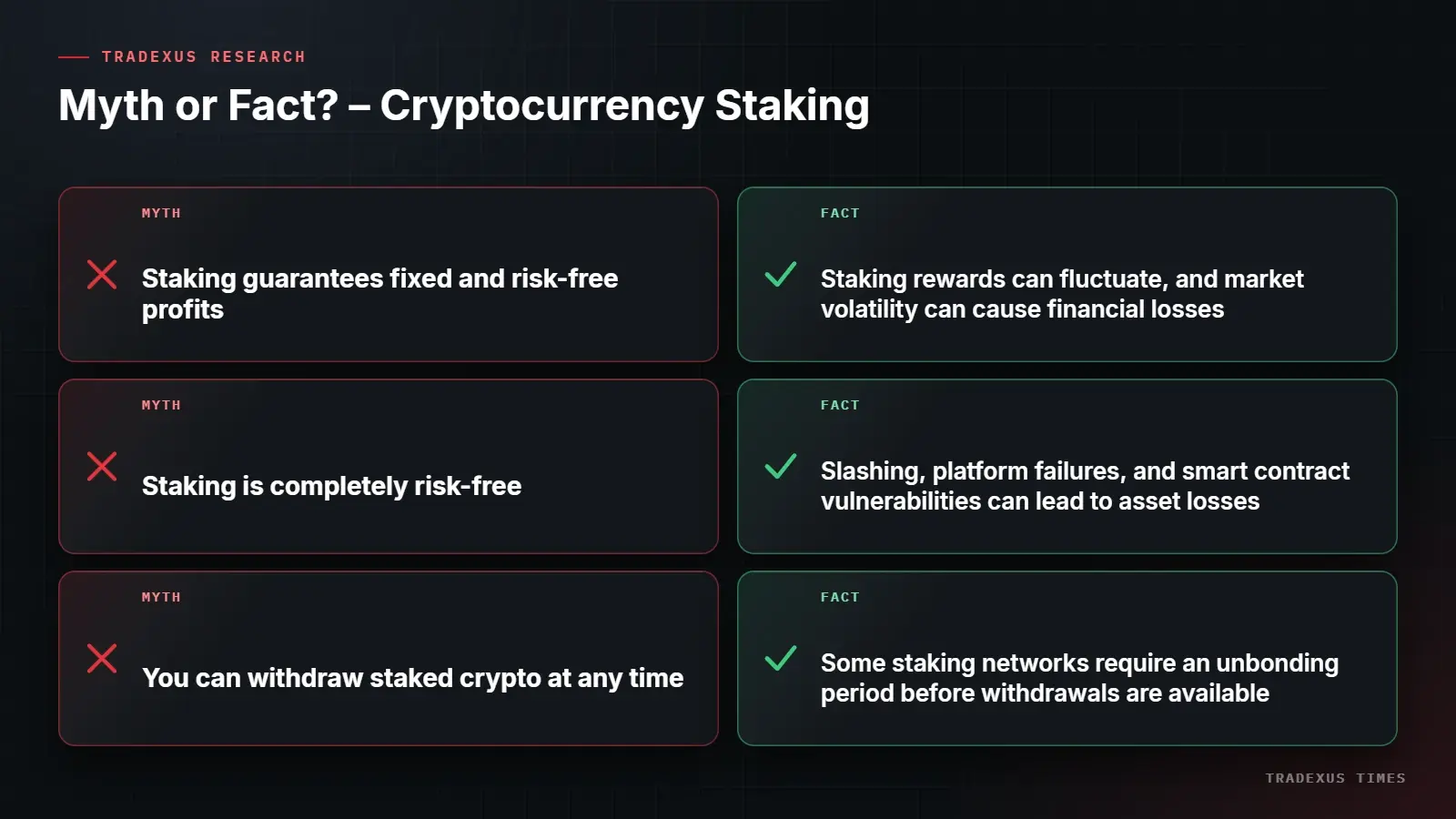
The most important lesson is that staking rewards should never be considered guaranteed income. Always investigate the risks before committing your cryptocurrency.[3]
How Can Beginners Start Staking Cryptocurrency?
Getting started with staking does not necessarily require advanced technical knowledge. Many cryptocurrency wallets and exchanges offer staking services through relatively simple interfaces. However, beginners should take time to understand the process before investing.[1]
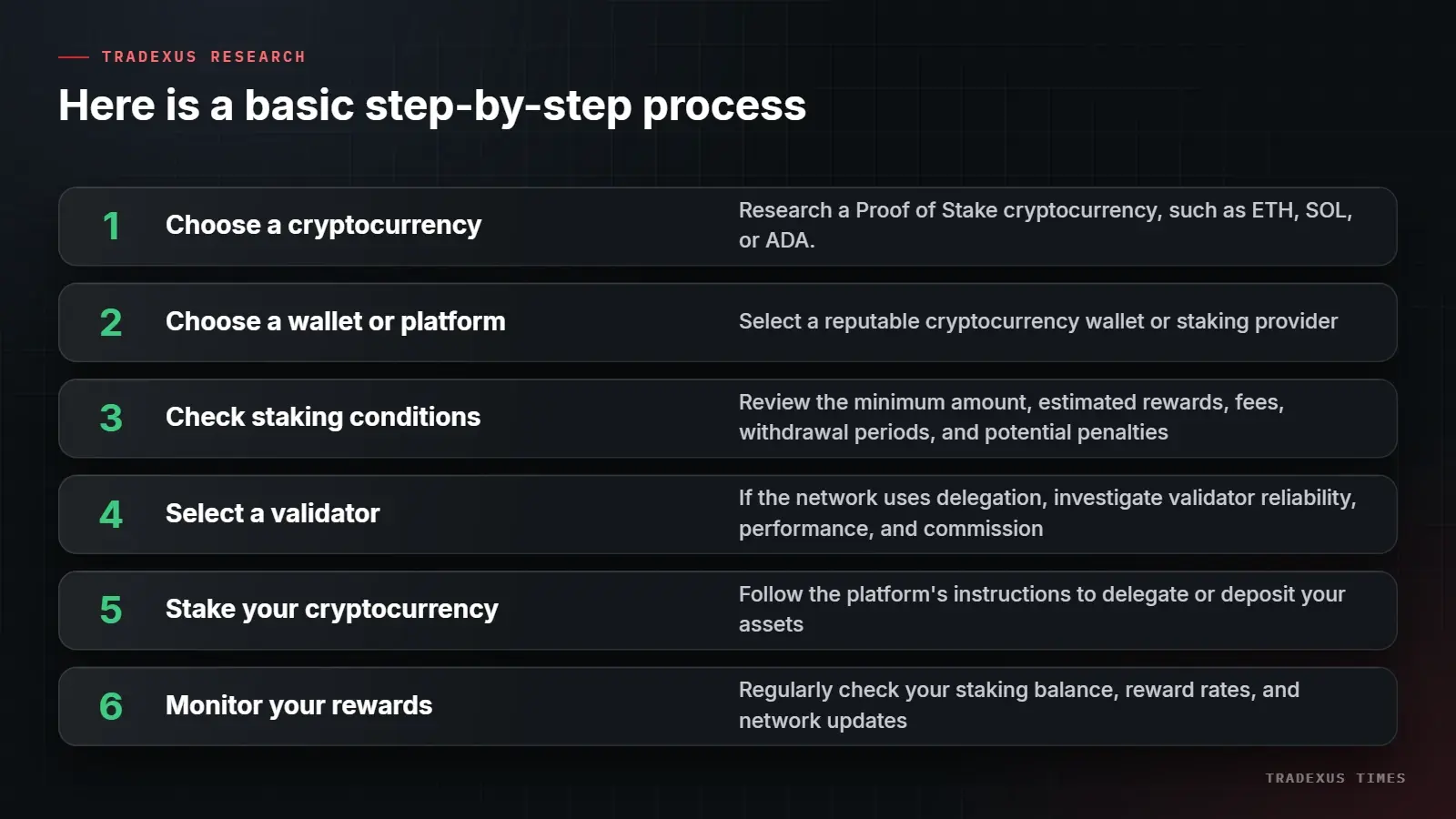
Always use official websites, verify wallet addresses, and never share your private keys or recovery phrase. Consider starting with a small amount while learning how the system works.[1]
Staking vs. Mining: What Is the Difference?
Staking and mining are two different methods used by blockchain networks to validate transactions and maintain network security. Mining is associated with Proof of Work, where participants use specialized computing equipment to solve computational problems. Staking, on the other hand, uses cryptocurrency committed as economic collateral to participate in transaction validation. Both systems aim to protect blockchain networks, but they operate differently.[2]
| Feature | Staking | Mining |
|---|---|---|
| Technology | Proof of Stake | Proof of Work |
| Main requirement | Cryptocurrency | Computing hardware |
| Energy consumption | Generally lower | Generally higher |
| Equipment | Often a wallet or validator setup | Mining hardware |
| Rewards | Staking rewards | Mining rewards |
or example, Ethereum currently uses Proof of Stake, while Bitcoin uses Proof of Work. This means Bitcoin cannot be staked through its native blockchain protocol in the same way as Ethereum.[2]
Conclusion: Is Cryptocurrency Staking Worth It?
Cryptocurrency staking is an important part of the modern blockchain ecosystem. It allows cryptocurrency holders to participate in securing decentralized networks while potentially earning additional digital assets. For people interested in holding cryptocurrencies over the long term, staking can be an interesting option to explore.[1]
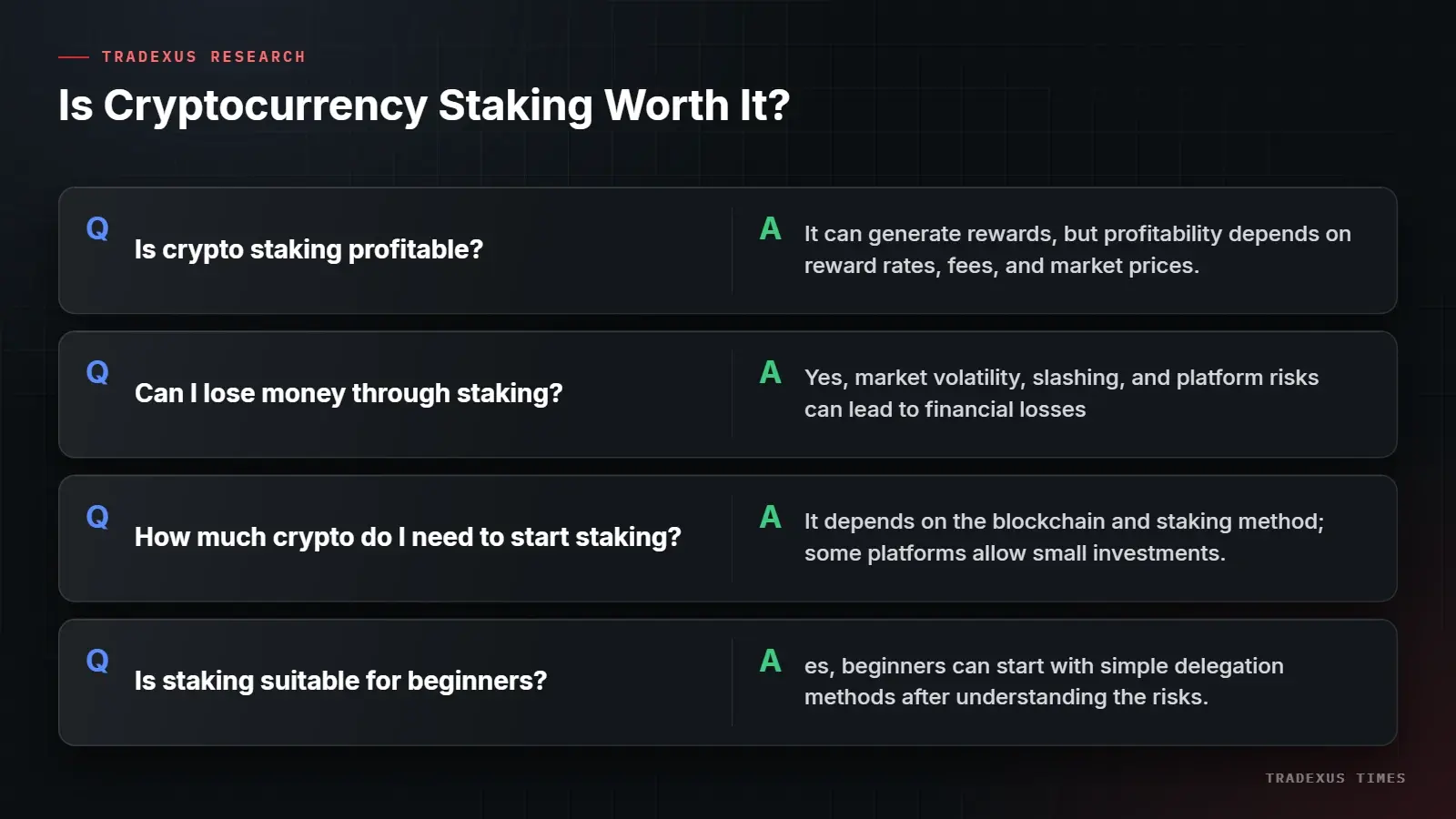
Nevertheless, staking is not a guaranteed way to make money. Cryptocurrency prices fluctuate, reward rates change, and technical or platform-related problems can result in losses. Before getting started, research the cryptocurrency, understand the staking mechanism, and evaluate the risks carefully.[1]
Ultimately, successful participation in staking requires more than simply choosing a cryptocurrency with an attractive reward rate. It requires understanding the technology, protecting your assets, and making informed financial decisions.[1]
Sources
- ethereum.org/staking/
- bitcoin.org/en/how-it-works
- support.blockchain.com/hc/en-us/articles/5969077675548-What-is-staking-and-its-risks
- solana.com/staking
Education only — not financial advice. Figures are as of the dates given in the text and its sources. Our editorial policy · Report an error