How to Avoid Crypto Scams: 10 Essential Ways to Protect Your Digital Assets
Learn how to recognize cryptocurrency scams, protect your digital assets, identify suspicious investment opportunities, and stay safe in the world of cryptocurrency.

Key takeaways
- Recognize Red Flags: Avoid unrealistic profit promises and suspicious offers.
- Protect Your Private Keys: Never share your recovery phrase or private keys.
- Strengthen Security: Use strong passwords and two-factor authentication.
- Research Before Investing: Verify projects, exchanges, and wallet providers.
- Stay Alert & Report Scams: Avoid suspicious links and report fraudulent activities immediately.
Introduction: Staying Safe in the World of Cryptocurrency
Cryptocurrency has transformed the financial world by introducing new ways to transfer money, invest, and participate in digital economies. Bitcoin, Ethereum, and thousands of other digital assets have attracted millions of people looking for financial opportunities. However, as cryptocurrency becomes more popular, scammers are finding increasingly sophisticated ways to exploit inexperienced investors and even experienced crypto users. From fake investment platforms and phishing websites to fraudulent giveaways and impersonation schemes, crypto scams can cause significant financial losses. [1]
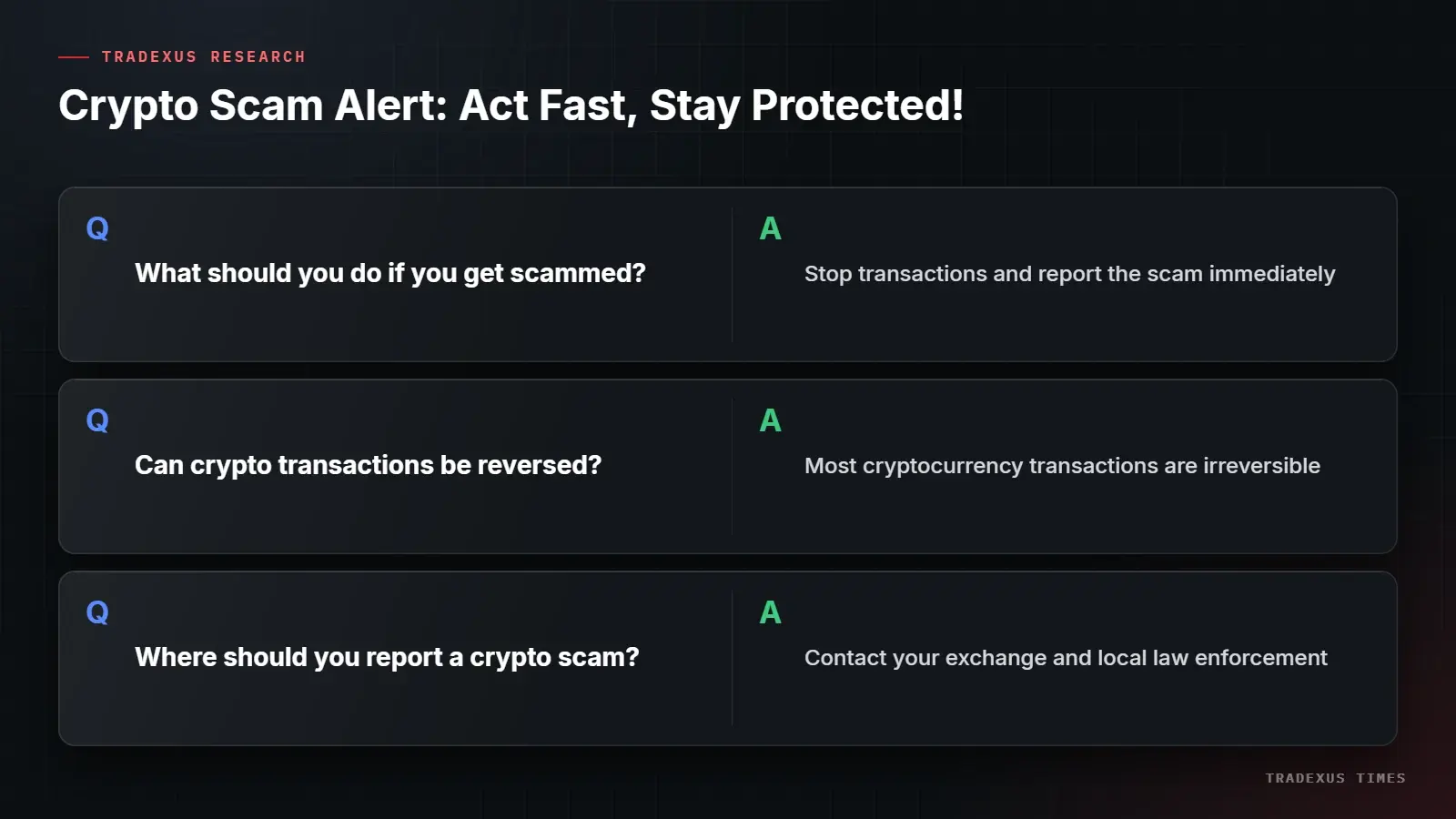
Unlike traditional bank transfers, cryptocurrency transactions are often irreversible. Once digital assets are sent to a scammer's wallet, recovering them can be extremely difficult. This makes prevention, awareness, and responsible digital security essential. Understanding how scams work and recognizing their warning signs can help you protect your money and personal information.
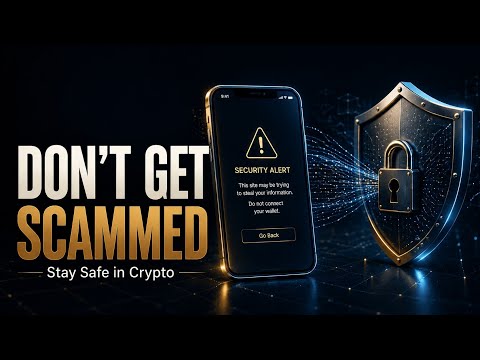 Watch on our channelStaying Safe in the World of Cryptocurrency
Recognize the Most Common Warning Signs
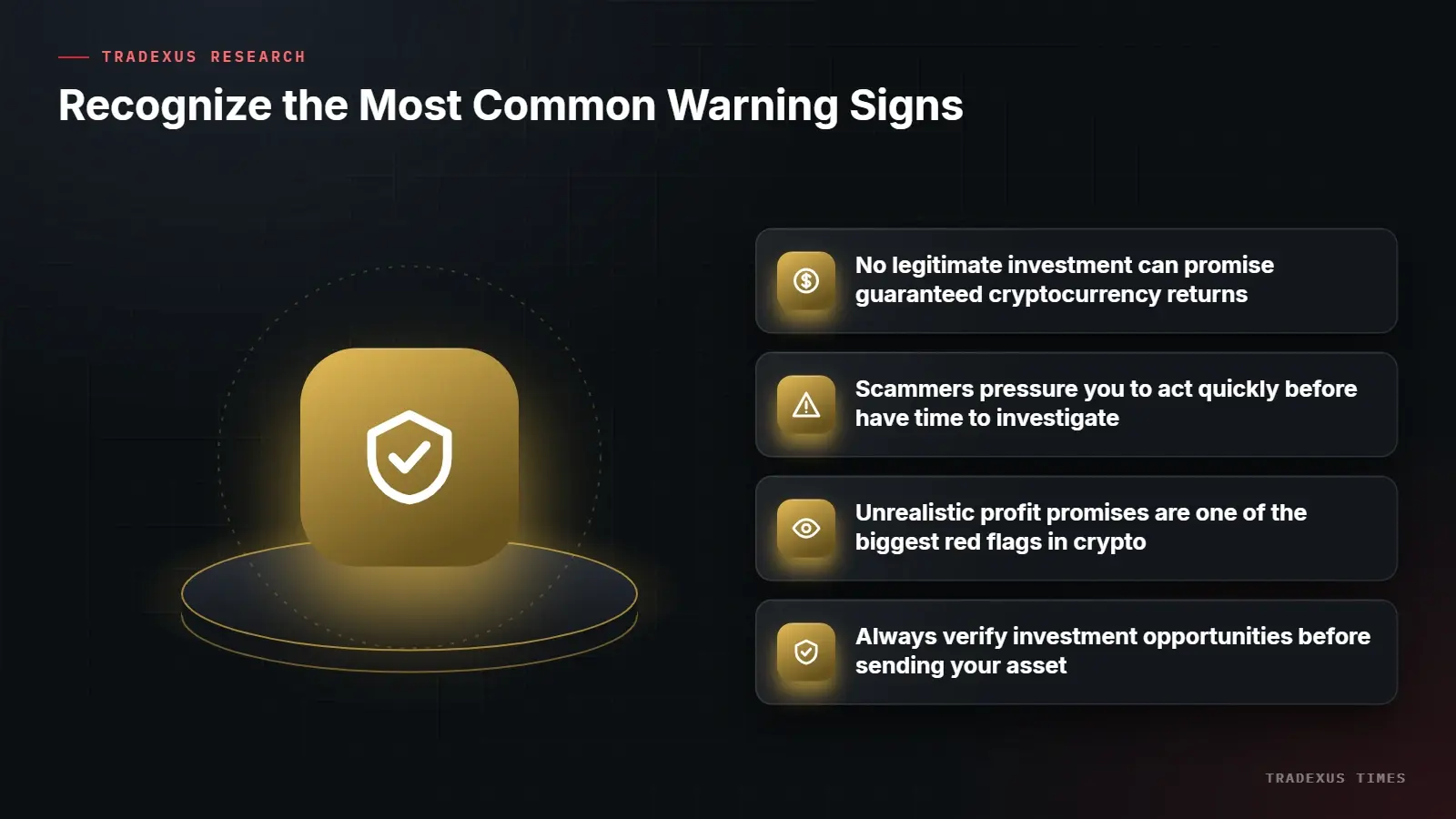
One of the most effective ways to avoid cryptocurrency scams is to learn how scammers attract their victims. Many fraudulent schemes begin with promises of extraordinary profits, guaranteed returns, or exclusive investment opportunities. Scammers may claim that a particular cryptocurrency will increase dramatically in value or that an investment opportunity is available for a limited time only. They often use urgency, fear of missing out (FOMO), and emotional pressure to convince people to act without conducting proper research. Be particularly suspicious of anyone promising risk-free investments, asking you to send money immediately, or guaranteeing that you will double your cryptocurrency. Remember that legitimate investments always involve risk, and no individual can guarantee market performance.
Never Share Your Private Keys or Recovery Phrase
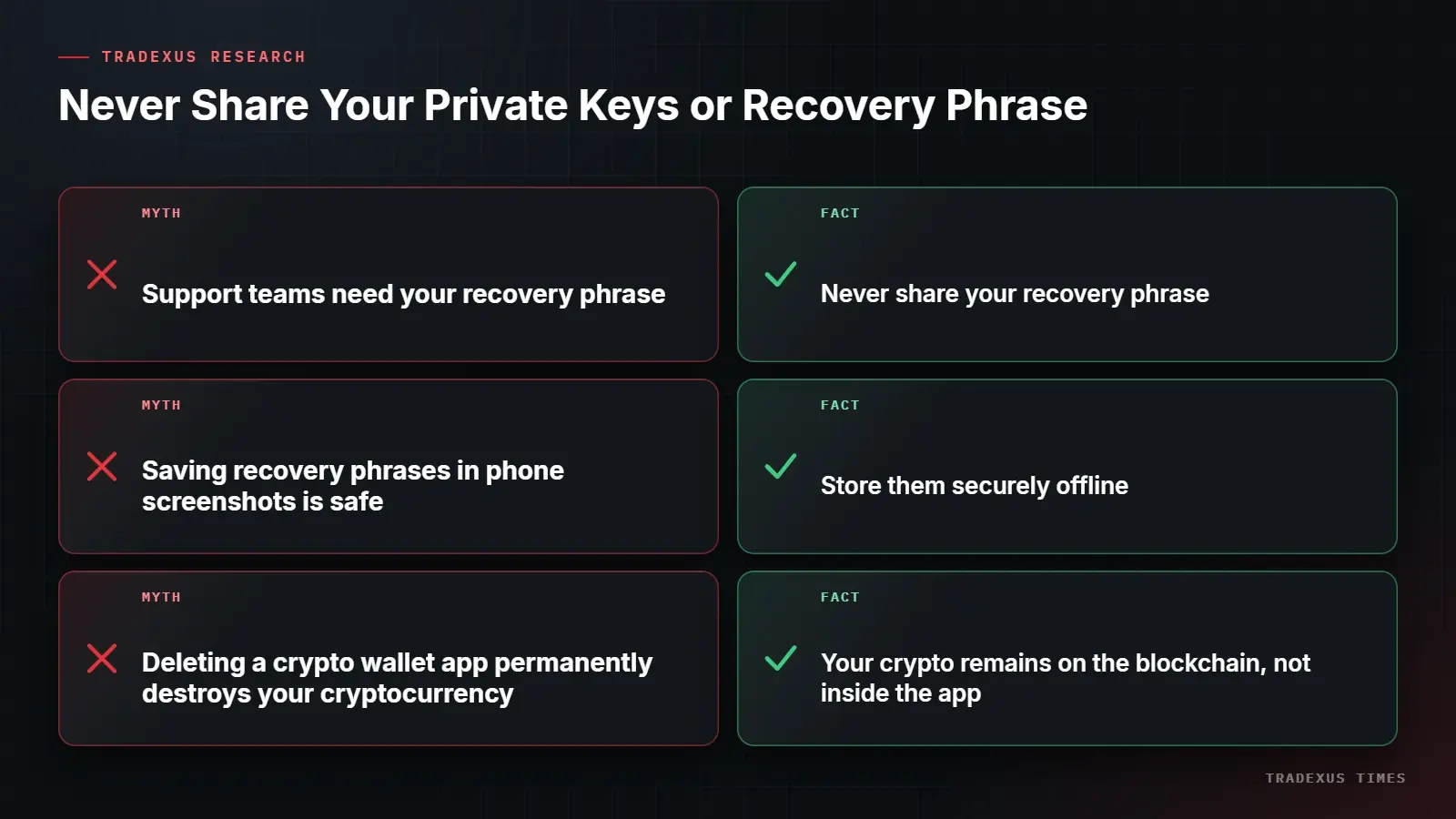
Your private keys and recovery phrase are among the most important pieces of information associated with your cryptocurrency wallet. They provide access to your digital assets, and anyone who obtains them may be able to transfer your funds without your permission. Unfortunately, scammers frequently impersonate exchange employees, wallet providers, or technical support representatives to persuade users to reveal these details. They may claim that your account has a security problem or that your wallet needs verification. Never share your private keys, recovery phrase, or authentication codes with anyone. Legitimate customer support representatives should not need your recovery phrase to assist you. Store your recovery phrase securely offline, avoid taking screenshots of it, and never enter it into unfamiliar websites or applications.
Use Strong Security Measures for Your Crypto Accounts
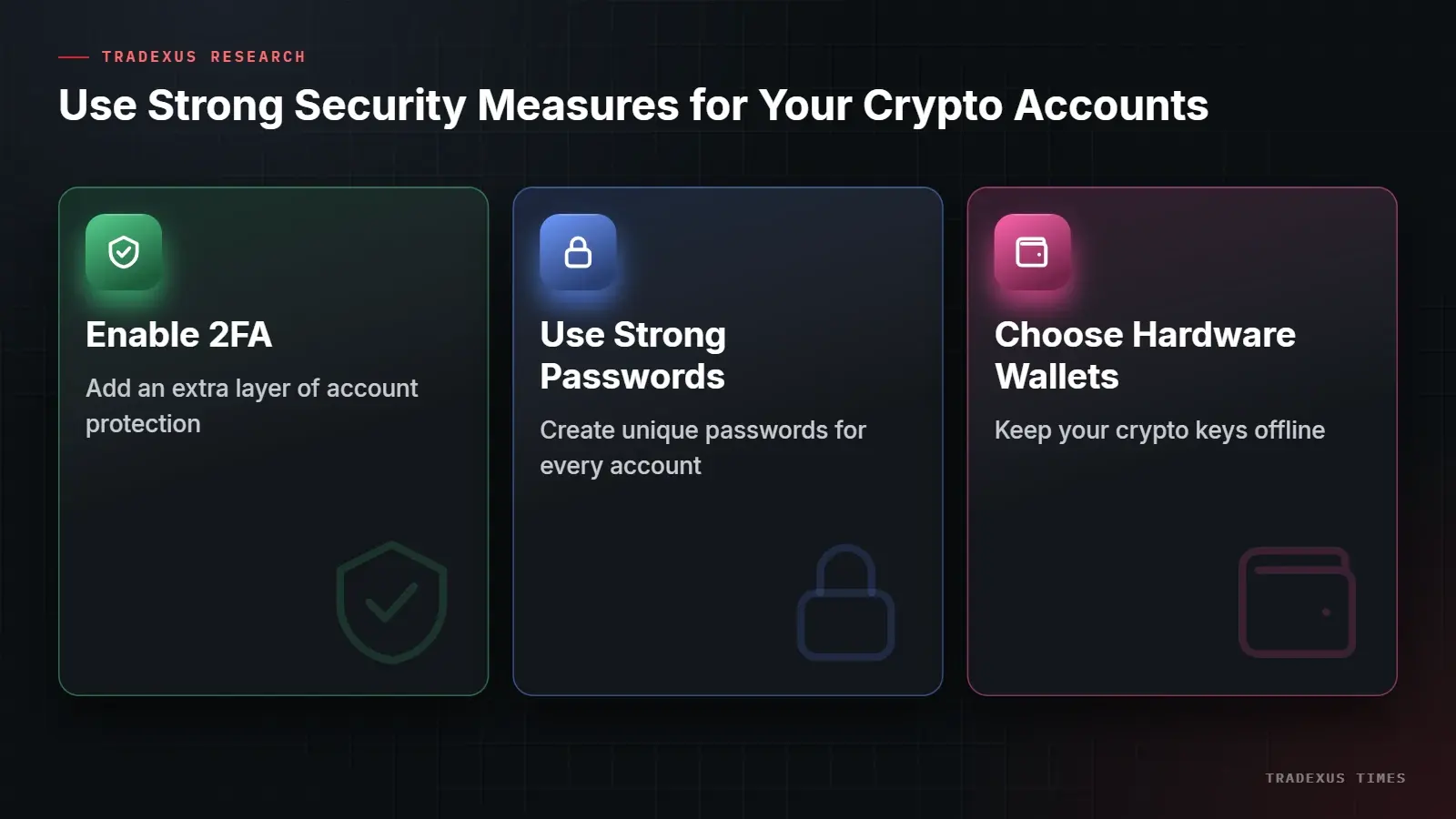
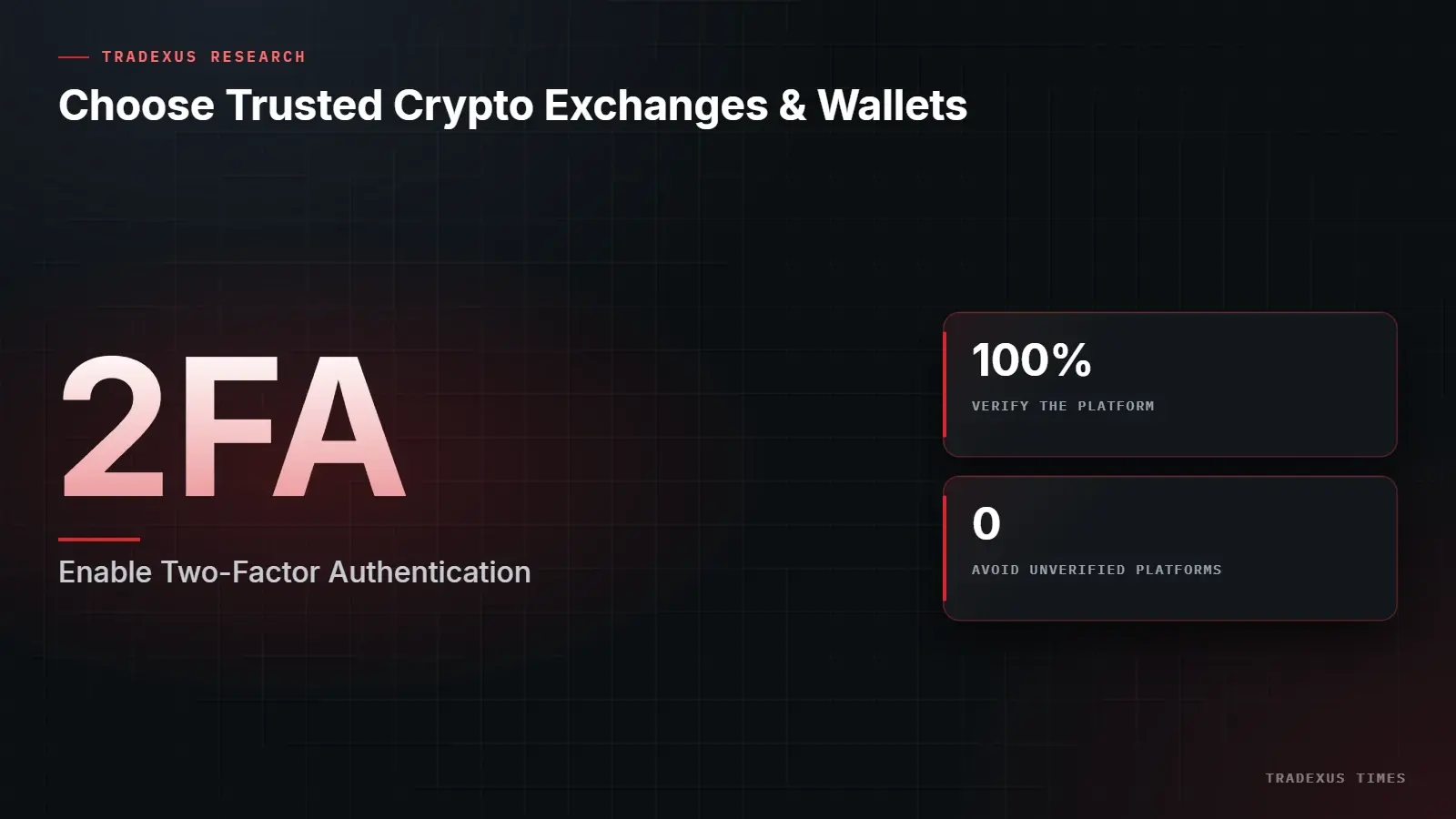
Protecting your cryptocurrency accounts requires more than simply choosing a password. Start by creating strong, unique passwords for your exchange accounts, email accounts, and digital wallets. Avoid reusing passwords across different platforms because a compromised account could expose others. Enable two-factor authentication (2FA), preferably using an authenticator application or a hardware security key rather than relying exclusively on SMS messages. Keep your computer, smartphone, wallet applications, and security software updated to reduce vulnerabilities. For larger cryptocurrency holdings, consider using a hardware wallet, which keeps private keys offline and reduces exposure to internet-based attacks. These precautions cannot eliminate every risk, but they create additional barriers that make unauthorized access more difficult.
Research Before Investing in Any Cryptocurrency Project
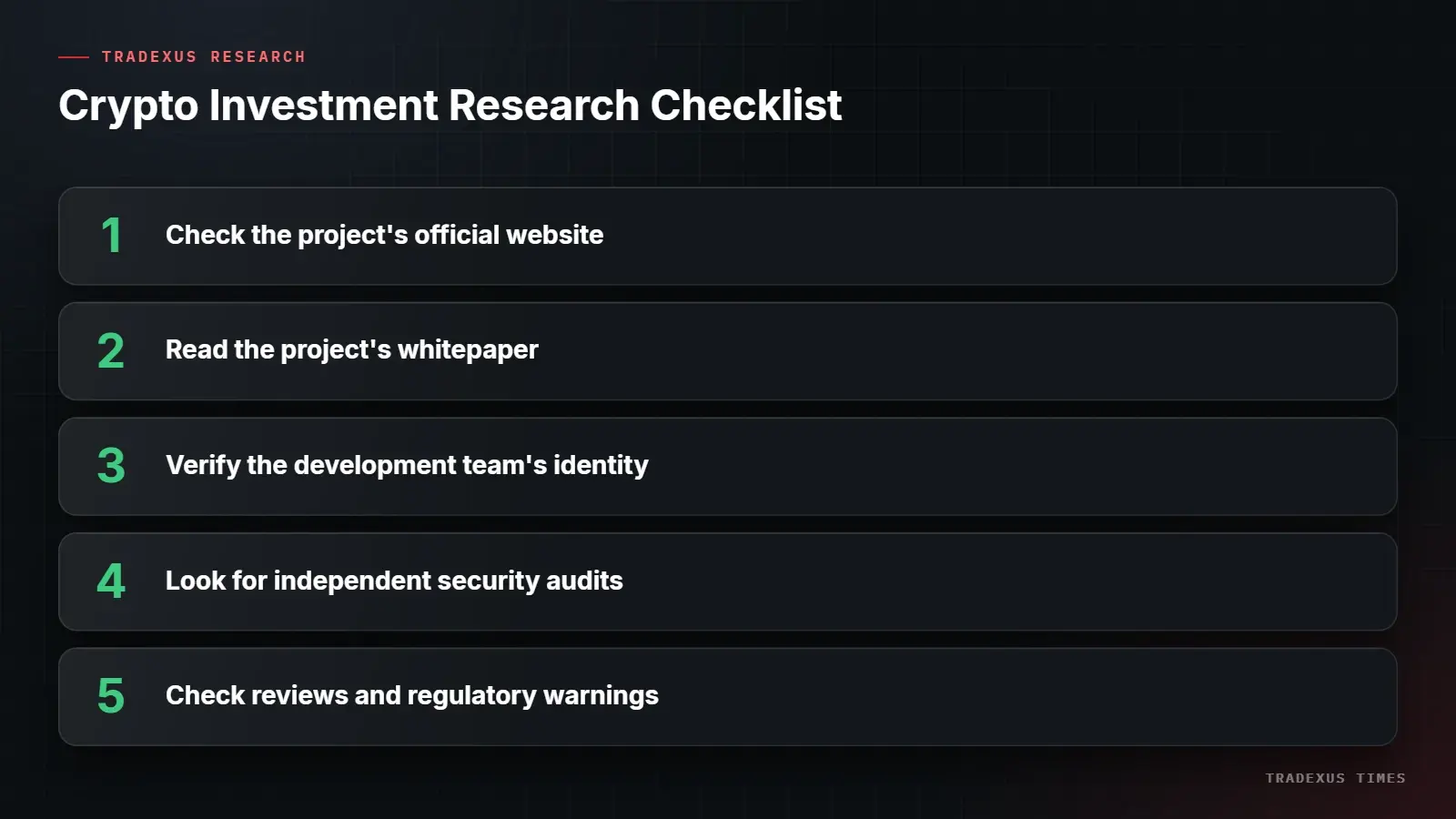
Before investing in a new cryptocurrency, token, or blockchain project, take time to investigate its background and credibility. Examine the project's official website, white paper, development team, technical documentation, and stated purpose. Check whether the team members have verifiable professional backgrounds and whether the project provides clear explanations of how its technology works. Search for independent reviews, security audits, complaints, and warnings from financial regulators. Be cautious of projects that provide little technical information, hide their founders, or rely heavily on celebrity endorsements and unrealistic predictions. In the European Union, you can also check the relevant regulatory registers and national financial authorities for information about crypto-asset service providers. Remember that an attractive website, a large social media following, or positive online comments do not automatically prove that a project is legitimate.
Watch Out for Phishing Websites, Emails, and Messages
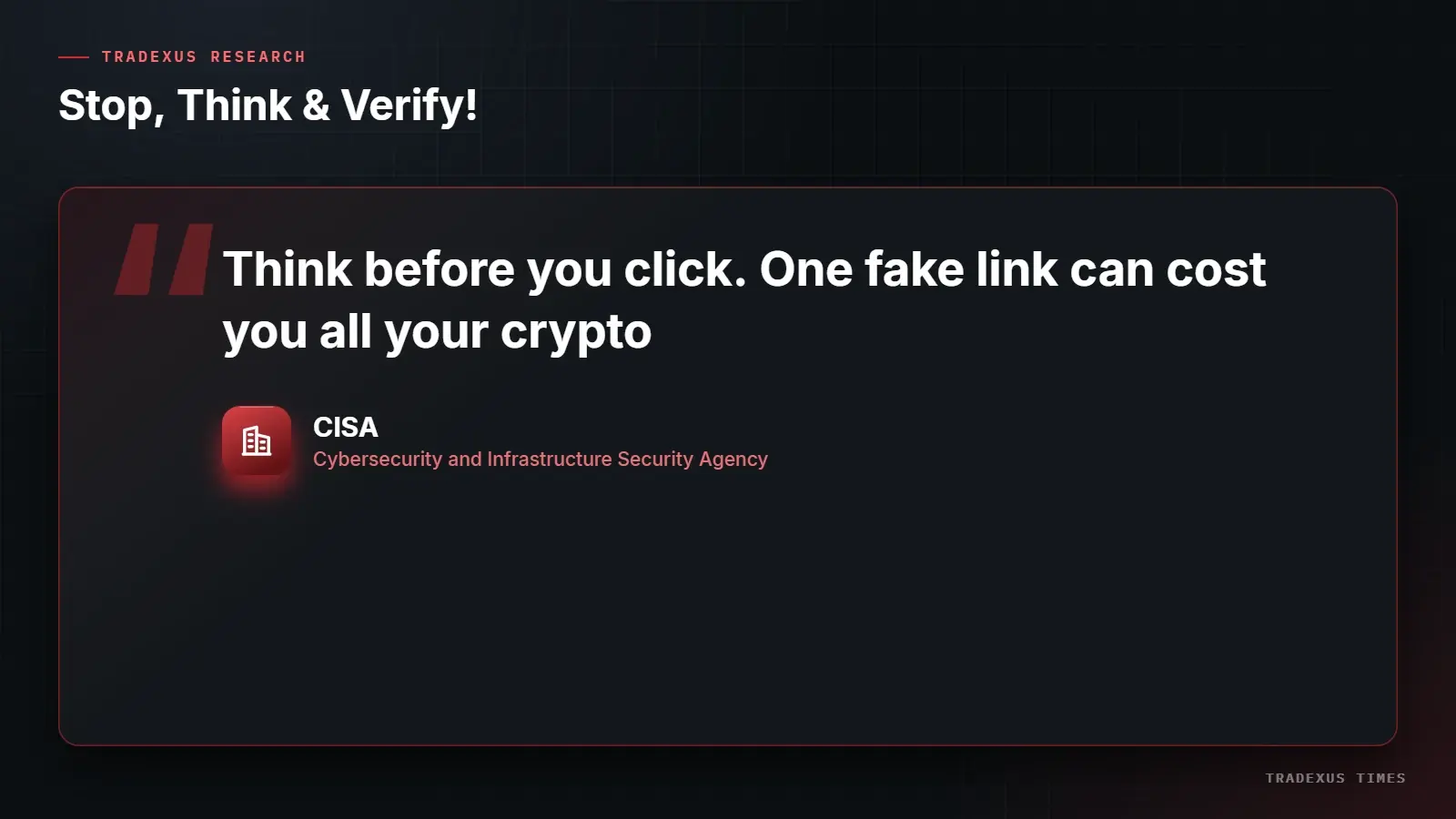
Phishing is one of the most common techniques used by cybercriminals to steal cryptocurrency and personal information. A phishing attack typically involves a fraudulent email, text message, social media post, or website designed to look like a legitimate cryptocurrency exchange or wallet provider. For example, you might receive a message claiming that your account has been suspended and that you must click a link to restore access. The link may direct you to a fake login page that collects your password and authentication details. To protect yourself, avoid clicking unexpected links, carefully examine website addresses, and access cryptocurrency platforms by typing their official addresses directly into your browser or using verified bookmarks. Be equally cautious with QR codes, downloadable wallet applications, and unexpected attachments. A familiar logo or professional-looking website is not proof of authenticity.
Avoid Fake Giveaways, Celebrity Endorsements, and Social Media Scams
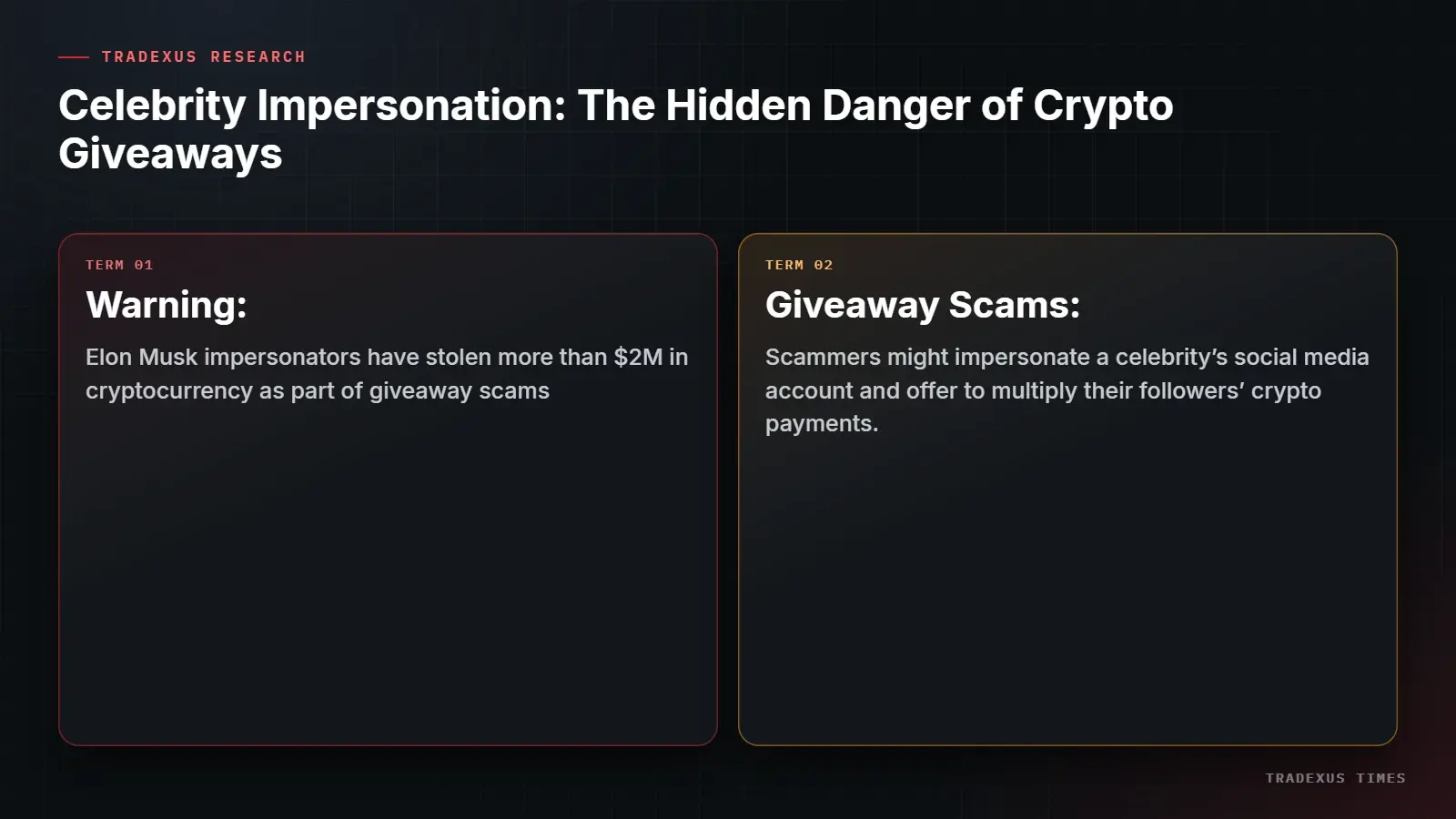
Social media platforms have become popular channels for cryptocurrency fraud. Scammers frequently create fake profiles pretending to represent celebrities, cryptocurrency entrepreneurs, influencers, or well-known companies. They may advertise giveaways claiming that anyone who sends a certain amount of Bitcoin or Ethereum will receive twice as much in return. Other scams involve fake investment groups on Telegram, WhatsApp, and other messaging platforms, where fabricated testimonials and manipulated screenshots are used to create the impression of successful investors. Some fraudsters even impersonate real people by hacking their accounts or copying their profile pictures. Never send cryptocurrency to receive a promised giveaway reward, and do not trust investment recommendations simply because they appear to come from a familiar public figure. Verify announcements through independently located official channels rather than links provided in suspicious messages.
Be Careful When Choosing Cryptocurrency Exchanges and Wallets
Not every cryptocurrency exchange or digital wallet available online is trustworthy. Some fraudulent platforms imitate established exchanges, while others operate legitimate-looking websites designed to collect deposits before disappearing. Before opening an account, investigate the company's reputation, operating history, security practices, customer support, and regulatory status. Check whether the provider is authorized to offer the relevant services in your jurisdiction. European users can consult the ESMA register and their national financial regulator for relevant information about authorized crypto-asset service providers. Be cautious of platforms that make withdrawals difficult, demand unexpected deposits, or offer unusually attractive bonuses. Never assume that a platform is safe simply because it appears in an advertisement, search result, or app store.
Never Pay Additional Fees to Recover Your Cryptocurrency
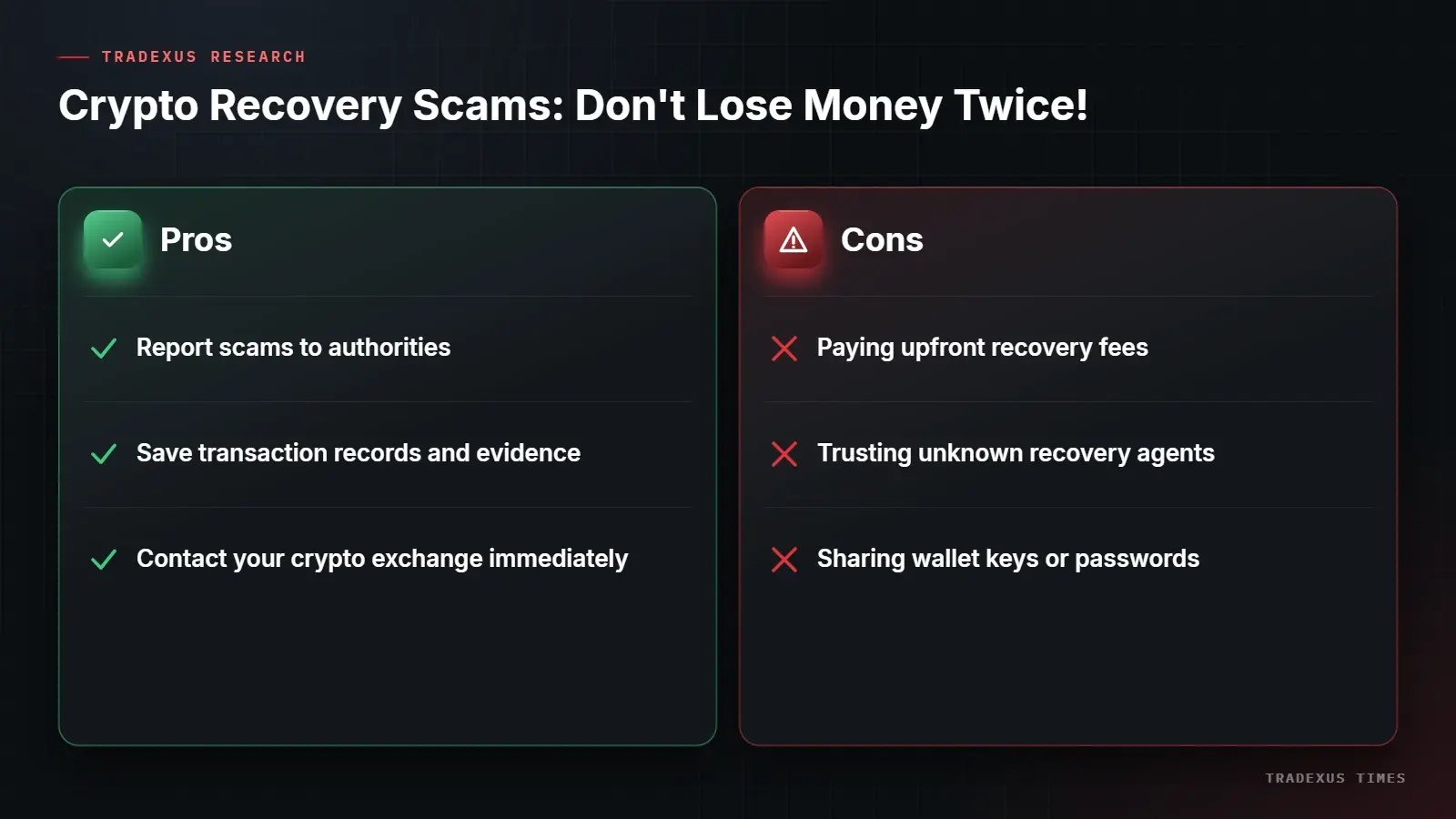
If you have already lost cryptocurrency to a scam, you may become a target for another type of fraud known as a recovery scam. In these schemes, criminals contact previous victims and claim they can retrieve stolen cryptocurrency, trace blockchain transactions, or recover funds from fraudulent investment platforms. They may present themselves as lawyers, cybersecurity experts, government officials, or professional recovery agents. After gaining your trust, they demand upfront payments for taxes, administrative charges, verification, or recovery services. Unfortunately, these promises are frequently fraudulent, and paying additional money can increase your losses. Be especially cautious of anyone who contacts you unexpectedly claiming to have recovered your funds. The FBI specifically warns victims about fraudulent companies claiming they can recover cryptocurrency losses. Legitimate law enforcement agencies do not require victims to pay scammers or private individuals to release recovered funds.
Know What to Do If You Encounter a Crypto Scam
If you suspect that you have encountered a cryptocurrency scam, act quickly and avoid sending any additional funds. Stop communicating with the suspicious individual, preserve messages, emails, website addresses, screenshots, wallet addresses, and transaction identification numbers. If you have shared account credentials, change your passwords immediately and secure any affected accounts. Contact the cryptocurrency exchange or wallet provider involved in the transaction and report the incident. If you have connected your wallet to a suspicious website, review and revoke potentially dangerous token approvals using a trusted blockchain security tool. Report the incident to the appropriate law enforcement agency and financial regulator in your country. In the United States, victims can report cryptocurrency investment fraud to the FBI's Internet Crime Complaint Center (IC3). In Germany, suspicious financial activity can also be reported to the relevant financial authorities and police. Although cryptocurrency transactions are difficult to reverse, prompt reporting may help investigators identify fraudulent activity and prevent further victims.
Conclusion: Stay Informed, Stay Alert, and Protect Your Crypto
Cryptocurrency offers exciting opportunities, but protecting your digital assets should always be a priority. Scammers continuously develop new methods to deceive investors, making cybersecurity awareness and responsible decision-making more important than ever. By recognizing warning signs, protecting private keys, using strong security measures, researching investment opportunities, and avoiding suspicious links and unsolicited offers, you can significantly reduce your exposure to cryptocurrency fraud. Remember that no investment opportunity is worth risking your financial security without proper investigation. Think before you click, research before you invest, and verify before you transfer. The best defense against crypto scams is knowledge, caution, and good security habits.
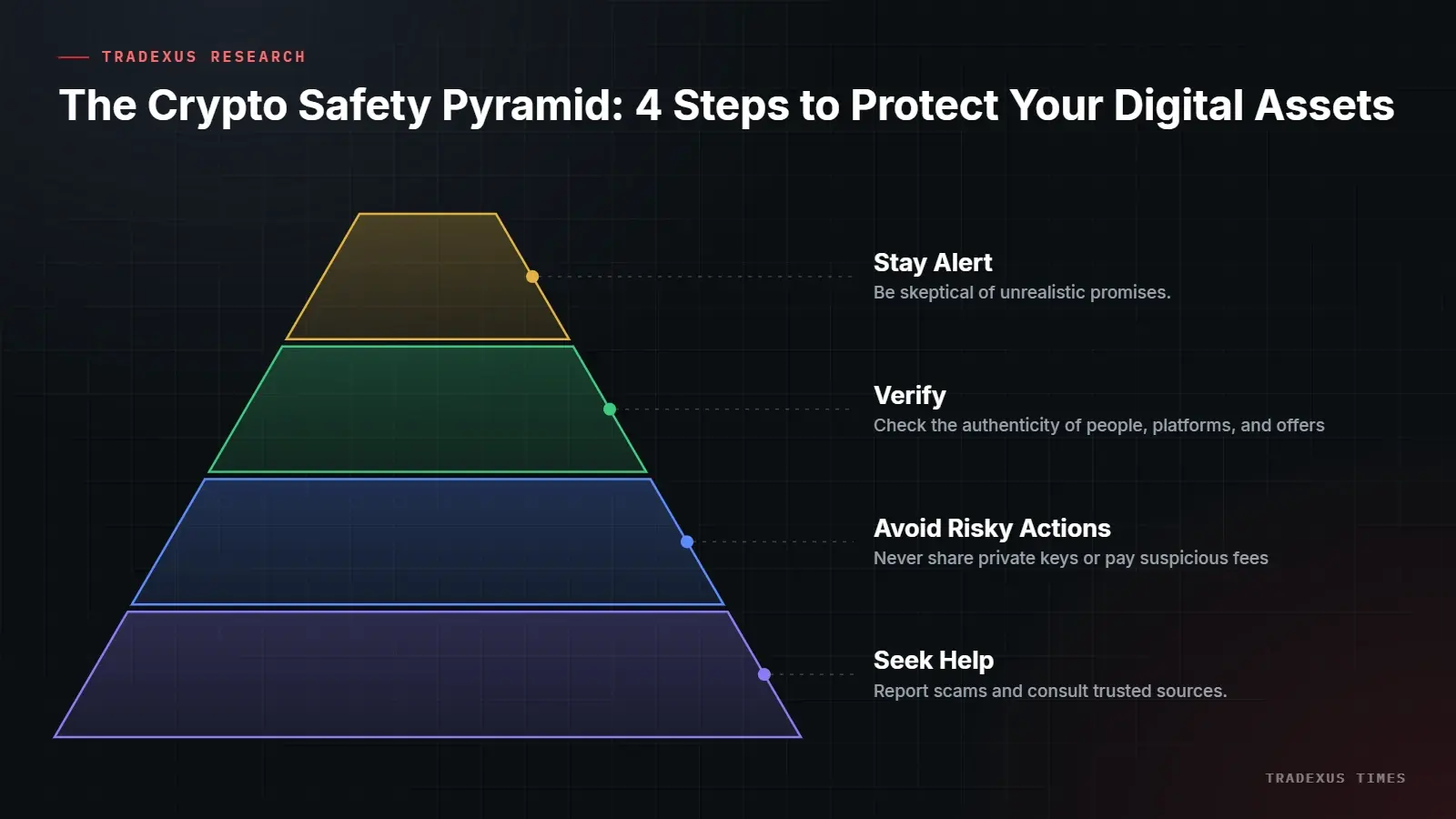
Cryptocurrency security starts with you. Your awareness is one of your strongest defenses against online financial fraud.
Sources
- consumer.ftc.gov/articles/what-know-about-cryptocurrency-scams
- esma.europa.eu/sites/default/files/2026-01/Factsheet_on_crypto_fraud_and_scams_LU_EN.pdf
- fbi.gov/how-we-can-help-you/victim-services/national-crimes-and-victim-resources/cryptocurrency-investment-fraud
- cisa.gov/secure-our-world
Education only — not financial advice. Figures are as of the dates given in the text and its sources. Our editorial policy · Report an error